Interoceptive training was associated with lower trait anxiety in autistic adults compared to emotional prosody training
Interoceptive training to target anxiety in autistic adults (ADIE): A single-center, superiority randomized controlled trial
Superiority randomized controlled trialBenefit found
Does Aligning Dimensions of Interoceptive Experience reduce anxiety in autistic adults?
Who
121
Autistic adults aged 18 to 65 years · Clinical and community settings in Southern England
Compared
Aligning Dimensions of Interoceptive Experience: 31% meeting trial criteria for recovery
Prosody control therapy: 16% meeting trial criteria for recovery
Main outcome
Spielberger Trait Anxiety Score at 3-months post-intervention
Result: estimated mean difference 3•23 (95% CI 1•13 to 5•29)
Bottom line: Aligning Dimensions of Interoceptive Experience significantly reduced trait anxiety in autistic adults compared to an active control.
Funded by: Transforming Mental Health PsyImpact Grant
eClinicalMedicine · 2021-08-01 · Save PNG
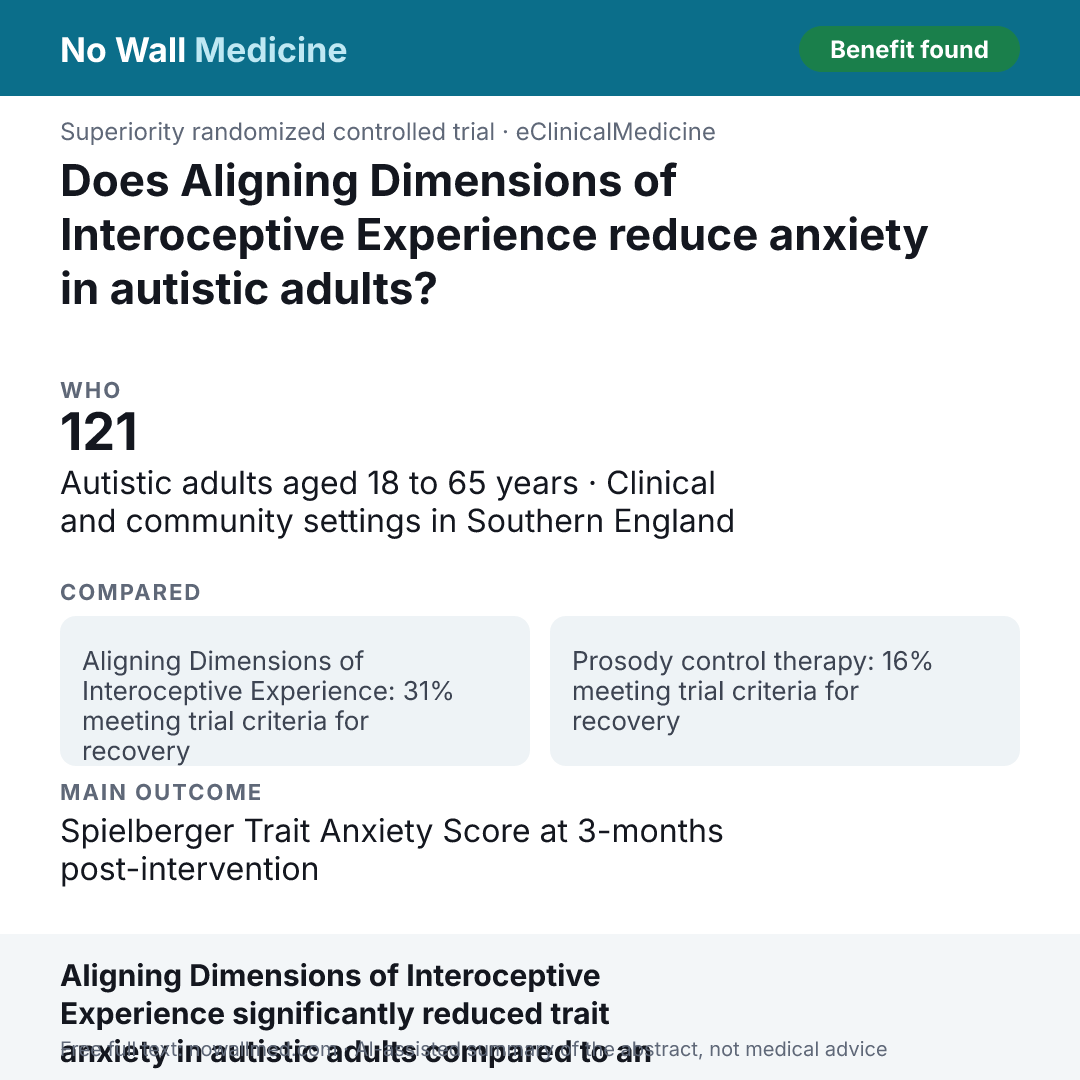
Clinical question: Does Aligning Dimensions of Interoceptive Experience reduce anxiety in autistic adults?
Key points
- Researchers studied 121 autistic adults who were randomly assigned to receive either Aligning Dimensions of Interoceptive Experience or emotional prosody identification therapy.
- At 3 months post-intervention, 31% of the interoceptive training group met criteria for recovery compared to 16% in the control group.
- One adverse event of cardiac anxiety following the interoceptive training was recorded during the trial.
Headline and key points written with AI from the paper’s abstract, with every number checked against it. Read the paper before relying on them.
Was this summary helpful?
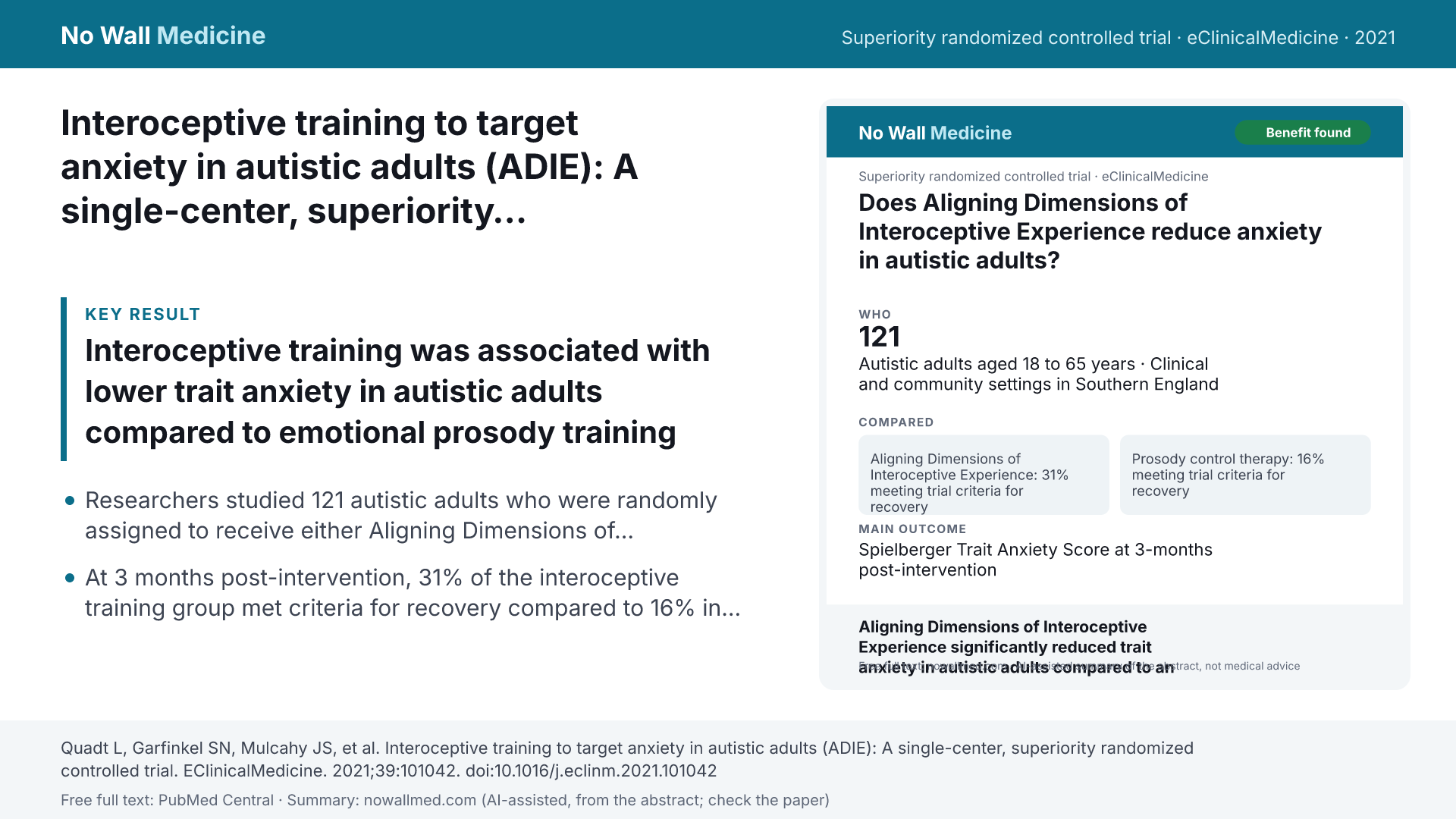
Headline, design, result, key points, caveat and citation as plain text.
Cite this article
Quadt L, Garfinkel SN, Mulcahy JS, et al. Interoceptive training to target anxiety in autistic adults (ADIE): A single-center, superiority randomized controlled trial. EClinicalMedicine. 2021;39:101042. doi:10.1016/j.eclinm.2021.101042
Spotted a mistake? Suggest a correction