Interventions Associated With Reduced Loneliness and Social Isolation in Older Adults: A Systematic Review and Meta-analysis
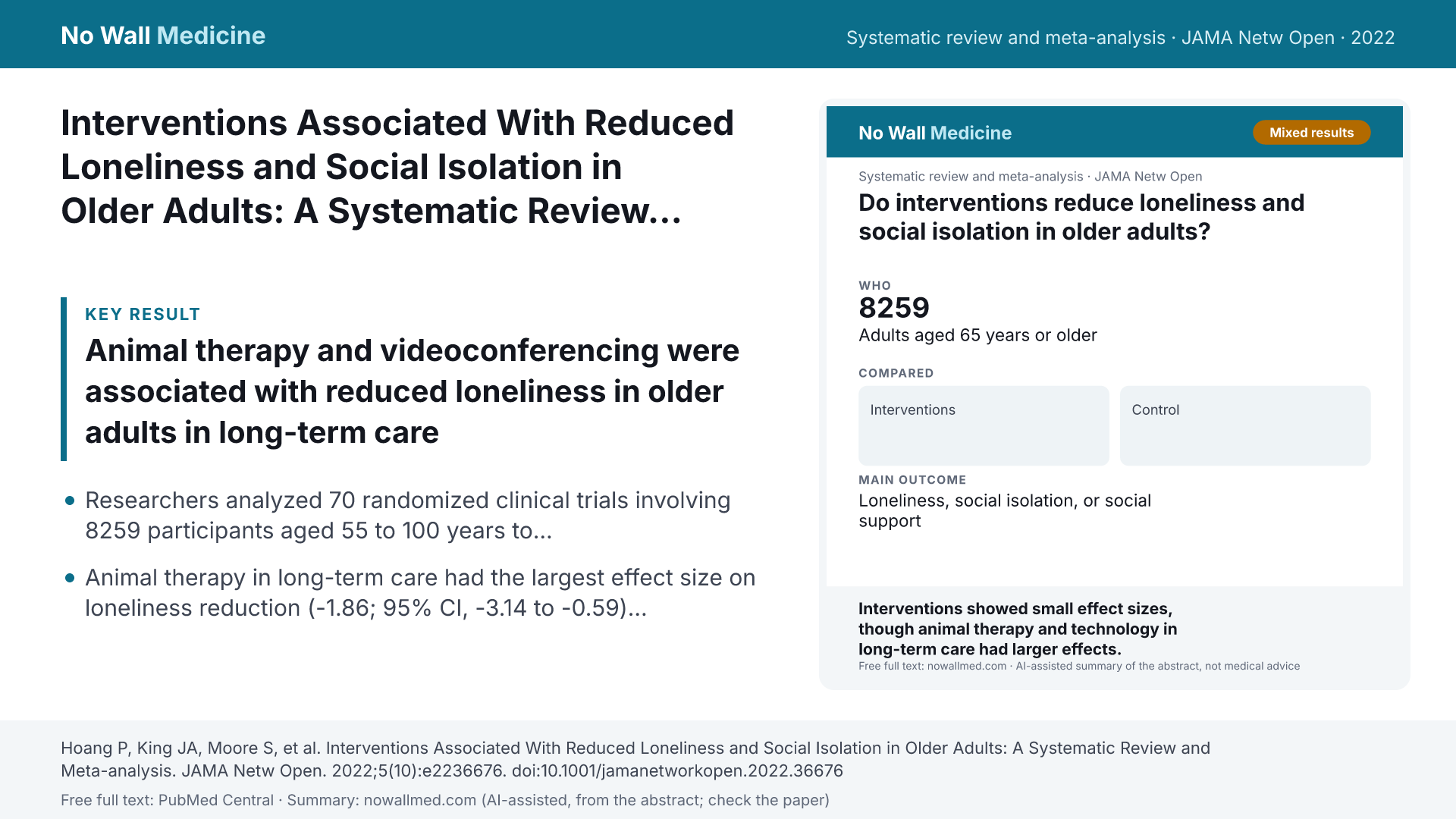
Key result: Animal therapy and videoconferencing were associated with reduced loneliness in older adults in long-term care
Key points
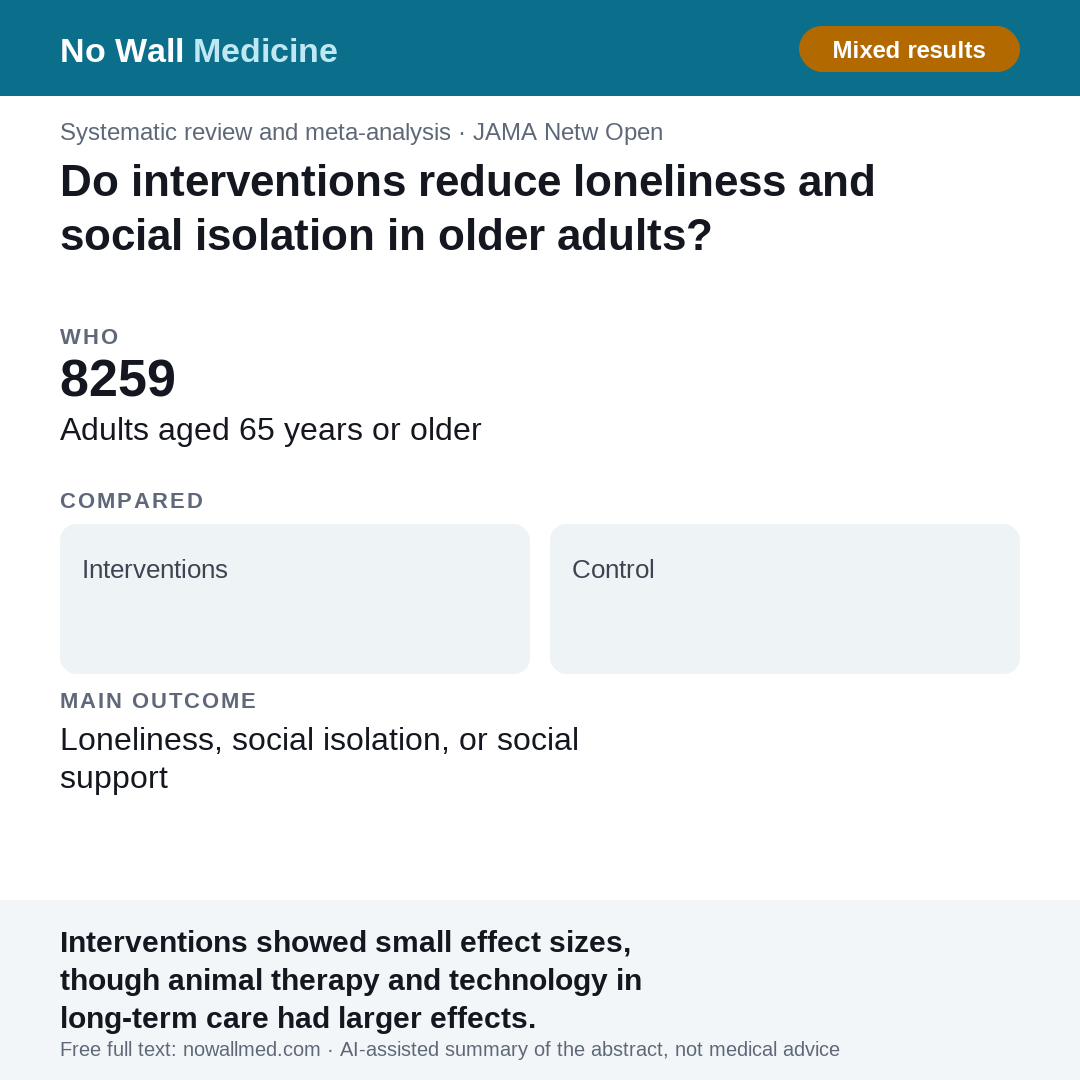
- Researchers analyzed 70 randomized clinical trials involving 8259 participants aged 55 to 100 years to evaluate interventions for loneliness and social isolation.
- Animal therapy in long-term care had the largest effect size on loneliness reduction (-1.86; 95% CI, -3.14 to -0.59) followed by videoconferencing (-1.40; 95% CI, -2.37 to -0.44).
- Most other interventions, including exercise, music therapy, and psychotherapy, were associated with small effect sizes.
Why it matters: It is unknown which specific interventions are most effective at reducing loneliness and social isolation in older adults.
Limitation the authors note: The authors stated that the overall quality of evidence was very low and the small number of studies per intervention limits conclusions.
Discussion prompts
- Would these patients look like yours? Who was left out?
- Is the main outcome one that matters to patients?
- Is the difference large enough to change what you do?
Cite: Hoang P, King JA, Moore S, et al. Interventions Associated With Reduced Loneliness and Social Isolation in Older Adults: A Systematic Review and Meta-analysis. JAMA Netw Open. 2022. doi:10.1001/jamanetworkopen.2022.36676
Free full text: PubMed Central · Summary and visual abstract: nowallmed.com/a/interventions-associated-with-reduced-loneliness-and-social-isolation-quh0uy/ (AI-assisted from the abstract; check the paper before relying on it).