Rehabilitation programs were linked to better lung function and fewer neurological issues after tuberculosis
Interventions to prevent post-tuberculosis sequelae: a systematic review and meta-analysis
Systematic review and meta-analysisMixed results
What interventions effectively prevent post-tuberculosis sequelae?
Who
10,592
Tuberculosis survivors
Compared
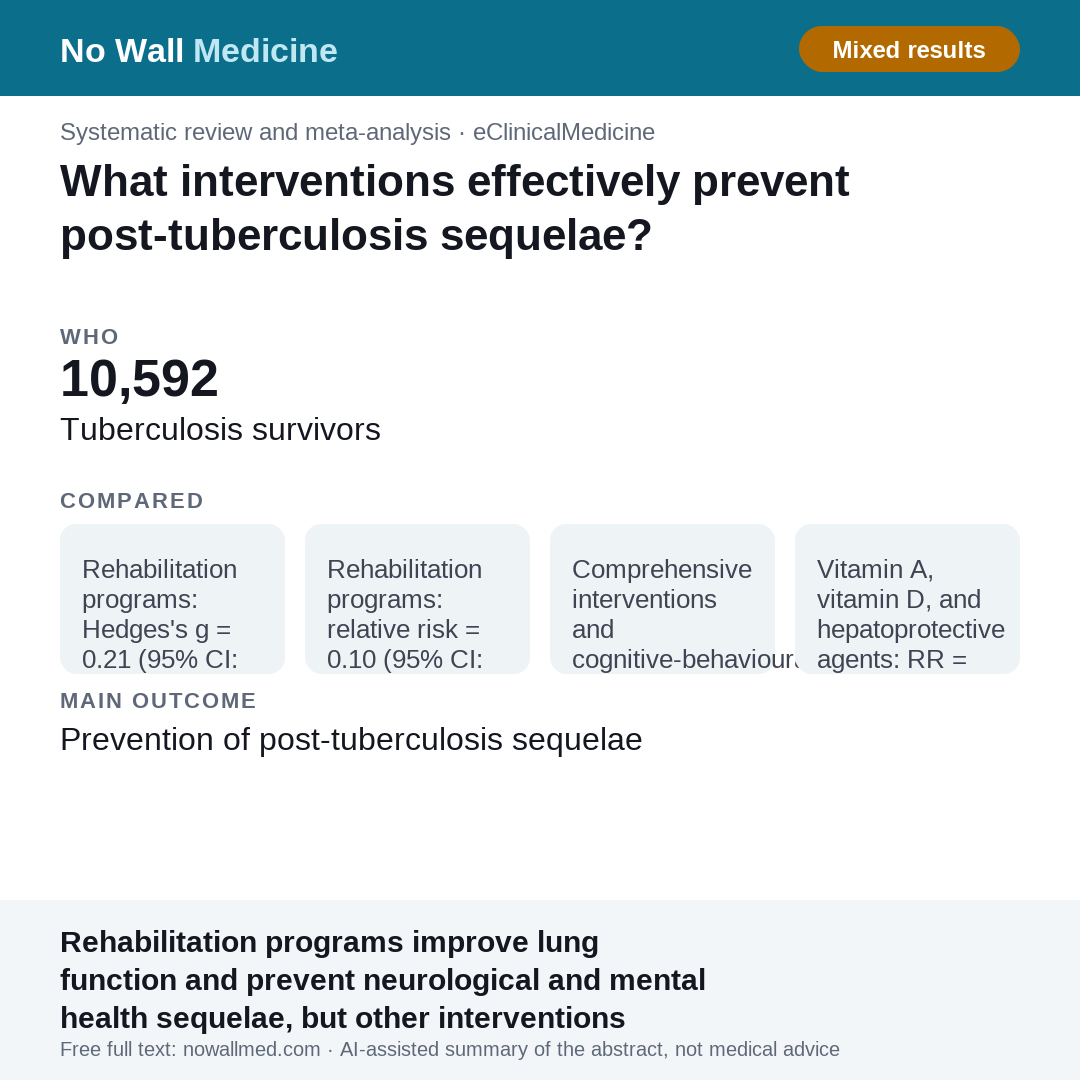
Rehabilitation programs: Hedges's g = 0.21 (95% CI: 0.03, 0.39) for lung function
Rehabilitation programs: relative risk = 0.10 (95% CI: 0.02, 0.42) for neurological sequelae
Comprehensive interventions and cognitive-behavioural therapy: Hedges's g = -1.89 (95% CI: -3.77, -0.01) for mental health disorders
Vitamin A, vitamin D, and hepatoprotective agents: RR = 0.90 (95% CI: 0.52, 1.57) for liver sequelae
Main outcome
Prevention of post-tuberculosis sequelae
Bottom line: Rehabilitation programs improve lung function and prevent neurological and mental health sequelae, but other interventions show limited effectiveness.
Funded by: Healy Medical Research Raine Foundation, Curtin, and Australian NHMRC
eClinicalMedicine · 2024-02-26Download image
Clinical question: What interventions effectively prevent post-tuberculosis sequelae?
Why it matters: Healthcare systems lack comprehensive strategies to address long-term health issues following tuberculosis due to insufficient evidence.
Key points
- Researchers analyzed 25 studies involving 10,592 participants to evaluate interventions for preventing long-term health issues after tuberculosis.
- Rehabilitation programs were associated with improved lung function (Hedges's g = 0.21; 95% CI: 0.03, 0.39) and prevented neurological sequelae (RR = 0.10; 95% CI: 0.02, 0.42).
- Vitamin A, vitamin D, and hepatoprotective agents for liver issues did not show significant reductions in sequelae (RR = 0.90; 95% CI: 0.52, 1.57).
Headline and key points written with AI from the paper’s abstract, with every number checked against it. Read the paper before relying on them.
Cite this article
Alene KA, Hertzog L, Gilmour B, Clements ACA, Murray MB. Interventions to prevent post-tuberculosis sequelae: a systematic review and meta-analysis. eClinicalMedicine. 2024. doi:10.1016/j.eclinm.2024.102511
Spotted a mistake? Suggest a correction
Top studies every Monday
The week’s key trials and guidelines in your specialties, plus any topics you follow. By email, free.
Get the weekly digest