Interventions to prevent spontaneous preterm birth in women with singleton pregnancy who are at high risk: systematic review and network meta-analysis
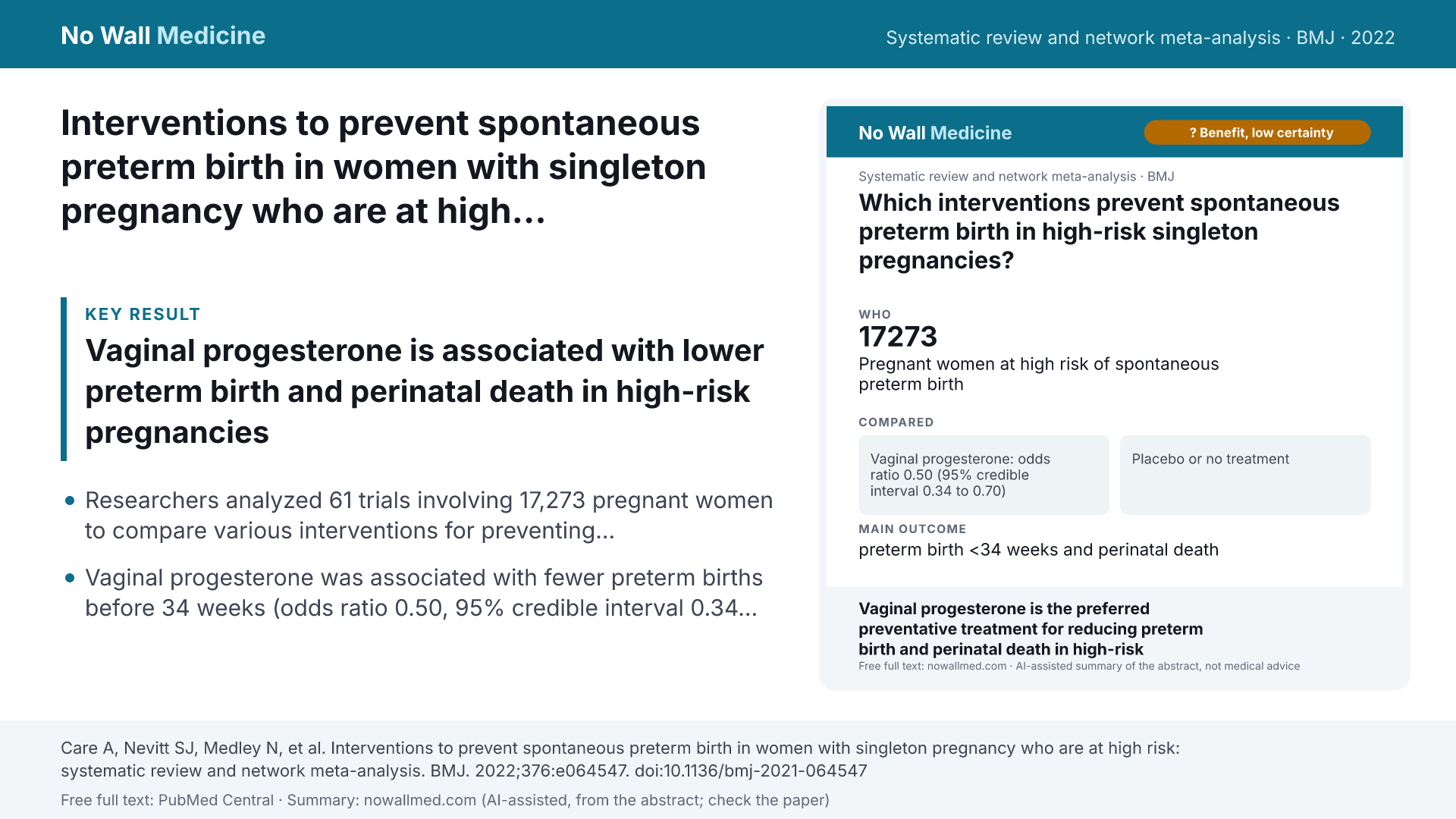
Key result: Vaginal progesterone is associated with lower preterm birth and perinatal death in high-risk pregnancies
Systematic review and network meta-analysisBenefit, low certainty
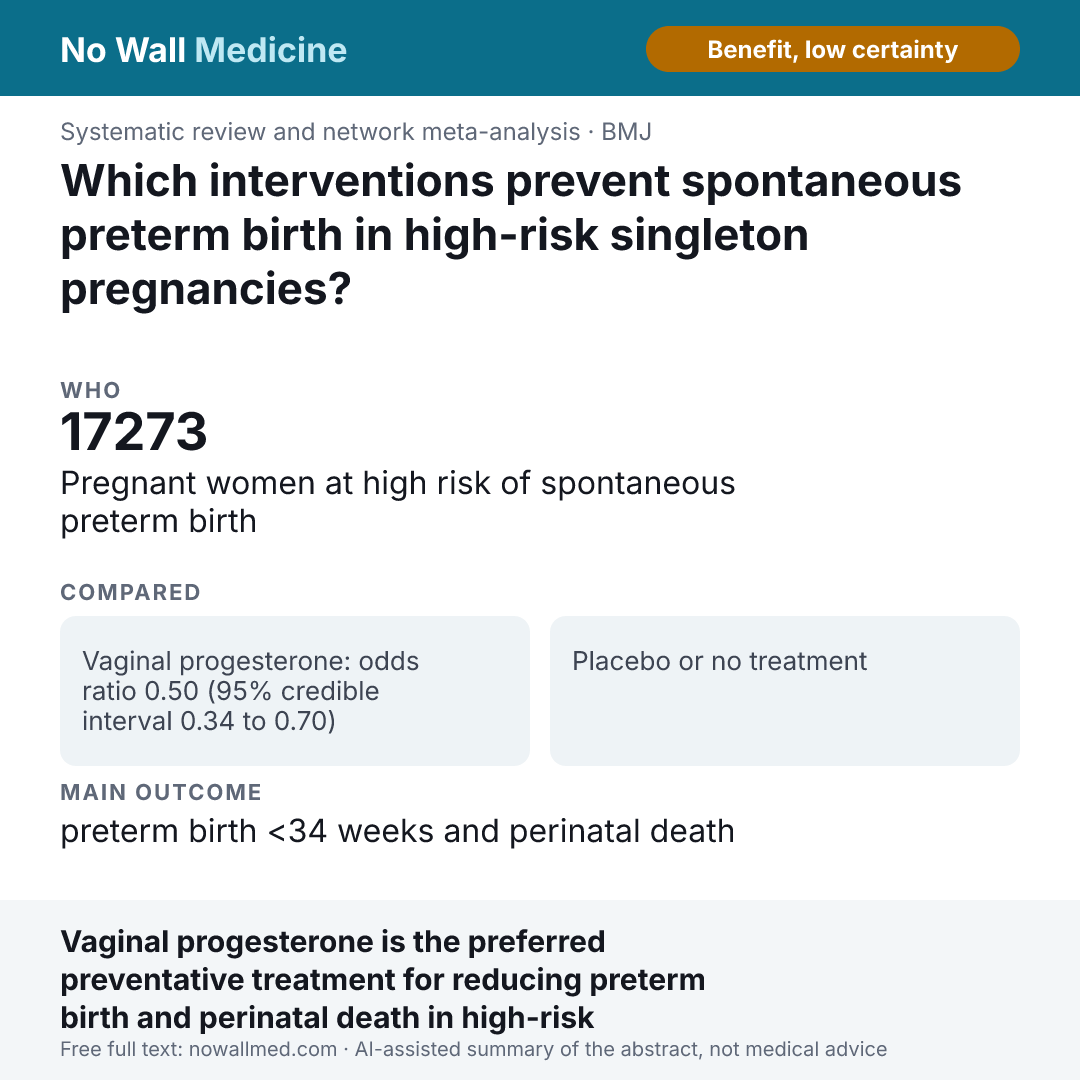
Which interventions prevent spontaneous preterm birth in high-risk singleton pregnancies?
Who
17273
Pregnant women at high risk of spontaneous preterm birth
Compared
Vaginal progesterone: odds ratio 0.50 (95% credible interval 0.34 to 0.70)
Placebo or no treatment
Main outcome
preterm birth <34 weeks and perinatal death
Result: odds ratio 0.50 (95% credible interval 0.34 to 0.70)
Bottom line: Vaginal progesterone is the preferred preventative treatment for reducing preterm birth and perinatal death in high-risk women.
BMJ · 2022-02-15 · Save PNG
Key points
- Researchers analyzed 61 trials involving 17,273 pregnant women to compare various interventions for preventing spontaneous preterm birth.
- Vaginal progesterone was associated with fewer preterm births before 34 weeks (odds ratio 0.50, 95% credible interval 0.34 to 0.70) and lower perinatal death (odds ratio 0.66, 0.44 to 0.97).
- Progesterone treatments were the only interventions associated with lower rates of neonatal sepsis, necrotising enterocolitis, and intensive care unit admission.
Discussion prompts
- Would these patients look like yours? Who was left out?
- Is the main outcome one that matters to patients?
- Is the difference large enough to change what you do?
Cite: Care A, Nevitt SJ, Medley N, et al. Interventions to prevent spontaneous preterm birth in women with singleton pregnancy who are at high risk: systematic review and network meta-analysis. BMJ. 2022;376:e064547. doi:10.1136/bmj-2021-064547
Free full text: PubMed Central · Summary and visual abstract: nowallmed.com/a/interventions-to-prevent-spontaneous-preterm-birth-in-women-with-xz1ol4/ (AI-assisted from the abstract; check the paper before relying on it).