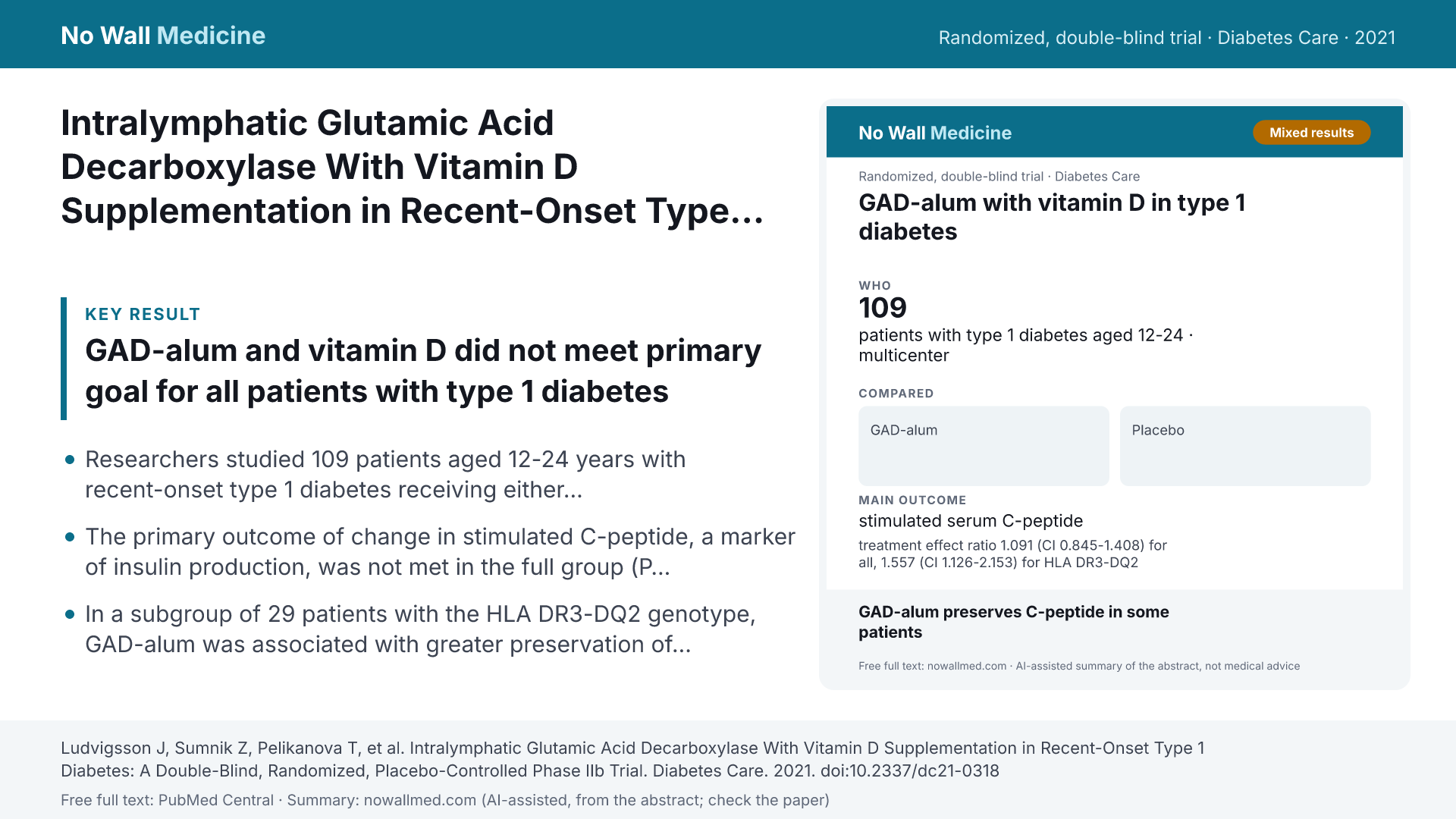
Intralymphatic Glutamic Acid Decarboxylase With Vitamin D Supplementation in Recent-Onset Type 1 Diabetes: A Double-Blind, Randomized, Placebo-Controlled Phase IIb Trial
Key result: GAD-alum and vitamin D did not meet primary goal for all patients with type 1 diabetes
Key points
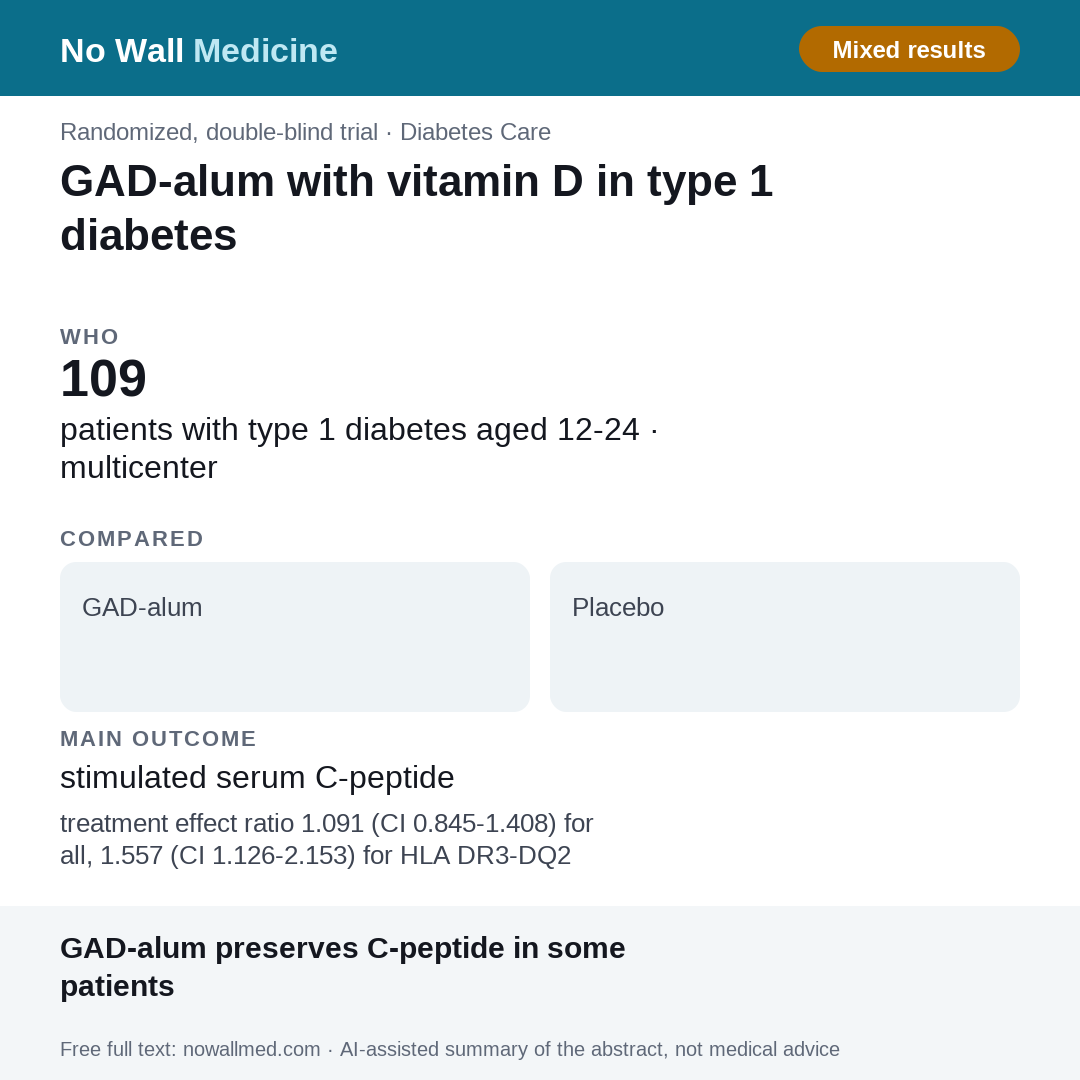
- Researchers studied 109 patients aged 12-24 years with recent-onset type 1 diabetes receiving either GAD-alum injections with vitamin D or a placebo.
- The primary outcome of change in stimulated C-peptide, a marker of insulin production, was not met in the full group (P = 0.5009).
- In a subgroup of 29 patients with the HLA DR3-DQ2 genotype, GAD-alum was associated with greater preservation of C-peptide AUC (treatment effect ratio 1.557; P = 0.0078).
Why it matters: It is unknown if combining intralymphatic GAD-alum therapy with vitamin D supplementation can preserve insulin secretion in all patients with recent-onset type 1 diabetes.
Discussion prompts
- Would these patients look like yours? Who was left out?
- Is the main outcome one that matters to patients?
- Is the difference large enough to change what you do?
Cite: Ludvigsson J, Sumnik Z, Pelikanova T, Nattero Chavez L, Lundberg E, Rica I. Intralymphatic Glutamic Acid Decarboxylase With Vitamin D Supplementation in Recent-Onset Type 1 Diabetes: A Double-Blind, Randomized, Placebo-Controlled Phase IIb Trial. Diabetes Care. 2021. doi:10.2337/dc21-0318
Free full text: PubMed Central · Summary and visual abstract: nowallmed.com/a/intralymphatic-glutamic-acid-decarboxylase-with-vitamin-d-1raul07/ (AI-assisted from the abstract; check the paper before relying on it).