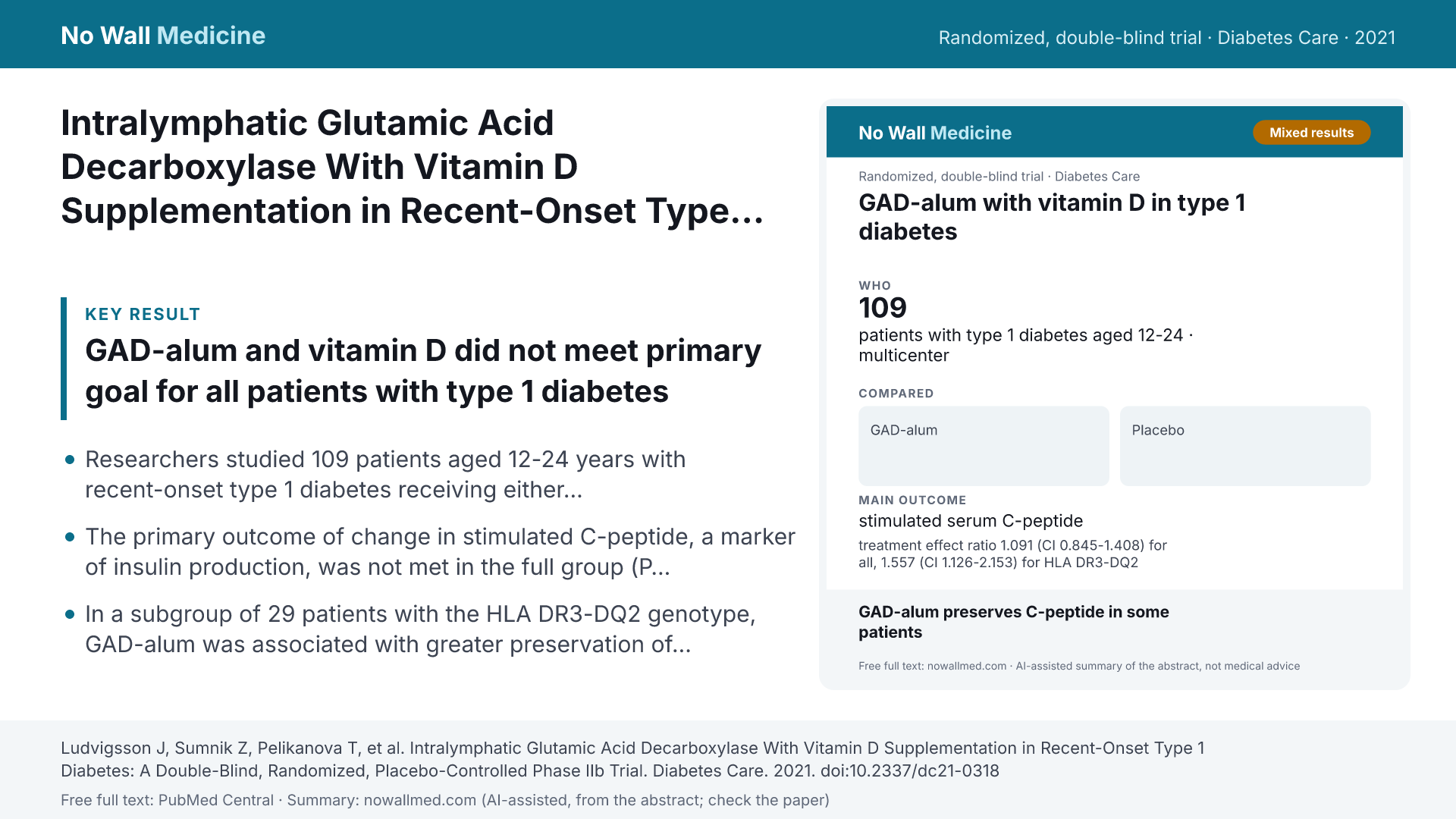
GAD-alum and vitamin D did not meet primary goal for all patients with type 1 diabetes
Intralymphatic Glutamic Acid Decarboxylase With Vitamin D Supplementation in Recent-Onset Type 1 Diabetes: A Double-Blind, Randomized, Placebo-Controlled Phase IIb Trial
Randomized, double-blind trialMixed results
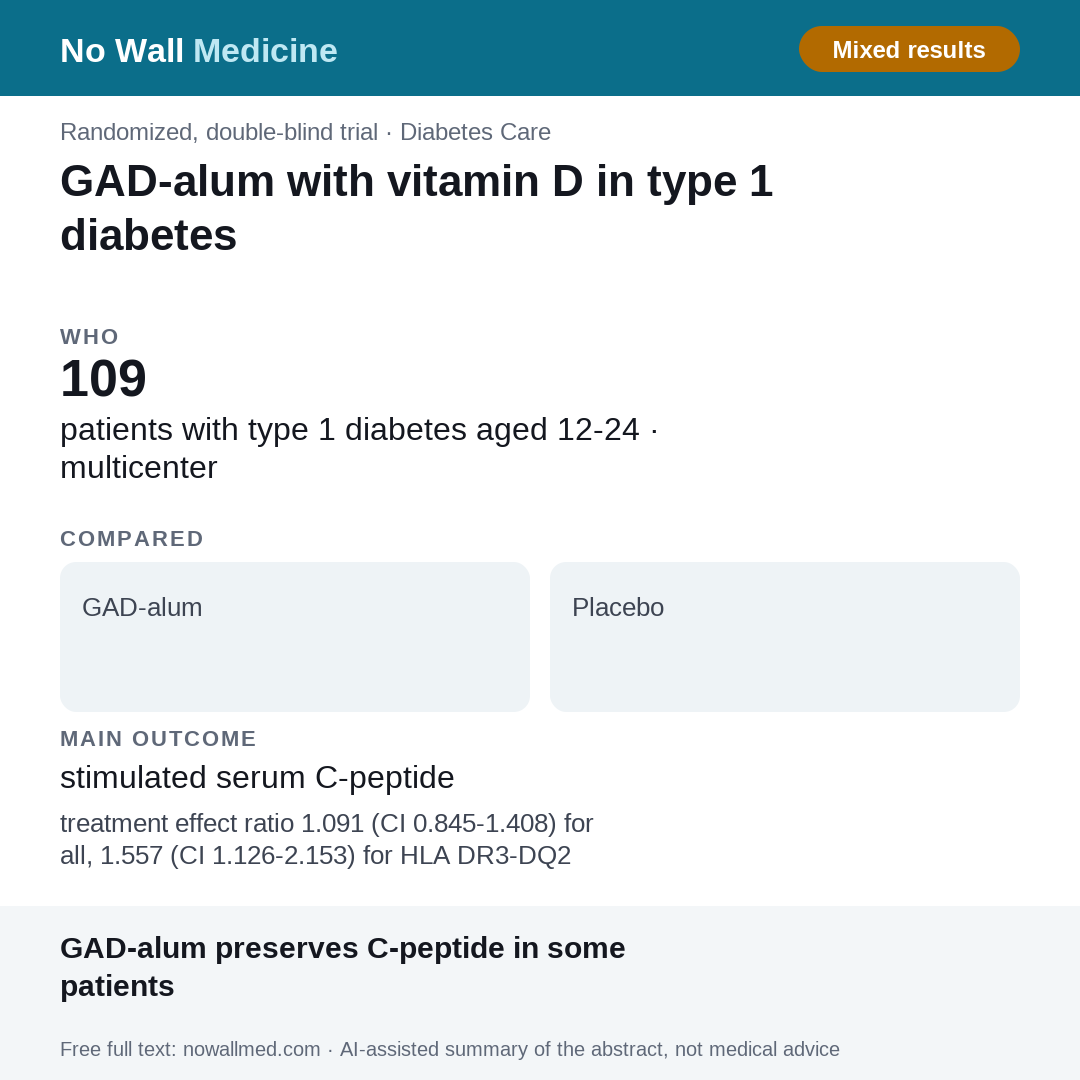
GAD-alum with vitamin D in type 1 diabetes
Who
109
patients with type 1 diabetes aged 12-24 · multicenter
Compared
GAD-alum
Placebo
Main outcome
stimulated serum C-peptide
Result: treatment effect ratio 1.091 (CI 0.845-1.408) for all, 1.557 (CI 1.126-2.153) for HLA DR3-DQ2 subgroup
Bottom line: GAD-alum preserves C-peptide in some patients
Limitation: minor transient injection site reactions
Diabetes Care · 2021-05-21Download image
Why it matters: It is unknown if combining intralymphatic GAD-alum therapy with vitamin D supplementation can preserve insulin secretion in all patients with recent-onset type 1 diabetes.
Key points
- Researchers studied 109 patients aged 12-24 years with recent-onset type 1 diabetes receiving either GAD-alum injections with vitamin D or a placebo.
- The primary outcome of change in stimulated C-peptide, a marker of insulin production, was not met in the full group (P = 0.5009).
- In a subgroup of 29 patients with the HLA DR3-DQ2 genotype, GAD-alum was associated with greater preservation of C-peptide AUC (treatment effect ratio 1.557; P = 0.0078).
Headline and key points written with AI from the paper’s abstract, with every number checked against it. Read the paper before relying on them.
Was this summary helpful?
Subject terms
Cite this article
Ludvigsson J, Sumnik Z, Pelikanova T, Nattero Chavez L, Lundberg E, Rica I. Intralymphatic Glutamic Acid Decarboxylase With Vitamin D Supplementation in Recent-Onset Type 1 Diabetes: A Double-Blind, Randomized, Placebo-Controlled Phase IIb Trial. Diabetes Care. 2021. doi:10.2337/dc21-0318
Spotted a mistake? Suggest a correction
Top studies every Monday
The week’s key trials and guidelines in your specialties, plus any topics you follow. By email, free.
Get the weekly digest