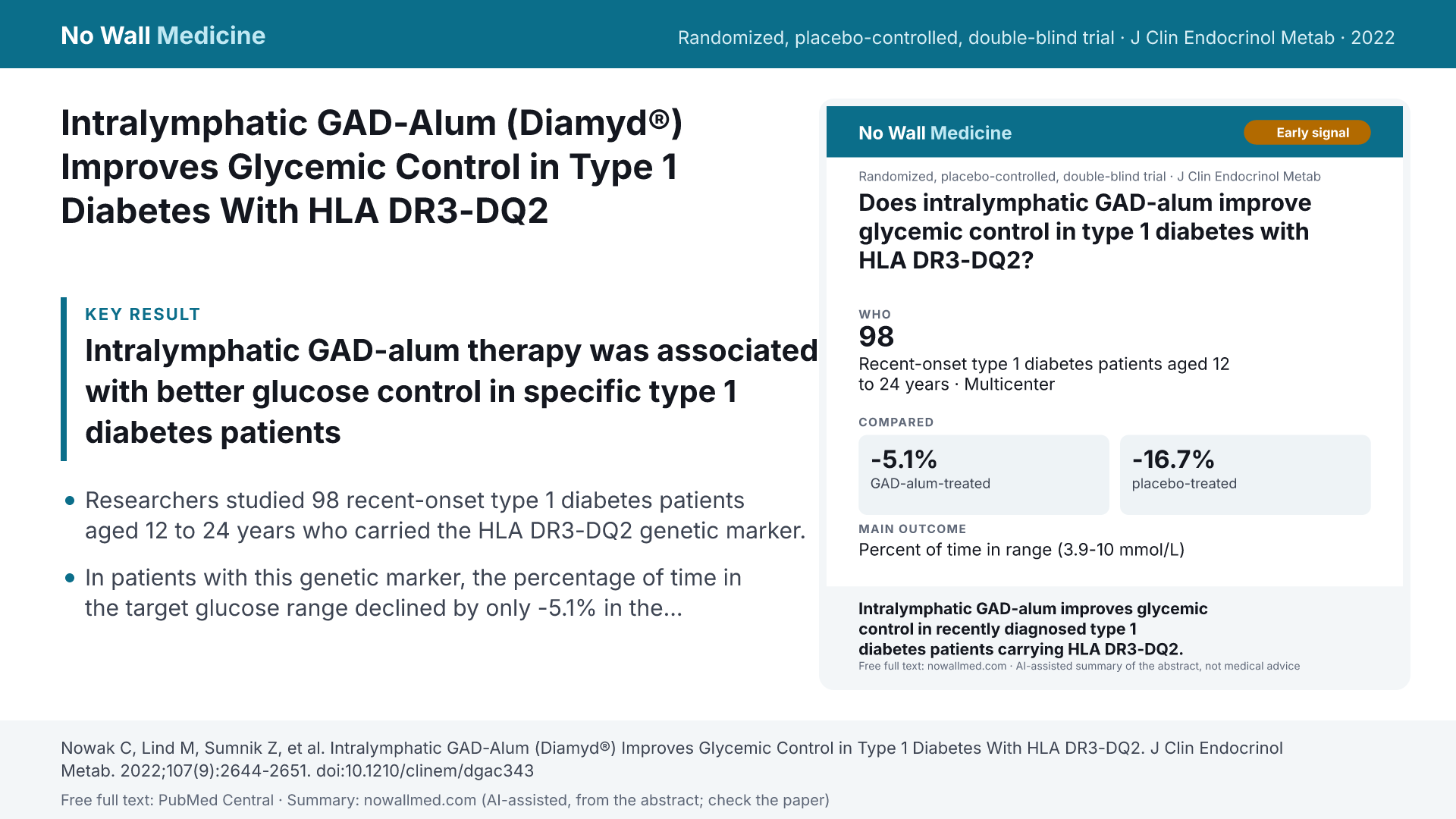
Intralymphatic GAD-alum therapy was associated with better glucose control in specific type 1 diabetes patients
Intralymphatic GAD-Alum (Diamyd®) Improves Glycemic Control in Type 1 Diabetes With HLA DR3-DQ2
Randomized, placebo-controlled, double-blind trialBenefit found
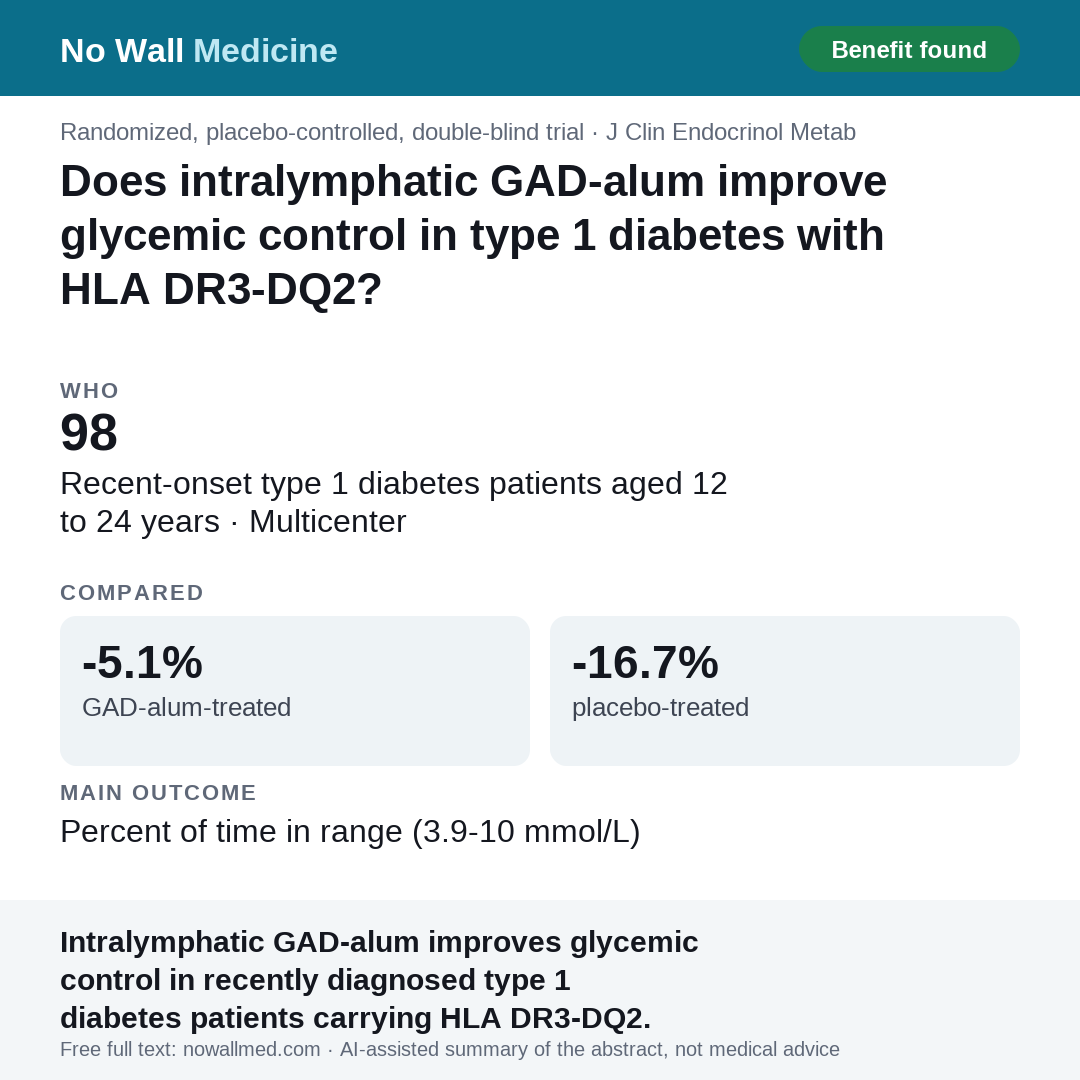
Does intralymphatic GAD-alum improve glycemic control in type 1 diabetes with HLA DR3-DQ2?
Who
98
Recent-onset type 1 diabetes patients aged 12 to 24 years · Multicenter
Compared
-5.1%GAD-alum-treated
-16.7%placebo-treated
Main outcome
Percent of time in range (3.9-10 mmol/L)
Bottom line: Intralymphatic GAD-alum improves glycemic control in recently diagnosed type 1 diabetes patients carrying HLA DR3-DQ2.
J Clin Endocrinol Metab · 2022-06-07Download image
Clinical question: Does intralymphatic GAD-alum improve glycemic control in type 1 diabetes with HLA DR3-DQ2?
Why it matters: It was unknown if intralymphatic GAD-alum therapy, an autoantigen therapy, could improve blood glucose levels as measured by continuous glucose monitoring in patients with the HLA DR3-DQ2 genetic profile.
Key points
- Researchers studied 98 recent-onset type 1 diabetes patients aged 12 to 24 years who carried the HLA DR3-DQ2 genetic marker.
- In patients with this genetic marker, the percentage of time in the target glucose range declined by only -5.1% in the GAD-alum group compared to -16.7% in the placebo group.
- The treatment was associated with reduced time spent with blood glucose above 13.9 mmol/L and a lower increase in glucose variability.
Headline and key points written with AI from the paper’s abstract, with every number checked against it. Read the paper before relying on them.
Was this summary helpful?
Subject terms
Cite this article
Nowak C, Lind M, Sumnik Z, Pelikanova T, Nattero-Chavez L, Lundberg E. Intralymphatic GAD-Alum (Diamyd®) Improves Glycemic Control in Type 1 Diabetes With HLA DR3-DQ2. J Clin Endocrinol Metab. 2022. doi:10.1210/clinem/dgac343
Spotted a mistake? Suggest a correction
Top studies every Monday
The week’s key trials and guidelines in your specialties, plus any topics you follow. By email, free.
Get the weekly digest