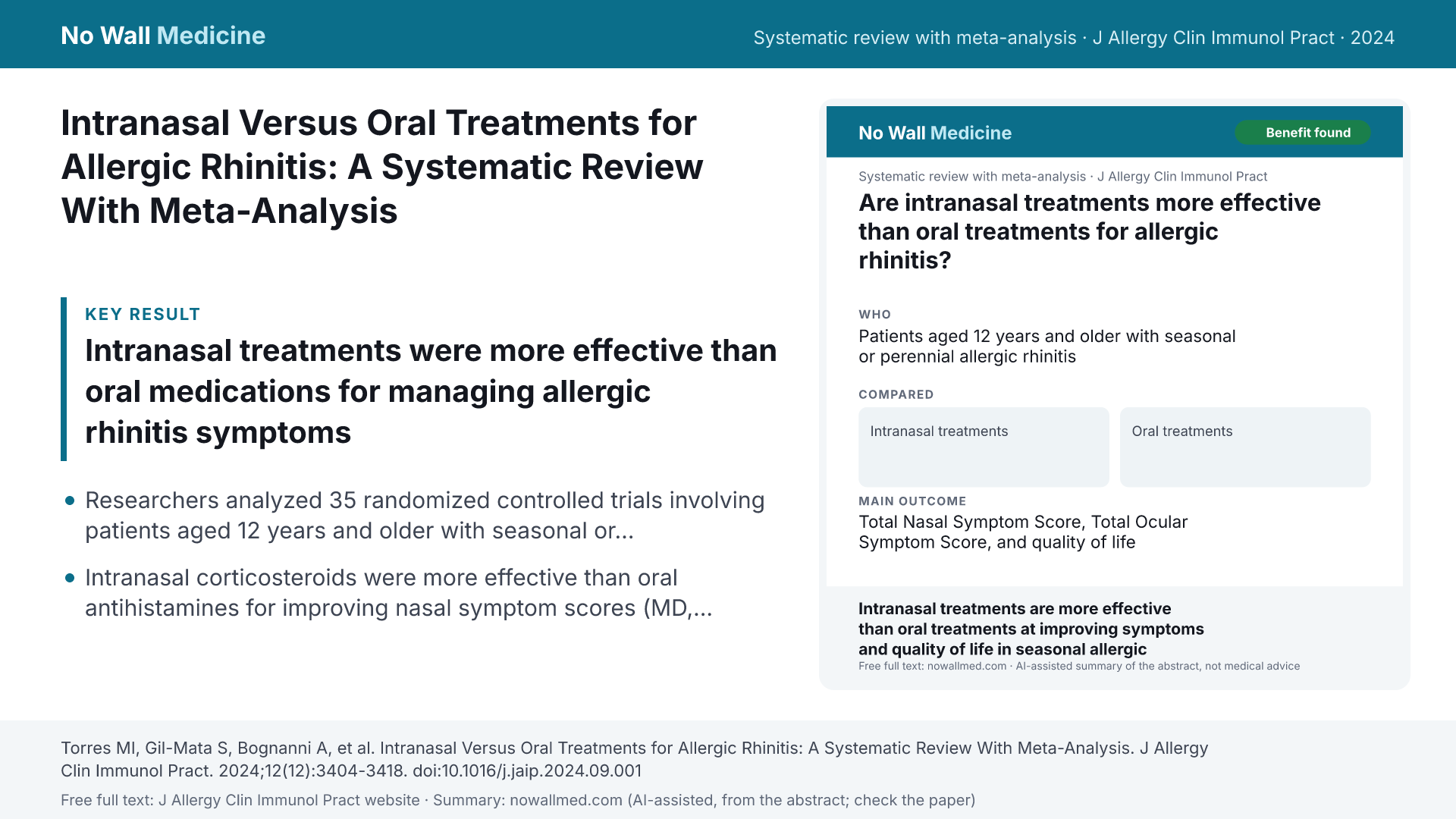
Intranasal treatments were more effective than oral medications for managing allergic rhinitis symptoms
Intranasal Versus Oral Treatments for Allergic Rhinitis: A Systematic Review With Meta-Analysis
Systematic review with meta-analysisBenefit found
Are intranasal treatments more effective than oral treatments for allergic rhinitis?
Who
Patients aged 12 years and older with seasonal or perennial allergic rhinitis
Compared
Intranasal treatments
Oral treatments
Main outcome
Total Nasal Symptom Score, Total Ocular Symptom Score, and quality of life
Result: Superiority of intranasal treatments was found for all assessed outcomes
Bottom line: Intranasal treatments are more effective than oral treatments at improving symptoms and quality of life in seasonal allergic rhinitis.
Limitation: Most studies displayed an unclear risk of bias.
J Allergy Clin Immunol Pract · 2024-09-07 · Save PNG
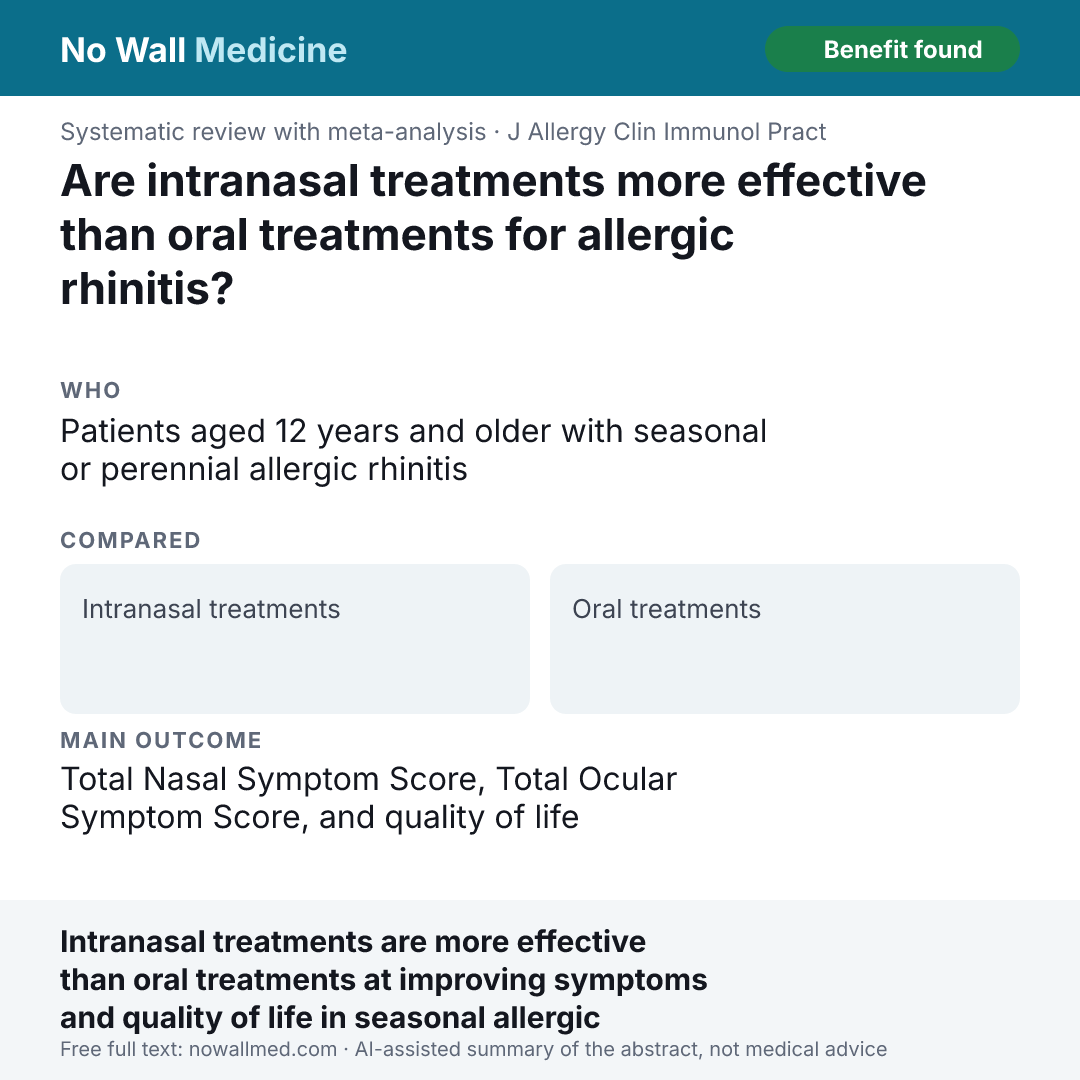
Clinical question: Are intranasal treatments more effective than oral treatments for allergic rhinitis?
Key points
- Researchers analyzed 35 randomized controlled trials involving patients aged 12 years and older with seasonal or perennial allergic rhinitis.
- Intranasal corticosteroids were more effective than oral antihistamines for improving nasal symptom scores (MD, -0.86), eye symptom scores (MD, -0.36), and quality of life (MD, -0.88).
- Intranasal antihistamines were more effective than oral antihistamines for improving nasal symptom scores (MD, -0.47) and quality of life (MD, -0.31).
Limitation the authors note: Most included studies assessed patients with seasonal allergic rhinitis and displayed an unclear risk of bias.
Headline and key points written with AI from the paper’s abstract, with every number checked against it. Read the paper before relying on them.
Was this summary helpful?
Subject terms
Headline, design, result, key points, caveat and citation as plain text.
Cite this article
Torres MI, Gil-Mata S, Bognanni A, et al. Intranasal Versus Oral Treatments for Allergic Rhinitis: A Systematic Review With Meta-Analysis. J Allergy Clin Immunol Pract. 2024;12(12):3404-3418. doi:10.1016/j.jaip.2024.09.001
Spotted a mistake? Suggest a correction