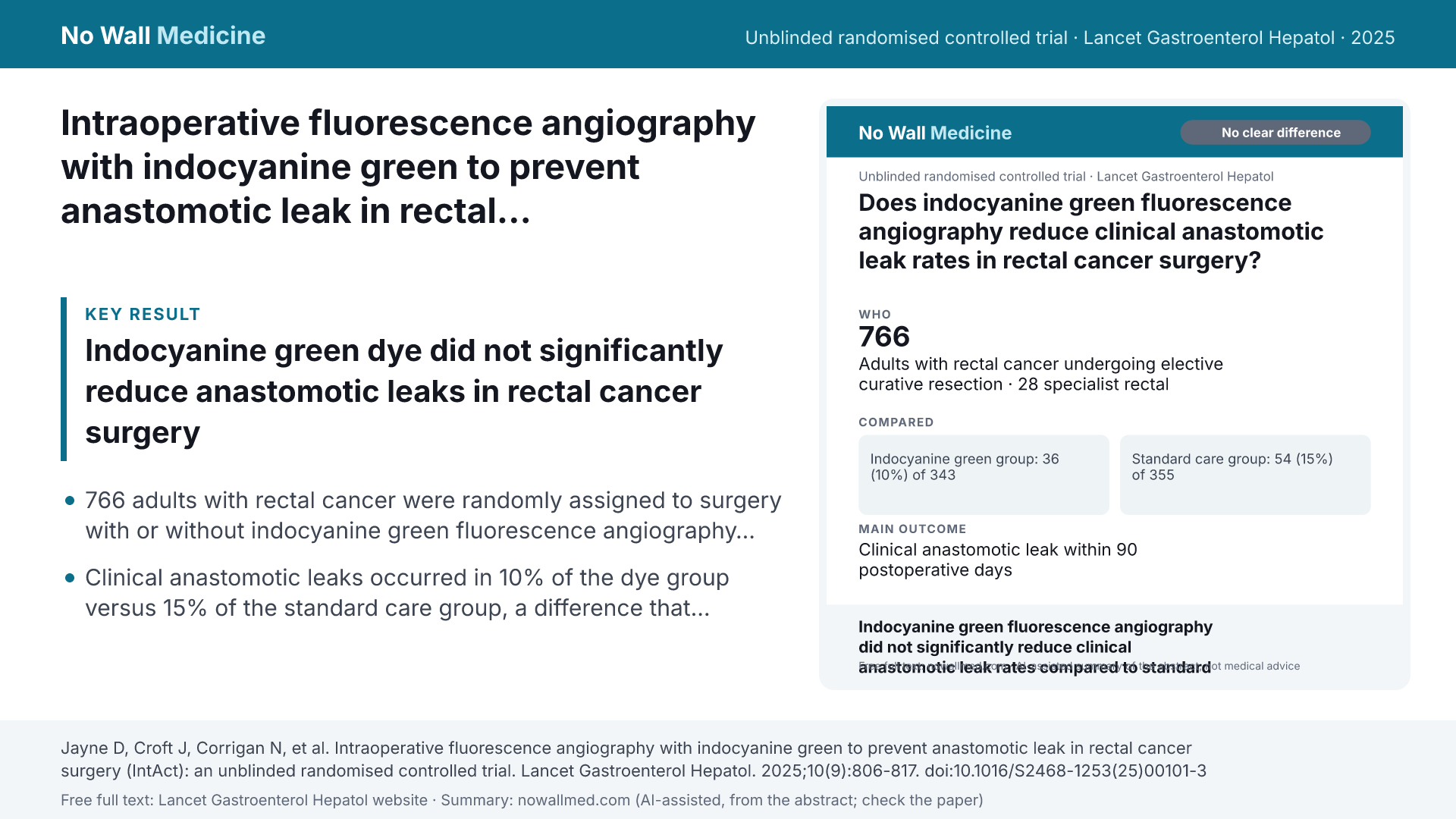
Intraoperative fluorescence angiography with indocyanine green to prevent anastomotic leak in rectal cancer surgery (IntAct): an unblinded randomised controlled trial
Key result: Indocyanine green dye did not significantly reduce anastomotic leaks in rectal cancer surgery
Key points
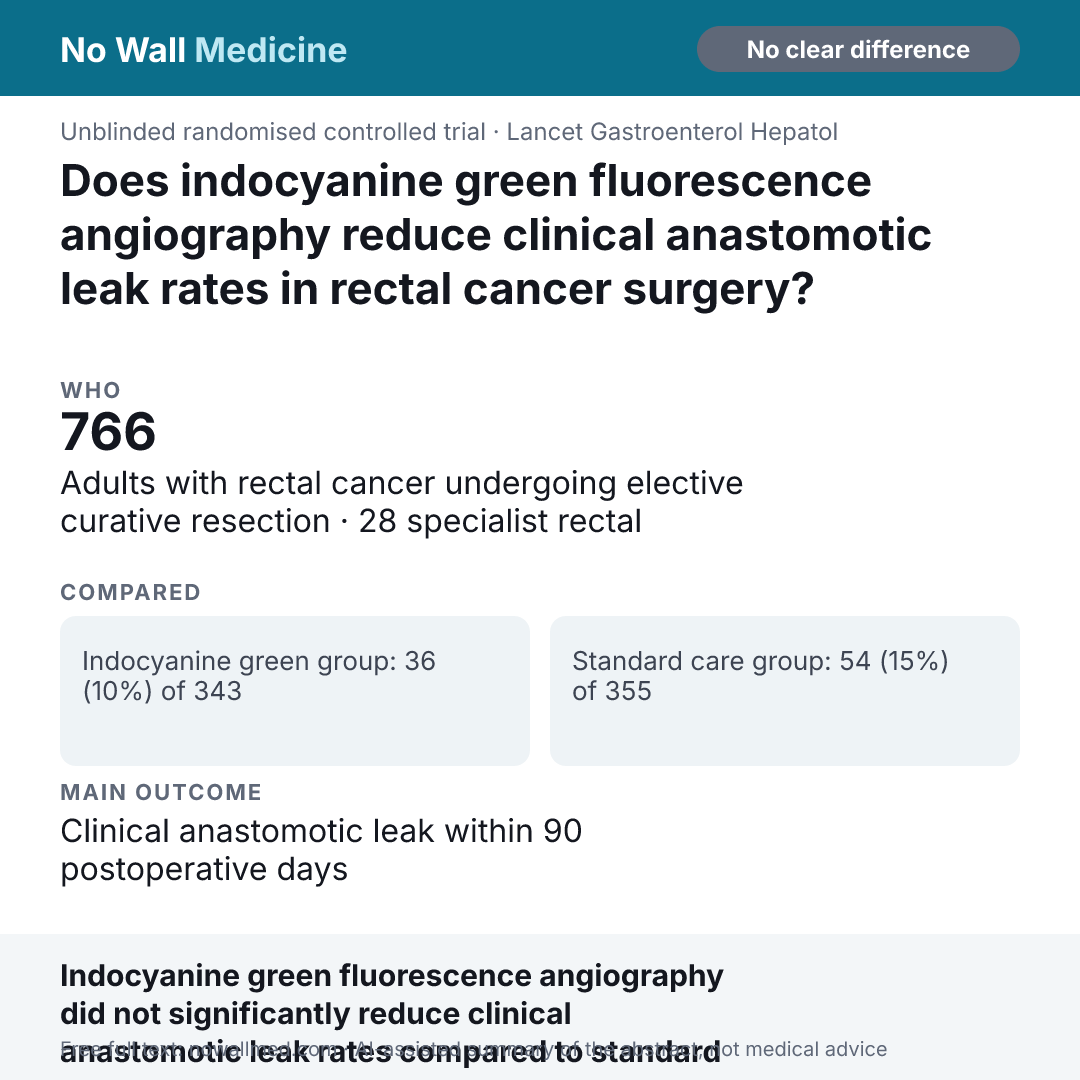
- 766 adults with rectal cancer were randomly assigned to surgery with or without indocyanine green fluorescence angiography at 28 European centres.
- Clinical anastomotic leaks occurred in 10% of the dye group versus 15% of the standard care group, a difference that was not statistically significant.
- No serious adverse events related to the dye were reported, though the study noted a signal towards reduced grade A or B leaks.
Why it matters: Data were mixed on whether indocyanine green fluorescence angiography can reduce the high rate of anastomotic leaks in rectal cancer surgery.
Discussion prompts
- Would these patients look like yours? Who was left out?
- Is the main outcome one that matters to patients?
- Is the difference large enough to change what you do?
Cite: Jayne D, Croft J, Corrigan N, et al. Intraoperative fluorescence angiography with indocyanine green to prevent anastomotic leak in rectal cancer surgery (IntAct): an unblinded randomised controlled trial. Lancet Gastroenterol Hepatol. 2025;10(9):806-817. doi:10.1016/S2468-1253(25)00101-3
Free full text: Lancet Gastroenterol Hepatol website · Summary and visual abstract: nowallmed.com/a/intraoperative-fluorescence-angiography-with-indocyanine-green-to-9x3vfa/ (AI-assisted from the abstract; check the paper before relying on it).