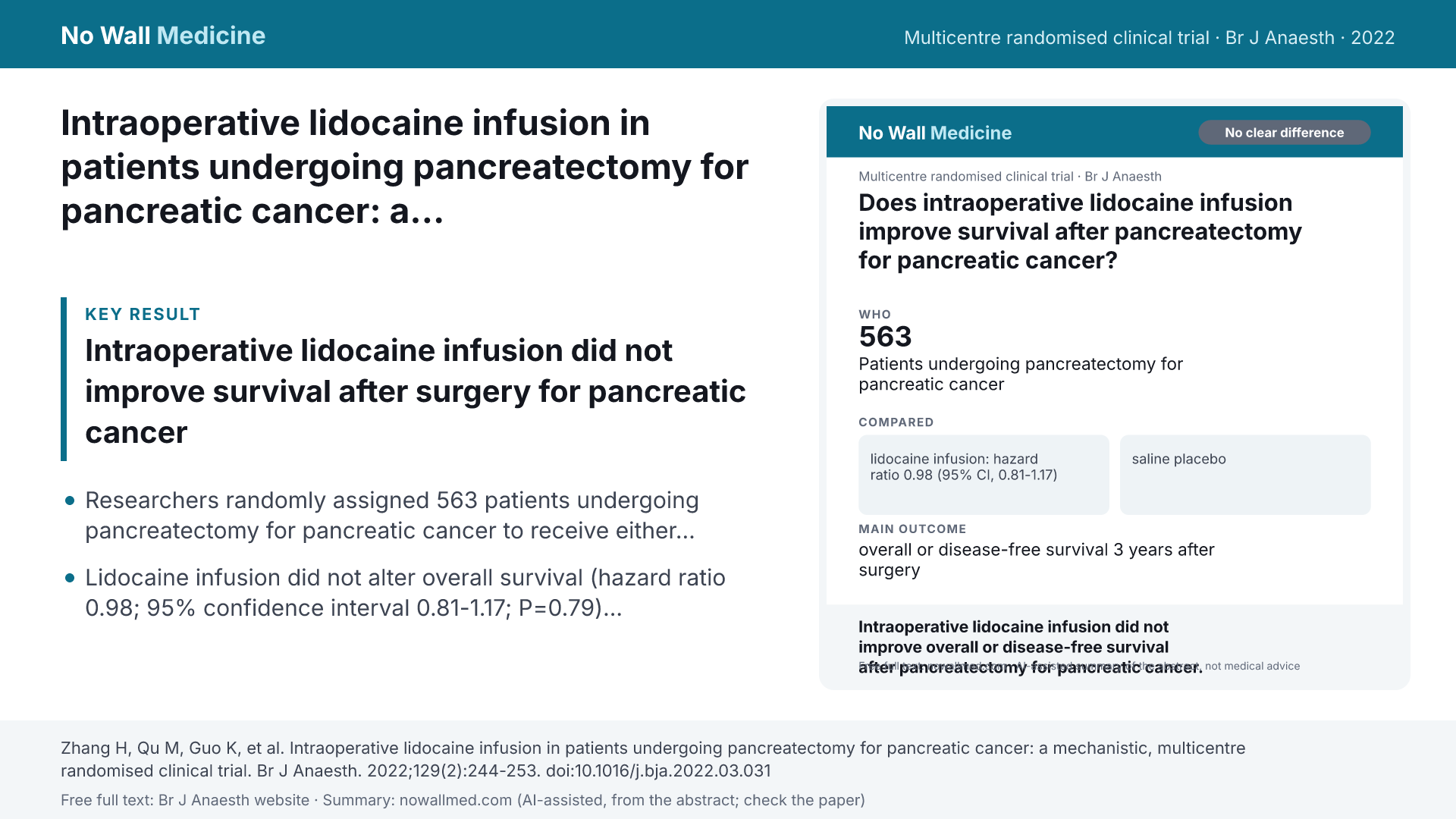
Intraoperative lidocaine infusion in patients undergoing pancreatectomy for pancreatic cancer: a mechanistic, multicentre randomised clinical trial
Key result: Intraoperative lidocaine infusion did not improve survival after surgery for pancreatic cancer
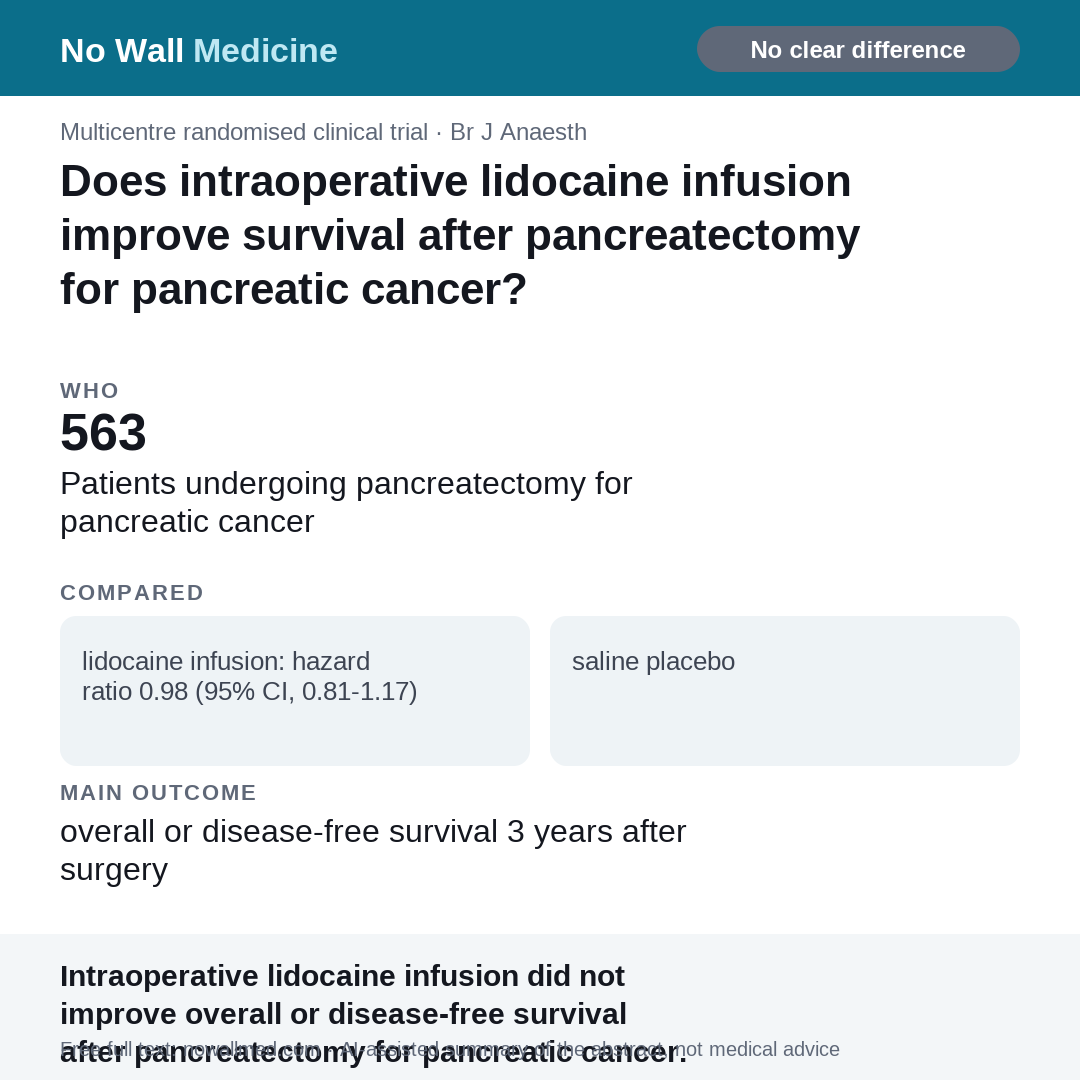
Multicentre randomised clinical trialNo clear difference
Does intraoperative lidocaine infusion improve survival after pancreatectomy for pancreatic cancer?
Who
563
Patients undergoing pancreatectomy for pancreatic cancer
Compared
lidocaine infusion: hazard ratio 0.98 (95% CI, 0.81-1.17)
saline placebo
Main outcome
overall or disease-free survival 3 years after surgery
Result: hazard ratio 0.98 (95% CI, 0.81-1.17)
Bottom line: Intraoperative lidocaine infusion did not improve overall or disease-free survival after pancreatectomy for pancreatic cancer.
Br J Anaesth · 2022-06-11Download image
Key points
- Researchers randomly assigned 563 patients undergoing pancreatectomy for pancreatic cancer to receive either an intravenous lidocaine infusion or a saline placebo.
- Lidocaine infusion did not alter overall survival (hazard ratio 0.98; 95% confidence interval 0.81-1.17; P=0.79) or disease-free survival (hazard ratio 0.91; 95% confidence interval 0.71-1.17; P=0.44).
- Lidocaine was associated with a lower mean intraoperative sufentanil dose of 47.6 μg [4.6] compared to 68.4 μg [4.8] for placebo, though postoperative complications and hospital stay were similar.
Why it matters: It was unknown if intravenous lidocaine improves long-term survival after pancreatic cancer surgery through anti-inflammatory or anti-tumour effects.
Discussion prompts
- Would these patients look like yours? Who was left out?
- Is the main outcome one that matters to patients?
- Is the difference large enough to change what you do?
Cite: Zhang H, Qu M, Guo K, et al. Intraoperative lidocaine infusion in patients undergoing pancreatectomy for pancreatic cancer: a mechanistic, multicentre randomised clinical trial. Br J Anaesth. 2022. doi:10.1016/j.bja.2022.03.031
Free full text: Br J Anaesth website · Summary and visual abstract: nowallmed.com/a/intraoperative-lidocaine-infusion-in-patients-undergoing-1esbzh/ (AI-assisted from the abstract; check the paper before relying on it).