Intraoperative Ureteral Stent Use at Radical Cystectomy is Associated with Higher 30-Day Complication Rates
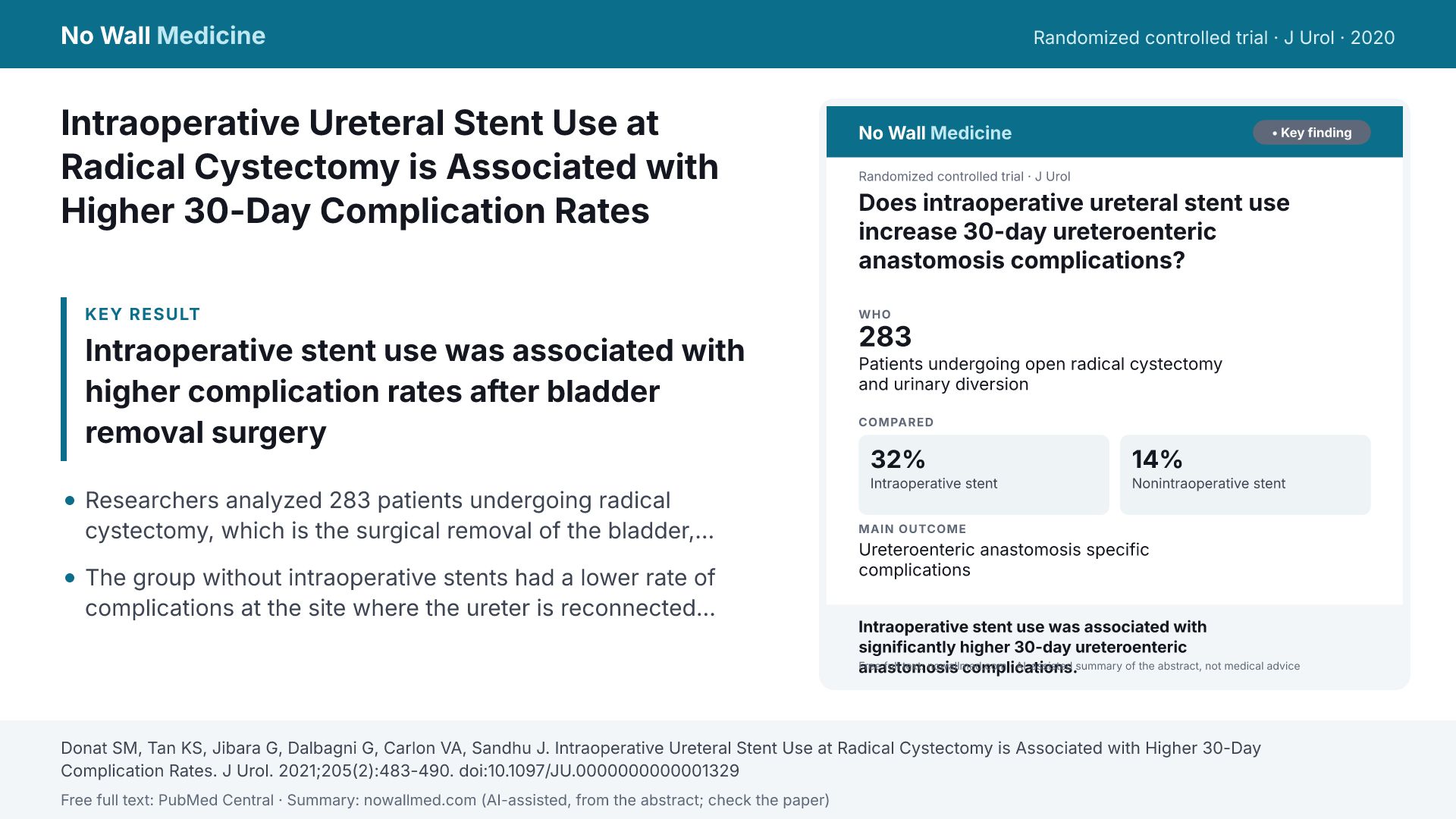
Key result: Intraoperative stent use was associated with higher complication rates after bladder removal surgery
Randomized controlled trialKey finding
Does intraoperative ureteral stent use increase 30-day ureteroenteric anastomosis complications?
Who
283
Patients undergoing open radical cystectomy and urinary diversion
Compared
32%Intraoperative stent
14%Nonintraoperative stent
Main outcome
Ureteroenteric anastomosis specific complications
Result: odds ratio 3.55 (95% CI 2.93-4.31)
Bottom line: Intraoperative stent use was associated with significantly higher 30-day ureteroenteric anastomosis complications.
J Urol · 2020-08-17
Key points
- Researchers analyzed 283 patients undergoing radical cystectomy, which is the surgical removal of the bladder, to compare outcomes between those receiving intraoperative stents and those who did not.
- The group without intraoperative stents had a lower rate of complications at the site where the ureter is reconnected to the urinary diversion (14% vs 32%).
- Using multivariable logistic regression, intraoperative stent use was associated with increased odds of urinary complications (OR 3.55, 95% CI 2.93-4.31).
Discussion prompts
- Would these patients look like yours? Who was left out?
- Is the main outcome one that matters to patients?
- Is the difference large enough to change what you do?
Cite: Donat SM, Tan KS, Jibara G, Dalbagni G, Carlon VA, Sandhu J. Intraoperative Ureteral Stent Use at Radical Cystectomy is Associated with Higher 30-Day Complication Rates. J Urol. 2021;205(2):483-490. doi:10.1097/JU.0000000000001329
Free full text: PubMed Central · Summary and visual abstract: nowallmed.com/a/intraoperative-ureteral-stent-use-at-radical-cystectomy-is-associated-rg3mp8/ (AI-assisted from the abstract; check the paper before relying on it).