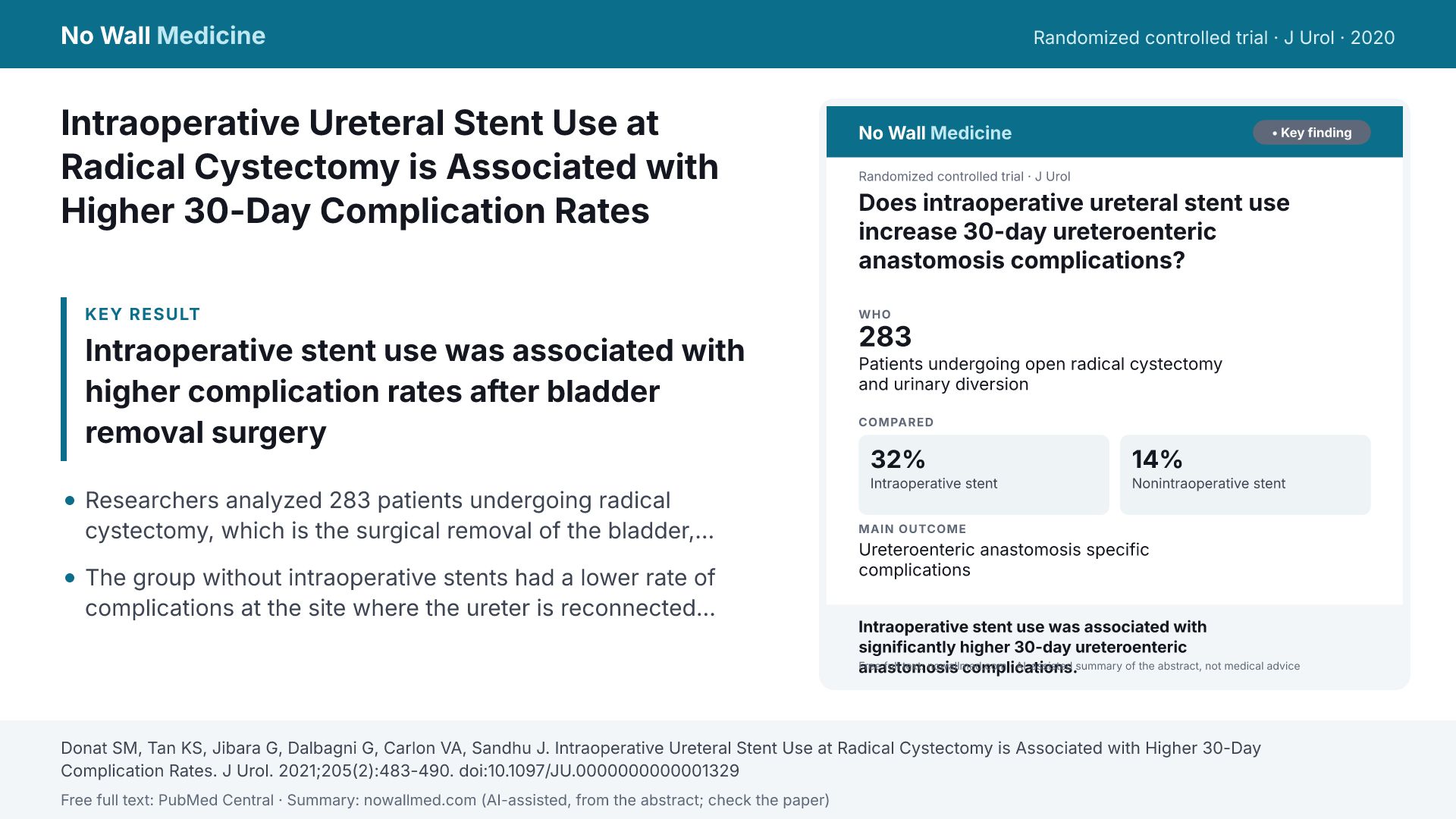
Intraoperative stent use was associated with higher complication rates after bladder removal surgery
Intraoperative Ureteral Stent Use at Radical Cystectomy is Associated with Higher 30-Day Complication Rates
Randomized controlled trialKey finding
Does intraoperative ureteral stent use increase 30-day ureteroenteric anastomosis complications?
Who
283
Patients undergoing open radical cystectomy and urinary diversion
Compared
32%Intraoperative stent
14%Nonintraoperative stent
Main outcome
Ureteroenteric anastomosis specific complications
Result: odds ratio 3.55 (95% CI 2.93-4.31)
Bottom line: Intraoperative stent use was associated with significantly higher 30-day ureteroenteric anastomosis complications.
J Urol · 2020-08-17Download image
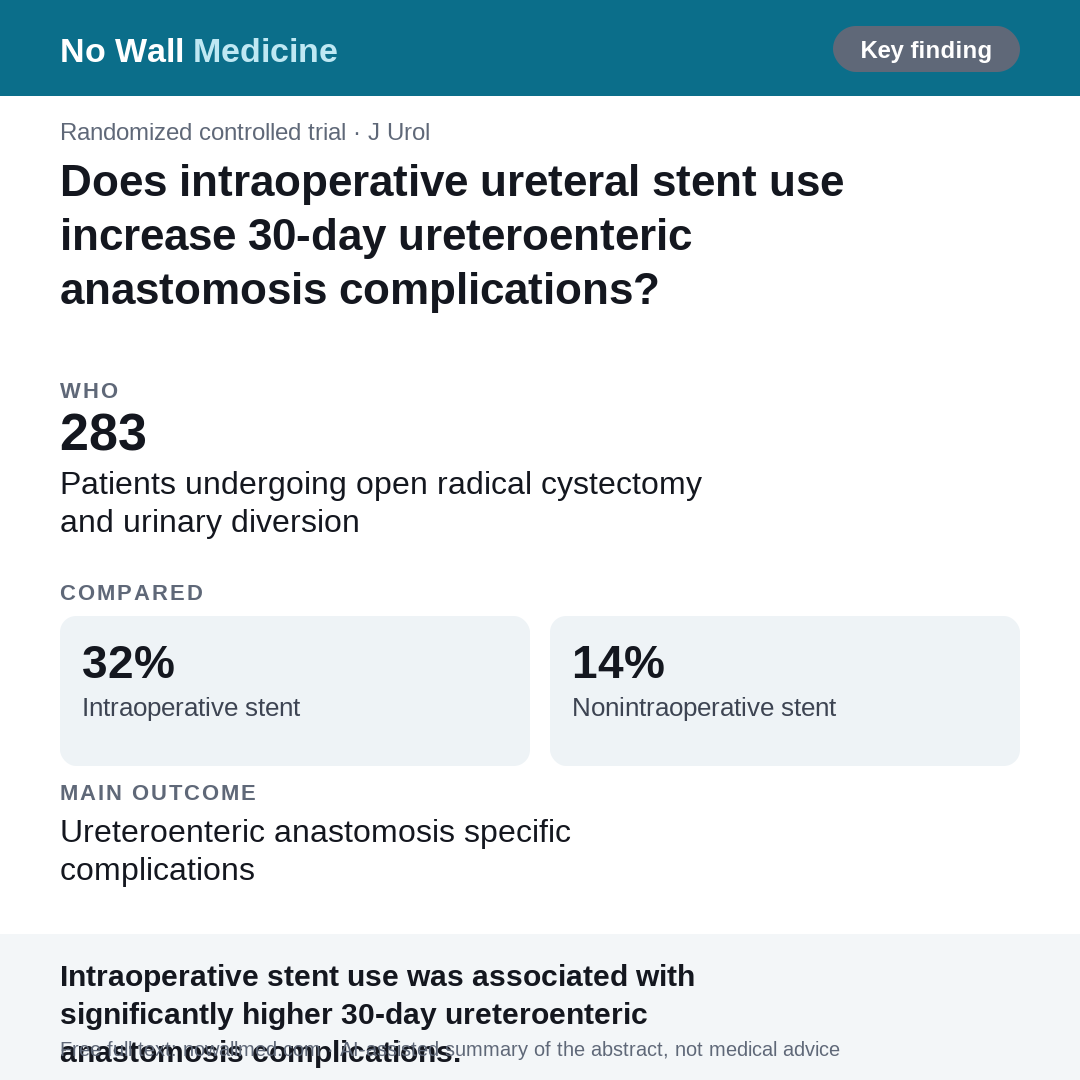
Clinical question: Does intraoperative ureteral stent use increase 30-day ureteroenteric anastomosis complications?
Key points
- Researchers analyzed 283 patients undergoing radical cystectomy, which is the surgical removal of the bladder, to compare outcomes between those receiving intraoperative stents and those who did not.
- The group without intraoperative stents had a lower rate of complications at the site where the ureter is reconnected to the urinary diversion (14% vs 32%).
- Using multivariable logistic regression, intraoperative stent use was associated with increased odds of urinary complications (OR 3.55, 95% CI 2.93-4.31).
Headline and key points written with AI from the paper’s abstract, with every number checked against it. Read the paper before relying on them.
Was this summary helpful?
Subject terms
Headline, design, result, key points, caveat and citation as plain text.
Cite this article
Donat SM, Tan KS, Jibara G, Dalbagni G, Carlon VA, Sandhu J. Intraoperative Ureteral Stent Use at Radical Cystectomy is Associated with Higher 30-Day Complication Rates. J Urol. 2020. doi:10.1097/JU.0000000000001329
Spotted a mistake? Suggest a correction