Retrosigmoid ileal conduit shows no significant difference in ureter narrowing compared to conventional methods
Ureteroenteric strictures following retrosigmoid vs. conventional ileal conduit - The MOSAIC study (The DaBlaCa-16 study)
Randomized controlled trialNo clear difference
Does a retrosigmoid ileal conduit reduce left-sided ureteroenteric strictures compared to conventional conduit?
Who
303
Patients undergoing robot-assisted radical cystectomy · Multicentre
Compared
4.1%Retrosigmoid ileal conduit (six of 148)
6.7%Conventional ileal conduit (10 of 149)
Main outcome
Rate of left-sided ureteroenteric strictures
Bottom line: The retrosigmoid ileal conduit did not significantly reduce left-sided ureteroenteric strictures compared to the conventional approach.
BJU Int · 2025-09-11Download image
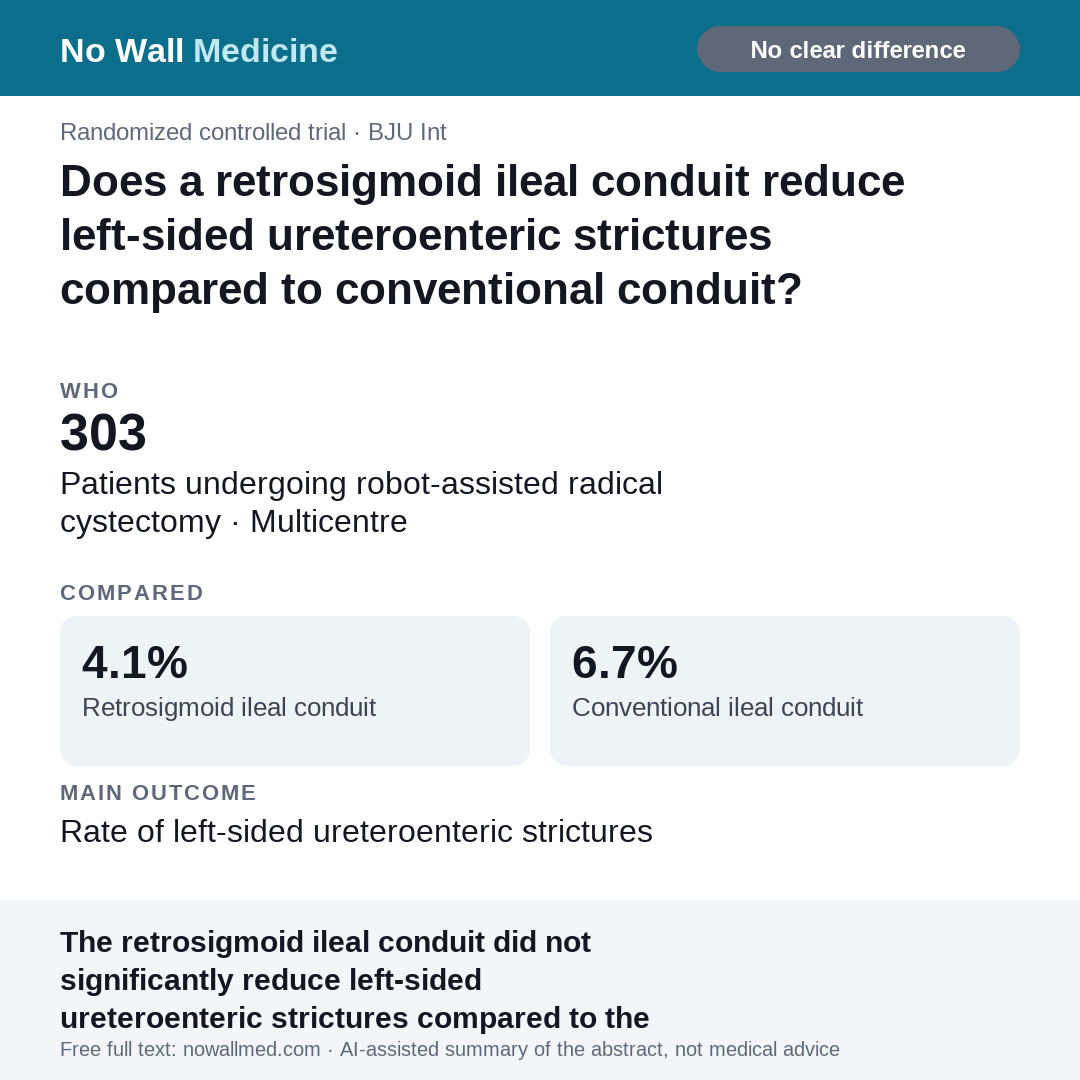
Clinical question: Does a retrosigmoid ileal conduit reduce left-sided ureteroenteric strictures compared to conventional conduit?
Key points
- Researchers conducted a randomized controlled trial involving 303 patients undergoing robot-assisted radical cystectomy, a surgery to remove the bladder.
- At a median follow-up of 754 days, the rate of left-sided ureteroenteric strictures, or narrowing of the connection between the ureter and bowel, was 4.1% in the retrosigmoid group and 6.7% in the conventional group.
- There were no significant differences observed in postoperative creatinine clearance, which measures kidney function, or metabolic complications like vitamin B12 deficiency and metabolic acidosis.
Headline and key points written with AI from the paper’s abstract, with every number checked against it. Read the paper before relying on them.
Topics
Cite this article
Brandt SB, Körner SK, Milling RV, Nielsen NK, Joensen UN, Bro L. Ureteroenteric strictures following retrosigmoid vs. conventional ileal conduit - The MOSAIC study (The DaBlaCa-16 study). BJU Int. 2025. doi:10.1111/bju.16894
Spotted a mistake? Suggest a correction
Top studies every Monday
The week’s key trials and guidelines in your specialties, plus any topics you follow. By email, free.
Get the weekly digest