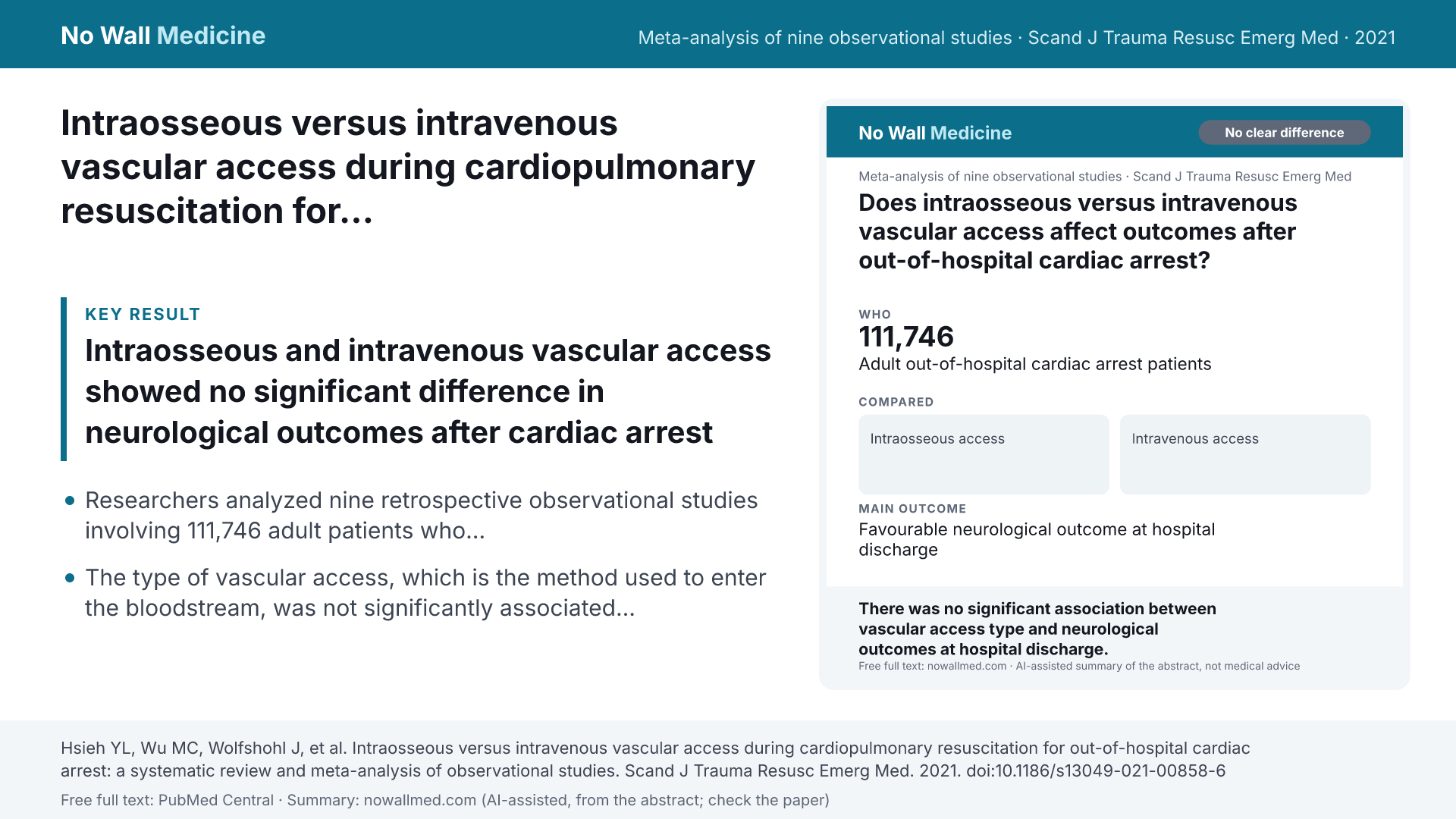
Intraosseous versus intravenous vascular access during cardiopulmonary resuscitation for out-of-hospital cardiac arrest: a systematic review and meta-analysis of observational studies
Key result: Intraosseous and intravenous vascular access showed no significant difference in neurological outcomes after cardiac arrest
Key points
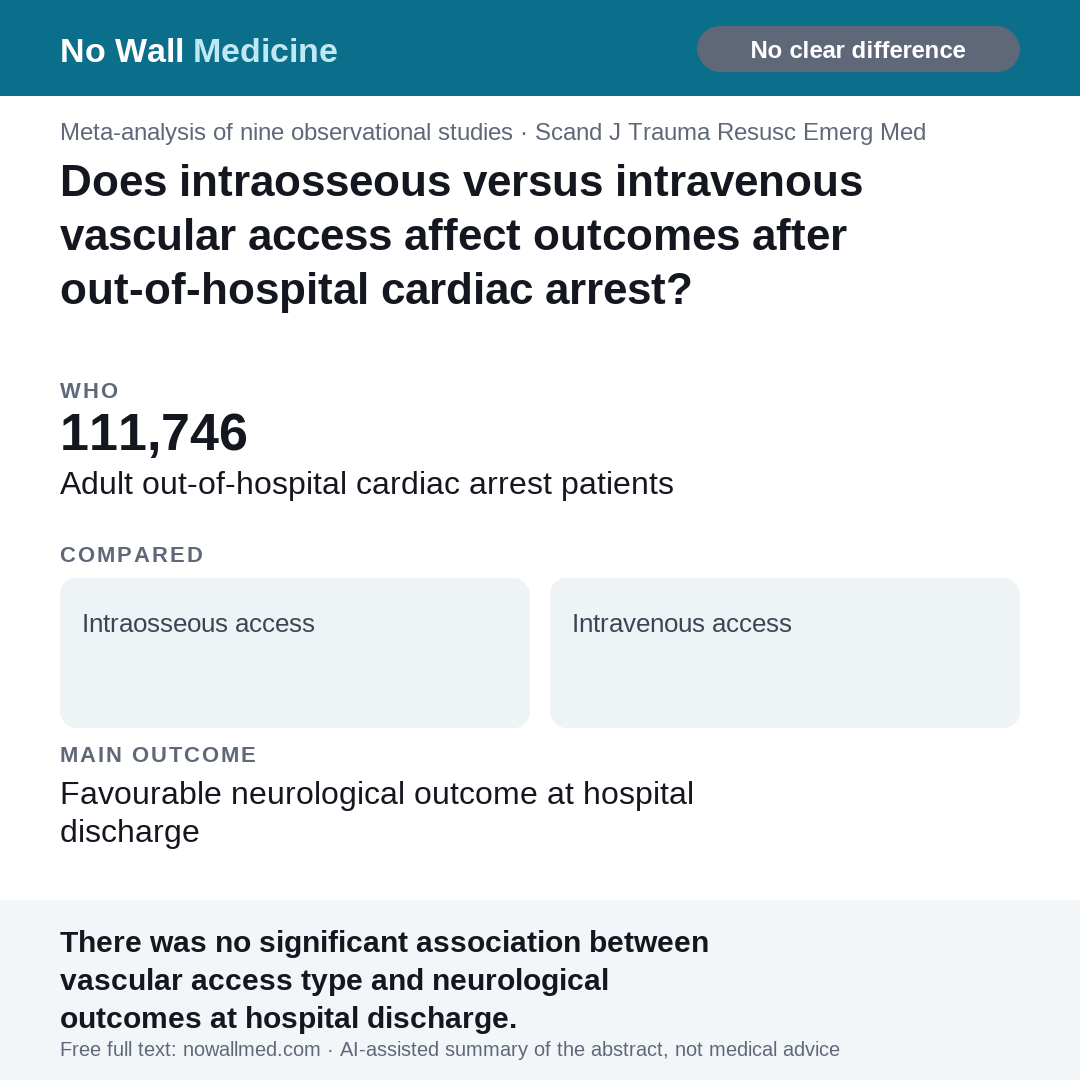
- Researchers analyzed nine retrospective observational studies involving 111,746 adult patients who experienced out-of-hospital cardiac arrest.
- The type of vascular access, which is the method used to enter the bloodstream, was not significantly associated with favorable neurological outcomes at hospital discharge (OR, 0.60; 95% CI, 0.27-1.33).
- Time to intervention was associated with the primary outcome (OR: 3.95, 95% CI, 1.42-11.02, p: 0.02) and could influence the results of pooled studies.
Why it matters: It is unknown whether using intraosseous access, which involves placing a needle into the bone, provides different neurological outcomes compared to intravenous access during resuscitation.
Limitation the authors note: The study was a meta-analysis of retrospective observational studies.
Discussion prompts
- Would these patients look like yours? Who was left out?
- Is the main outcome one that matters to patients?
- Is the difference large enough to change what you do?
Cite: Hsieh YL, Wu MC, Wolfshohl J, d'Etienne J, Huang CH, Lu TC. Intraosseous versus intravenous vascular access during cardiopulmonary resuscitation for out-of-hospital cardiac arrest: a systematic review and meta-analysis of observational studies. Scand J Trauma Resusc Emerg Med. 2021. doi:10.1186/s13049-021-00858-6
Free full text: PubMed Central · Summary and visual abstract: nowallmed.com/a/intraosseous-versus-intravenous-vascular-access-during-8en5fw/ (AI-assisted from the abstract; check the paper before relying on it).