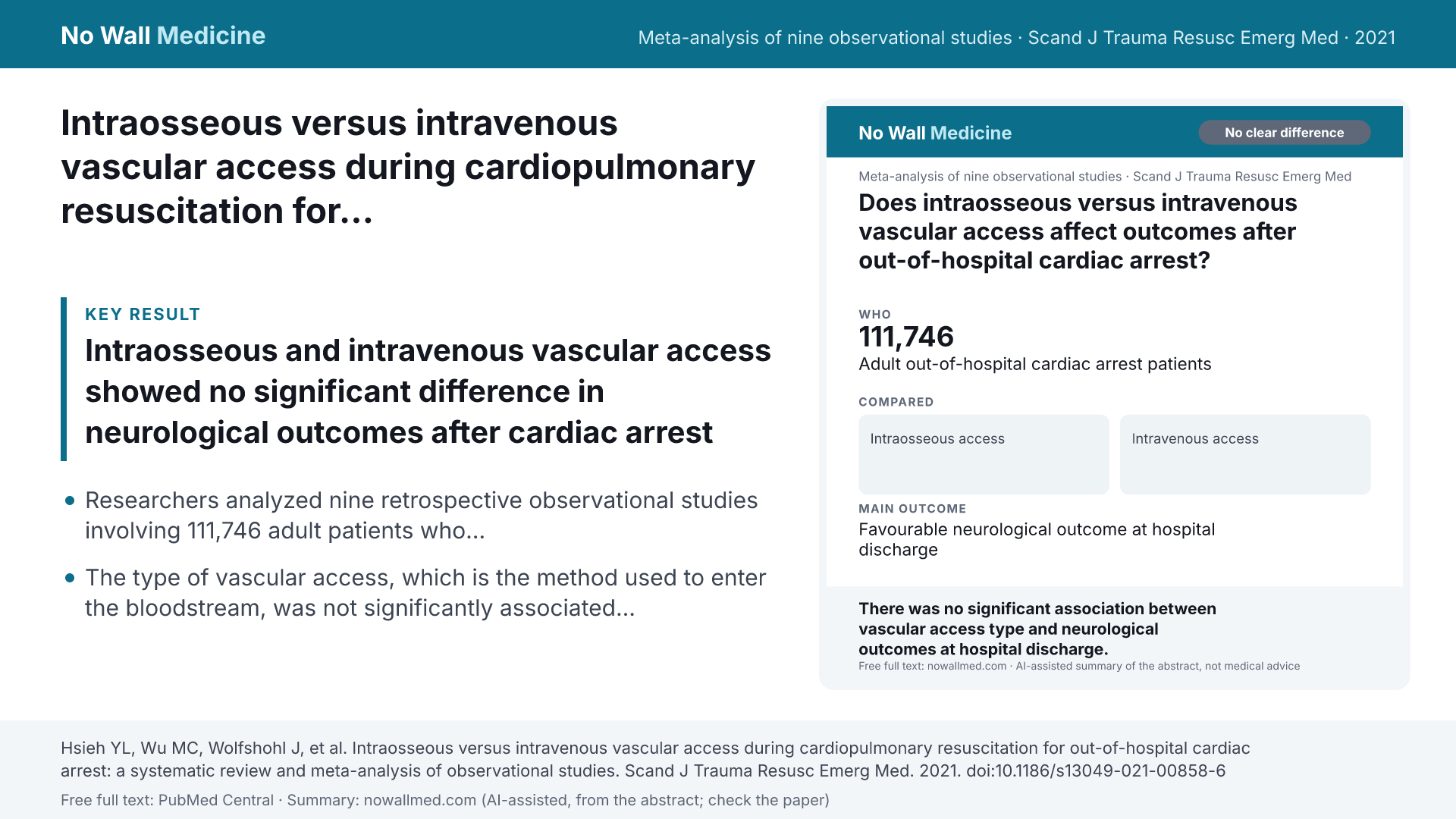
Intraosseous and intravenous vascular access showed no significant difference in neurological outcomes after cardiac arrest
Intraosseous versus intravenous vascular access during cardiopulmonary resuscitation for out-of-hospital cardiac arrest: a systematic review and meta-analysis of observational studies
Meta-analysis of nine observational studiesNo clear difference
Does intraosseous versus intravenous vascular access affect outcomes after out-of-hospital cardiac arrest?
Who
111,746
Adult out-of-hospital cardiac arrest patients
Compared
Intraosseous access
Intravenous access
Main outcome
Favourable neurological outcome at hospital discharge
Result: odds ratio 0.60 (95% CI 0.27-1.33)
Bottom line: There was no significant association between vascular access type and neurological outcomes at hospital discharge.
Limitation: The study included retrospective observational studies rather than randomized clinical trials.
Scand J Trauma Resusc Emerg Med · 2021-03-08Download image
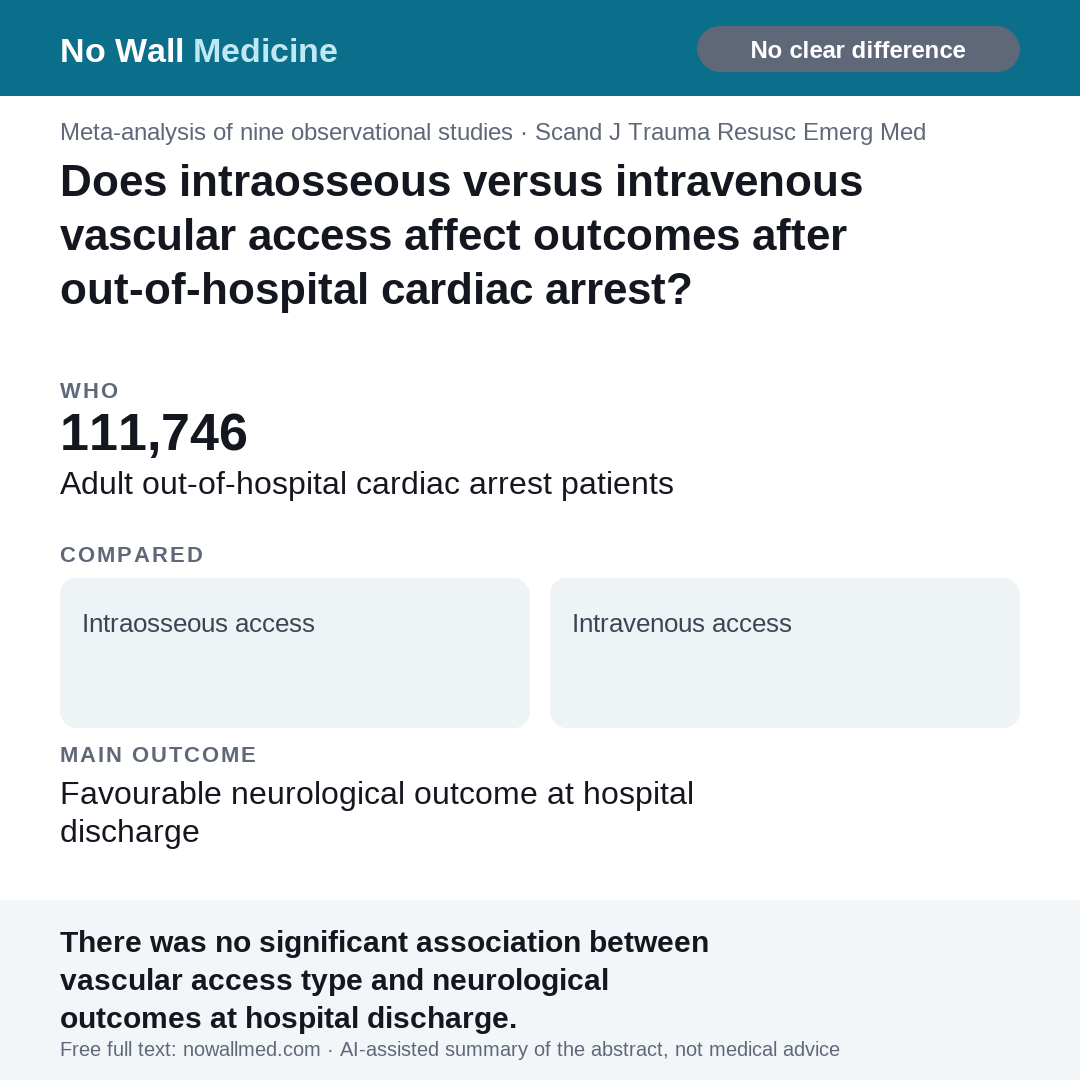
Clinical question: Does intraosseous versus intravenous vascular access affect outcomes after out-of-hospital cardiac arrest?
Why it matters: It is unknown whether using intraosseous access, which involves placing a needle into the bone, provides different neurological outcomes compared to intravenous access during resuscitation.
Key points
- Researchers analyzed nine retrospective observational studies involving 111,746 adult patients who experienced out-of-hospital cardiac arrest.
- The type of vascular access, which is the method used to enter the bloodstream, was not significantly associated with favorable neurological outcomes at hospital discharge (OR, 0.60; 95% CI, 0.27-1.33).
- Time to intervention was associated with the primary outcome (OR: 3.95, 95% CI, 1.42-11.02, p: 0.02) and could influence the results of pooled studies.
Limitation the authors note: The study was a meta-analysis of retrospective observational studies.
Headline and key points written with AI from the paper’s abstract, with every number checked against it. Read the paper before relying on them.
Was this summary helpful?
Subject terms
Cite this article
Hsieh YL, Wu MC, Wolfshohl J, d'Etienne J, Huang CH, Lu TC. Intraosseous versus intravenous vascular access during cardiopulmonary resuscitation for out-of-hospital cardiac arrest: a systematic review and meta-analysis of observational studies. Scand J Trauma Resusc Emerg Med. 2021. doi:10.1186/s13049-021-00858-6
Spotted a mistake? Suggest a correction