Intravenous sodium thiosulphate for vascular calcification of hemodialysis patients-a systematic review and meta-analysis
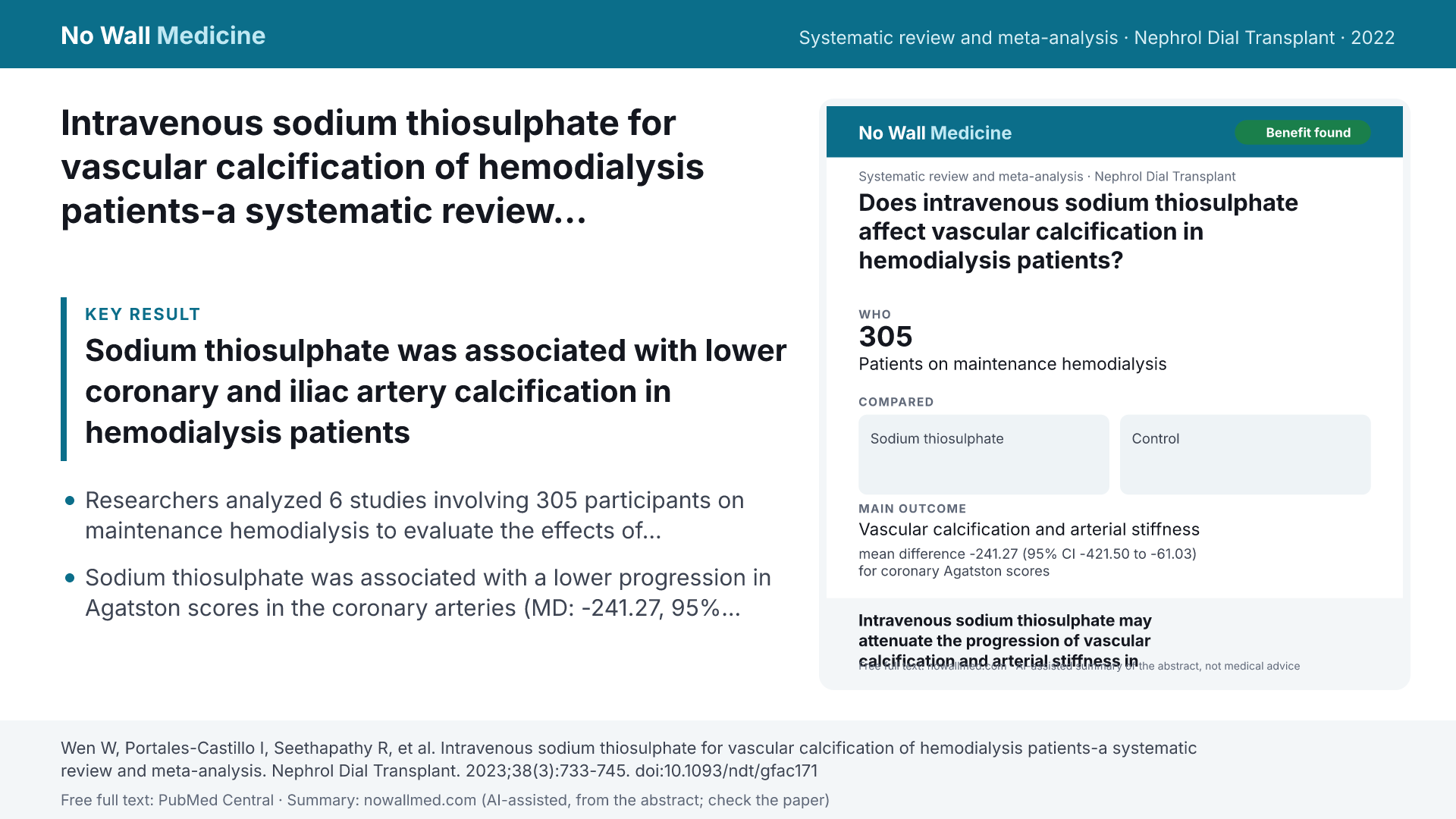
Key result: Sodium thiosulphate was associated with lower coronary and iliac artery calcification in hemodialysis patients
Key points
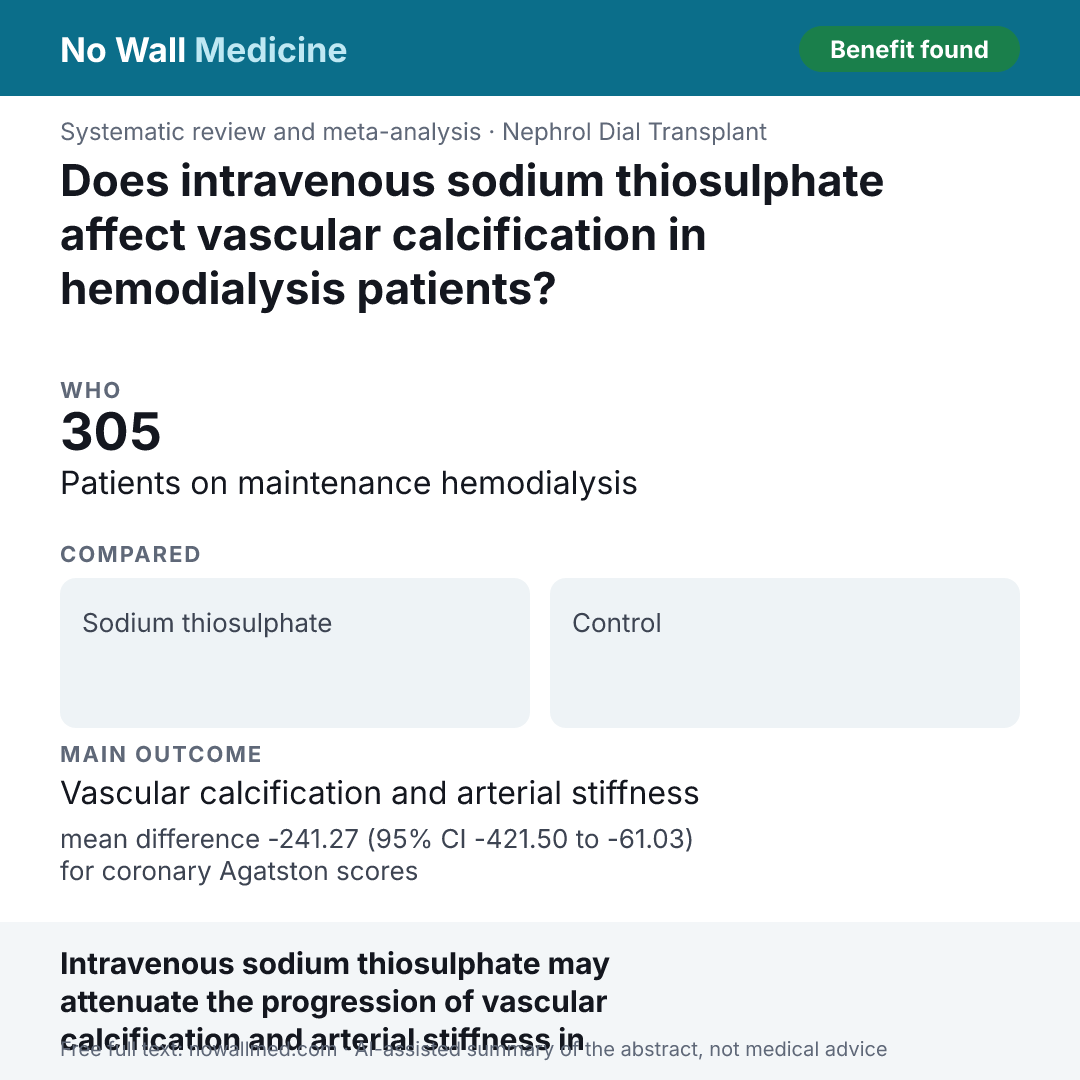
- Researchers analyzed 6 studies involving 305 participants on maintenance hemodialysis to evaluate the effects of intravenous sodium thiosulphate on vascular calcification, which is the hardening of blood vessels.
- Sodium thiosulphate was associated with a lower progression in Agatston scores in the coronary arteries (MD: -241.27, 95% CI: -421.50 to -61.03) and iliac arteries (MD: -382.00, 95% CI: -751.07 to -12.93).
- The treatment was associated with a lower increase in pulse wave velocity (MD: -1.29 m/s, 95% CI: -2.24 to -0.34 m/s), but was linked to gastrointestinal symptoms and increased anion gap acidosis.
Why it matters: The effects and safety of intravenous sodium thiosulphate for treating vascular calcification in patients with chronic kidney disease were not clearly established.
Limitation the authors note: The authors state that large and well-designed randomized controlled trials are warranted.
Discussion prompts
- Would these patients look like yours? Who was left out?
- Is the main outcome one that matters to patients?
- Is the difference large enough to change what you do?
Cite: Wen W, Portales-Castillo I, Seethapathy R, et al. Intravenous sodium thiosulphate for vascular calcification of hemodialysis patients-a systematic review and meta-analysis. Nephrol Dial Transplant. 2023;38(3):733-745. doi:10.1093/ndt/gfac171
Free full text: PubMed Central · Summary and visual abstract: nowallmed.com/a/intravenous-sodium-thiosulphate-for-vascular-calcification-of-cfw56p/ (AI-assisted from the abstract; check the paper before relying on it).