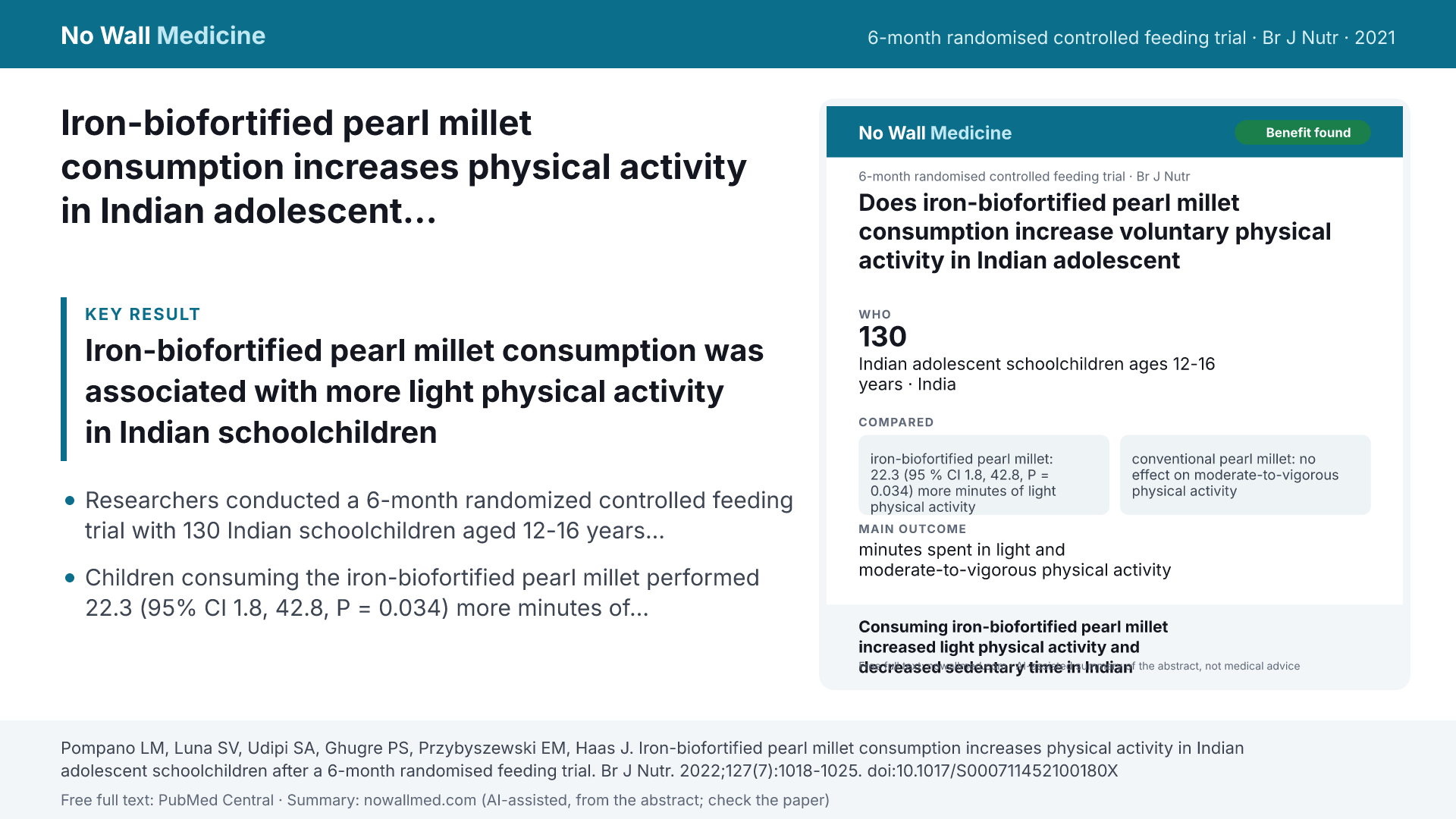
Iron-biofortified pearl millet consumption was associated with more light physical activity in Indian schoolchildren
Iron-biofortified pearl millet consumption increases physical activity in Indian adolescent schoolchildren after a 6-month randomised feeding trial
6-month randomised controlled feeding trialBenefit found
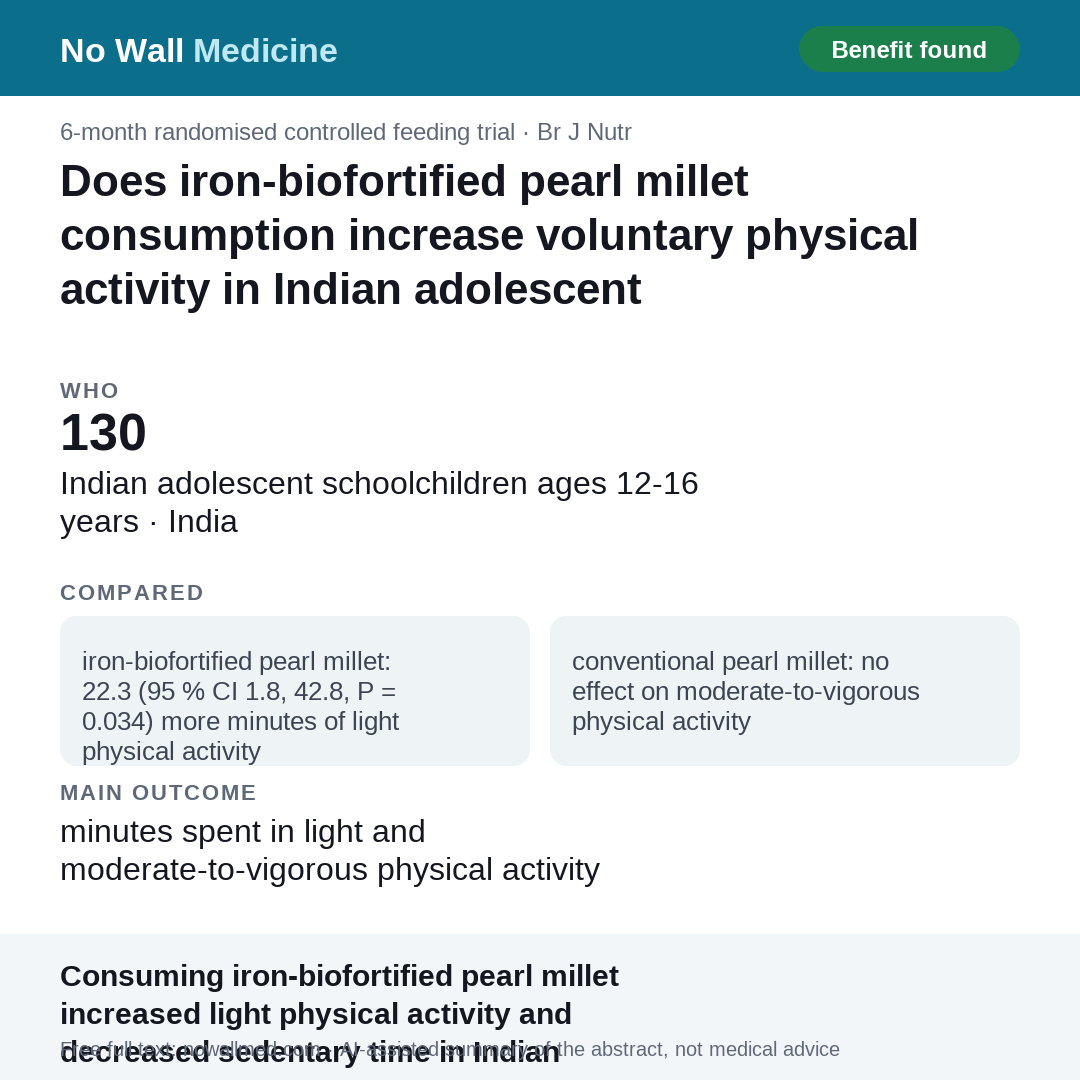
Does iron-biofortified pearl millet consumption increase voluntary physical activity in Indian adolescent schoolchildren?
Who
130
Indian adolescent schoolchildren ages 12-16 years · India
Compared
iron-biofortified pearl millet: 22.3 (95 % CI 1.8, 42.8, P = 0.034) more minutes of light physical activity
conventional pearl millet: no effect on moderate-to-vigorous physical activity
Main outcome
minutes spent in light and moderate-to-vigorous physical activity
Result: 22.3 (95 % CI 1.8, 42.8, P = 0.034) more minutes of light physical activity
Bottom line: Consuming iron-biofortified pearl millet increased light physical activity and decreased sedentary time in Indian schoolchildren.
Br J Nutr · 2021-06-03Download image
Clinical question: Does iron-biofortified pearl millet consumption increase voluntary physical activity in Indian adolescent schoolchildren?
Why it matters: It was unclear how consuming iron-biofortified staple foods impacts voluntary physical activity in populations with iron deficiency.
Key points
- Researchers conducted a 6-month randomized controlled feeding trial with 130 Indian schoolchildren aged 12-16 years to compare iron-biofortified pearl millet with conventional pearl millet.
- Children consuming the iron-biofortified pearl millet performed 22.3 (95% CI 1.8, 42.8, P = 0.034) more minutes of light physical activity each day compared to the conventional group.
- The amount of iron consumed was associated with more light physical activity and an inverse relationship with daily sedentary minutes.
Headline and key points written with AI from the paper’s abstract, with every number checked against it. Read the paper before relying on them.
Was this summary helpful?
Subject terms
Cite this article
Pompano LM, Luna SV, Udipi SA, Ghugre PS, Przybyszewski EM, Haas J. Iron-biofortified pearl millet consumption increases physical activity in Indian adolescent schoolchildren after a 6-month randomised feeding trial. Br J Nutr. 2021. doi:10.1017/S000711452100180X
Spotted a mistake? Suggest a correction