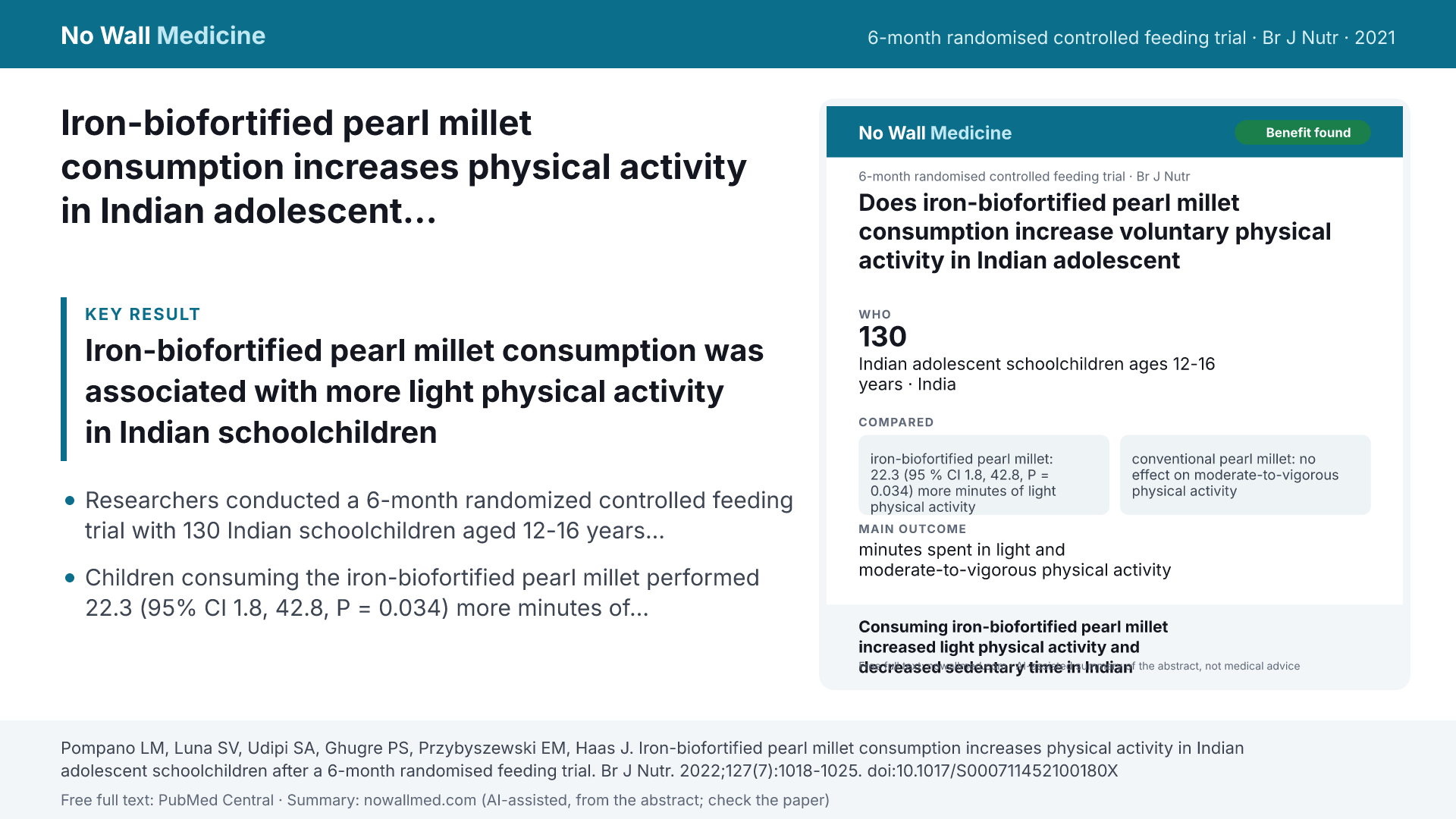
Iron-biofortified pearl millet consumption increases physical activity in Indian adolescent schoolchildren after a 6-month randomised feeding trial
Key result: Iron-biofortified pearl millet consumption was associated with more light physical activity in Indian schoolchildren
Key points
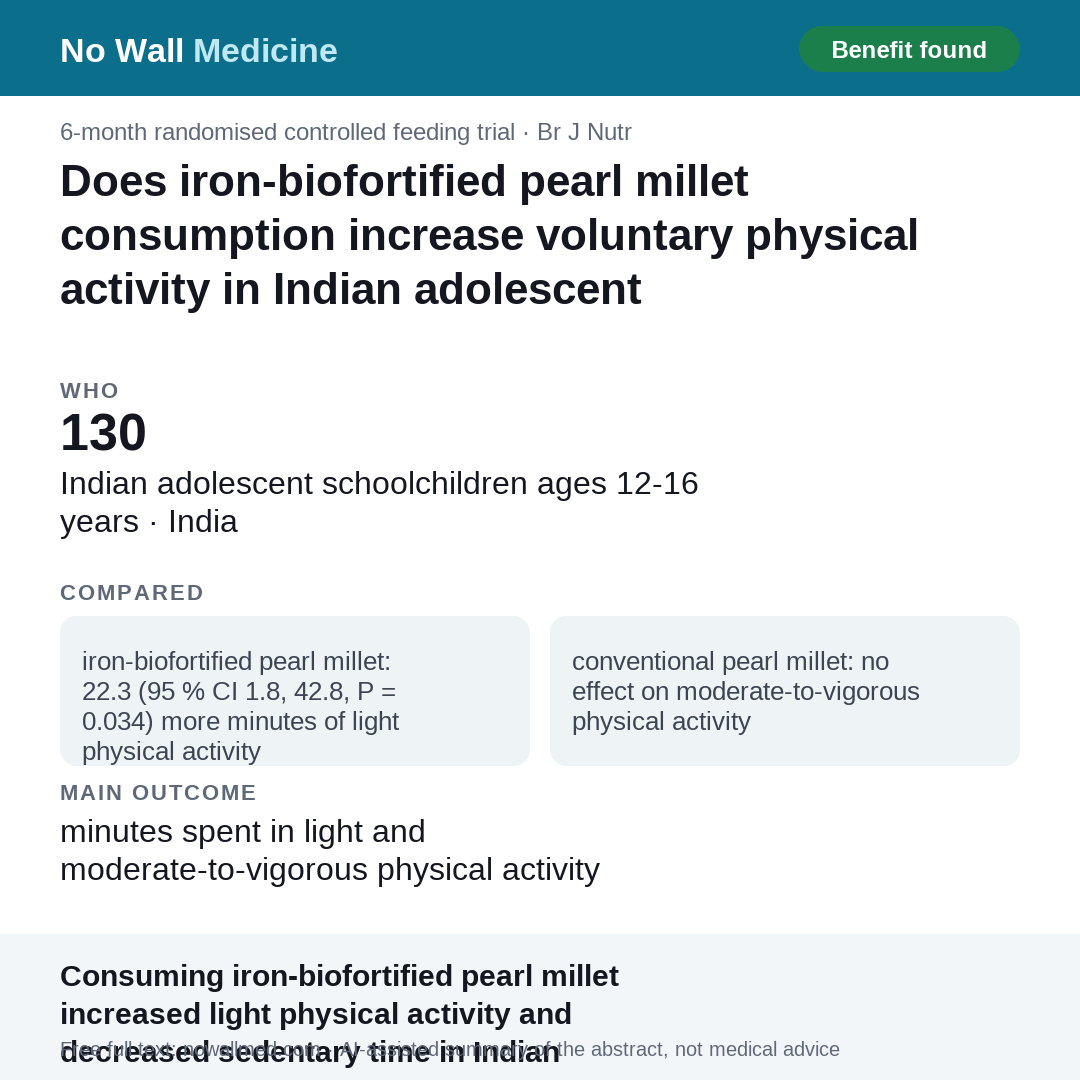
- Researchers conducted a 6-month randomized controlled feeding trial with 130 Indian schoolchildren aged 12-16 years to compare iron-biofortified pearl millet with conventional pearl millet.
- Children consuming the iron-biofortified pearl millet performed 22.3 (95% CI 1.8, 42.8, P = 0.034) more minutes of light physical activity each day compared to the conventional group.
- The amount of iron consumed was associated with more light physical activity and an inverse relationship with daily sedentary minutes.
Why it matters: It was unclear how consuming iron-biofortified staple foods impacts voluntary physical activity in populations with iron deficiency.
Discussion prompts
- Would these patients look like yours? Who was left out?
- Is the main outcome one that matters to patients?
- Is the difference large enough to change what you do?
Cite: Pompano LM, Luna SV, Udipi SA, Ghugre PS, Przybyszewski EM, Haas J. Iron-biofortified pearl millet consumption increases physical activity in Indian adolescent schoolchildren after a 6-month randomised feeding trial. Br J Nutr. 2021. doi:10.1017/S000711452100180X
Free full text: PubMed Central · Summary and visual abstract: nowallmed.com/a/iron-biofortified-pearl-millet-consumption-increases-physical-ee9sb1/ (AI-assisted from the abstract; check the paper before relying on it).