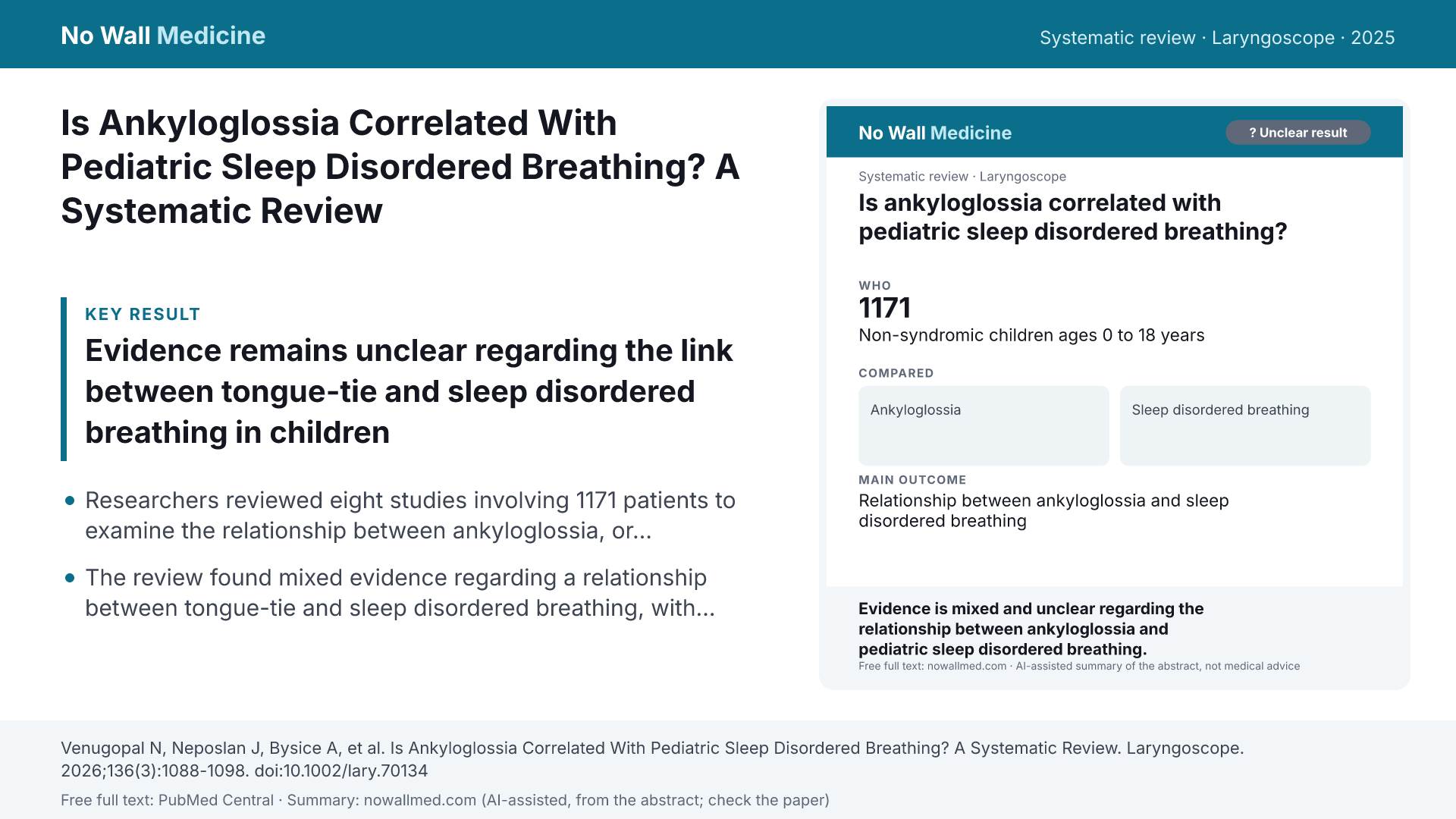
Is Ankyloglossia Correlated With Pediatric Sleep Disordered Breathing? A Systematic Review
Key result: Evidence remains unclear regarding the link between tongue-tie and sleep disordered breathing in children
Key points
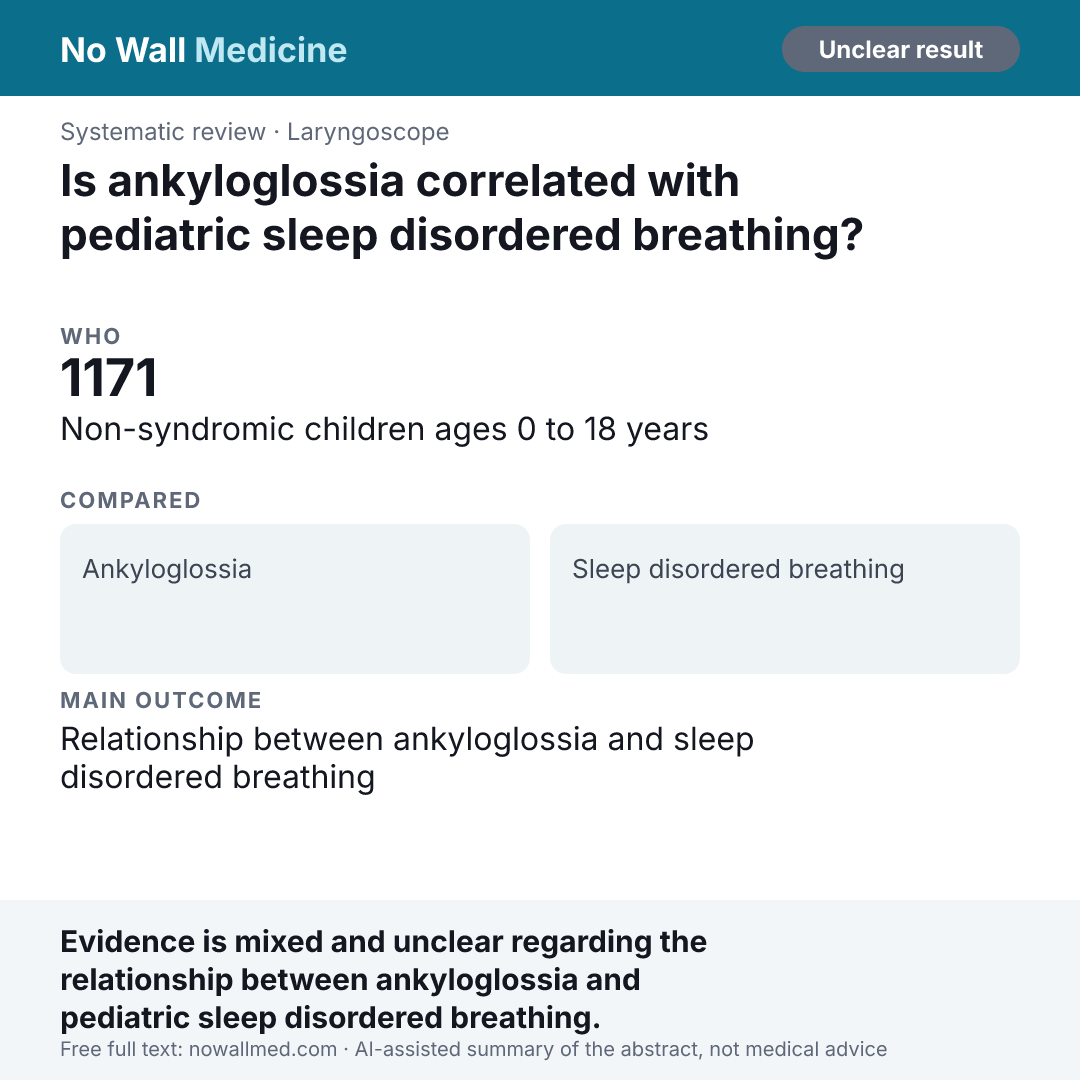
- Researchers reviewed eight studies involving 1171 patients to examine the relationship between ankyloglossia, or tongue-tie, and sleep disordered breathing in children aged 0 to 18 years.
- The review found mixed evidence regarding a relationship between tongue-tie and sleep disordered breathing, with only two interventional studies reporting a positive association.
- There was insufficient data to conclude that frenotomy, a surgical procedure to release the tongue-tie, is indicated for managing sleep disordered breathing in these children.
Limitation the authors note: The lack of standardized diagnostic criteria for tongue-tie and the use of surveys instead of validated clinical assessment tools for sleep disordered breathing limit the findings.
Discussion prompts
- Would these patients look like yours? Who was left out?
- Is the main outcome one that matters to patients?
- Is the difference large enough to change what you do?
Cite: Venugopal N, Neposlan J, Bysice A, et al. Is Ankyloglossia Correlated With Pediatric Sleep Disordered Breathing? A Systematic Review. Laryngoscope. 2026;136(3):1088-1098. doi:10.1002/lary.70134
Free full text: PubMed Central · Summary and visual abstract: nowallmed.com/a/is-ankyloglossia-correlated-with-pediatric-sleep-disordered-breathing-148hmxj/ (AI-assisted from the abstract; check the paper before relying on it).