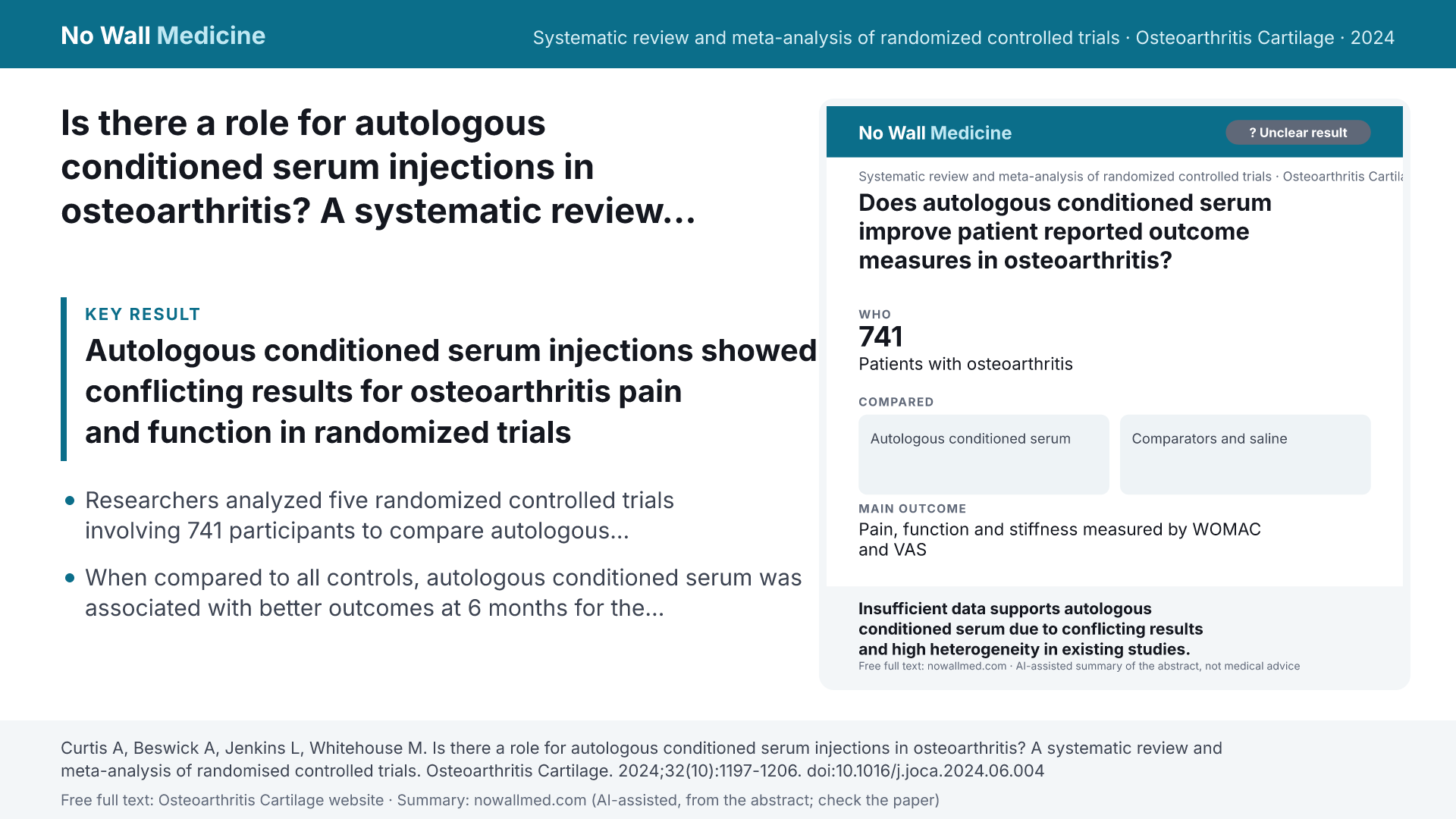
Autologous conditioned serum injections showed conflicting results for osteoarthritis pain and function in randomized trials
Is there a role for autologous conditioned serum injections in osteoarthritis? A systematic review and meta-analysis of randomised controlled trials
Systematic review and meta-analysis of randomized controlled trialsUnclear result
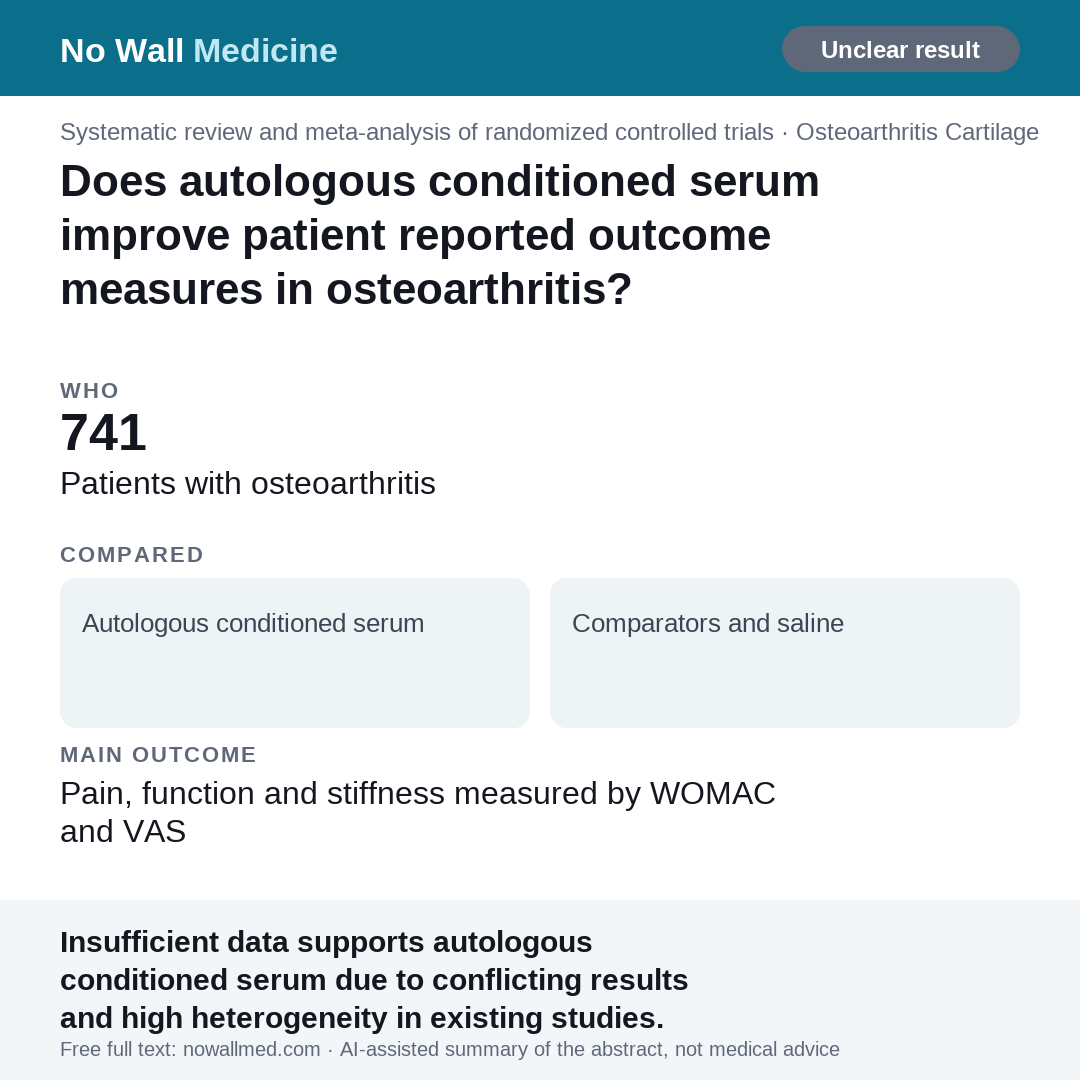
Does autologous conditioned serum improve patient reported outcome measures in osteoarthritis?
Who
741
Patients with osteoarthritis
Compared
Autologous conditioned serum
Comparators and saline
Main outcome
Pain, function and stiffness measured by WOMAC and VAS
Result: SMD -0.61 (95% CI -1.01 to -0.21) for WOMAC with all comparators
Bottom line: Insufficient data supports autologous conditioned serum due to conflicting results and high heterogeneity in existing studies.
Limitation: High heterogeneity and risk of bias in included studies.
Osteoarthritis Cartilage · 2024-06-13Download image
Clinical question: Does autologous conditioned serum improve patient reported outcome measures in osteoarthritis?
Why it matters: It is unknown if autologous conditioned serum injections provide meaningful improvements in pain, function, or stiffness for patients with osteoarthritis compared to placebo or other treatments.
Key points
- Researchers analyzed five randomized controlled trials involving 741 participants to compare autologous conditioned serum, which is a patient's own processed blood serum, against various controls.
- When compared to all controls, autologous conditioned serum was associated with better outcomes at 6 months for the Western Ontario and McMaster Universities Osteoarthritis Index (SMD -0.61) and visual analogue scale (SMD -1.24).
- When compared specifically to saline placebo, there was no significant difference in Western Ontario and McMaster Universities Osteoarthritis Index (MD -9.87) or visual analogue scale at 6 months.
Limitation the authors note: The meta-analysis was limited by high heterogeneity and studies that were rated as having some concern or high risk of bias.
Headline and key points written with AI from the paper’s abstract, with every number checked against it. Read the paper before relying on them.
Was this summary helpful?
Subject terms
Cite this article
Curtis A, Beswick A, Jenkins L, Whitehouse M. Is there a role for autologous conditioned serum injections in osteoarthritis? A systematic review and meta-analysis of randomised controlled trials. Osteoarthritis Cartilage. 2024. doi:10.1016/j.joca.2024.06.004
Spotted a mistake? Suggest a correction
Top studies every Monday
The week’s key trials and guidelines in your specialties, plus any topics you follow. By email, free.
Get the weekly digest