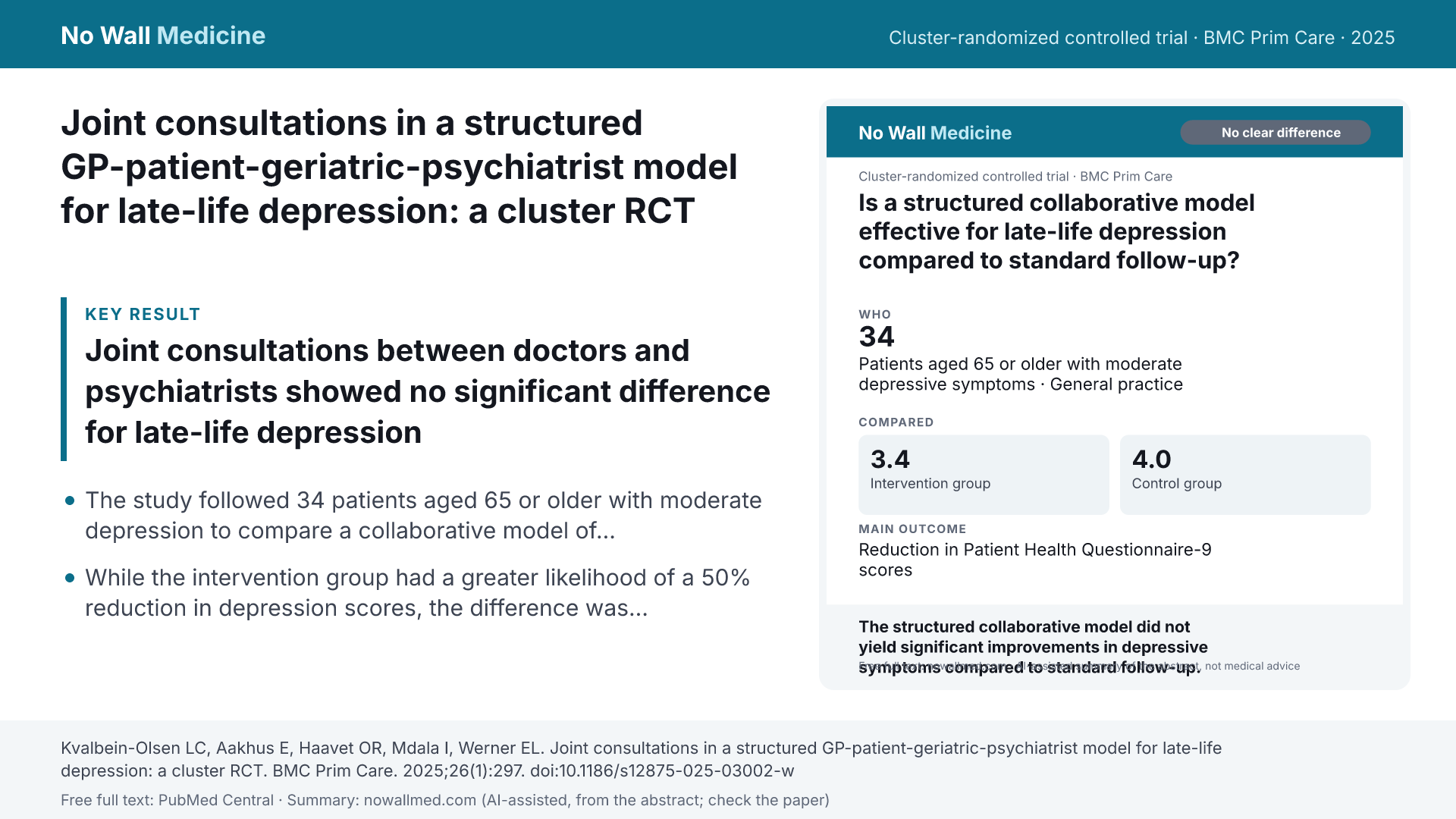
Joint consultations in a structured GP-patient-geriatric-psychiatrist model for late-life depression: a cluster RCT
Key result: Joint consultations between doctors and psychiatrists showed no significant difference for late-life depression
Key points
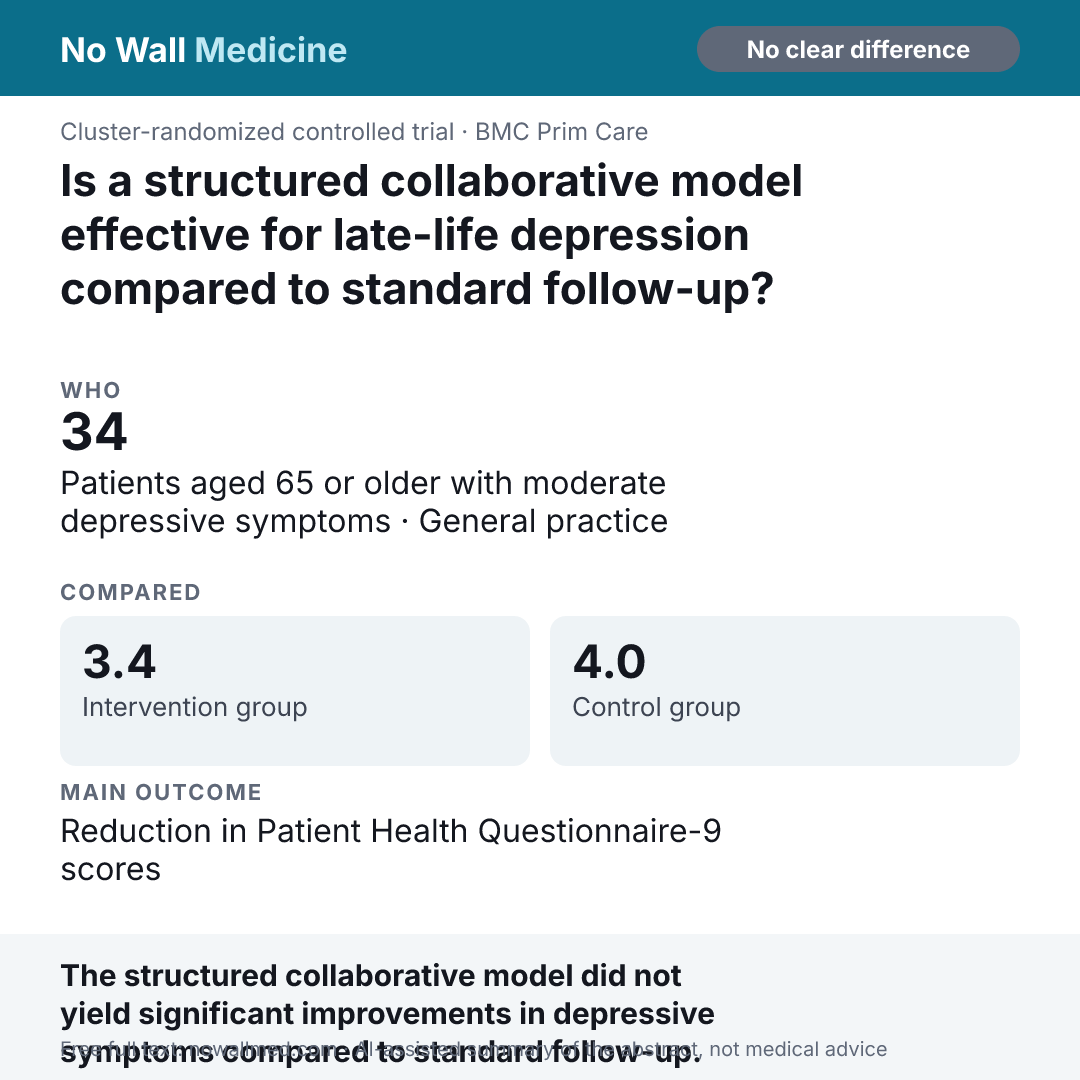
- The study followed 34 patients aged 65 or older with moderate depression to compare a collaborative model of joint consultations against standard follow-up.
- While the intervention group had a greater likelihood of a 50% reduction in depression scores, the difference was not statistically significant.
- At 18 months, mean depression scores decreased by 3.4 in the intervention group and 4.0 in the control group, with no significant difference between them.
Why it matters: Primary care resources are often limited and access to specialized psychiatric assistance for older adults with depression can be suboptimal.
Limitation the authors note: The authors state that major challenges in the recruitment process likely contributed to a low participation rate.
Discussion prompts
- Would these patients look like yours? Who was left out?
- Is the main outcome one that matters to patients?
- Is the difference large enough to change what you do?
Cite: Kvalbein-Olsen LC, Aakhus E, Haavet OR, Mdala I, Werner EL. Joint consultations in a structured GP-patient-geriatric-psychiatrist model for late-life depression: a cluster RCT. BMC Prim Care. 2025;26(1):297. doi:10.1186/s12875-025-03002-w
Free full text: PubMed Central · Summary and visual abstract: nowallmed.com/a/joint-consultations-in-a-structured-gp-patient-geriatric-psychiatrist-1jv9ox1/ (AI-assisted from the abstract; check the paper before relying on it).