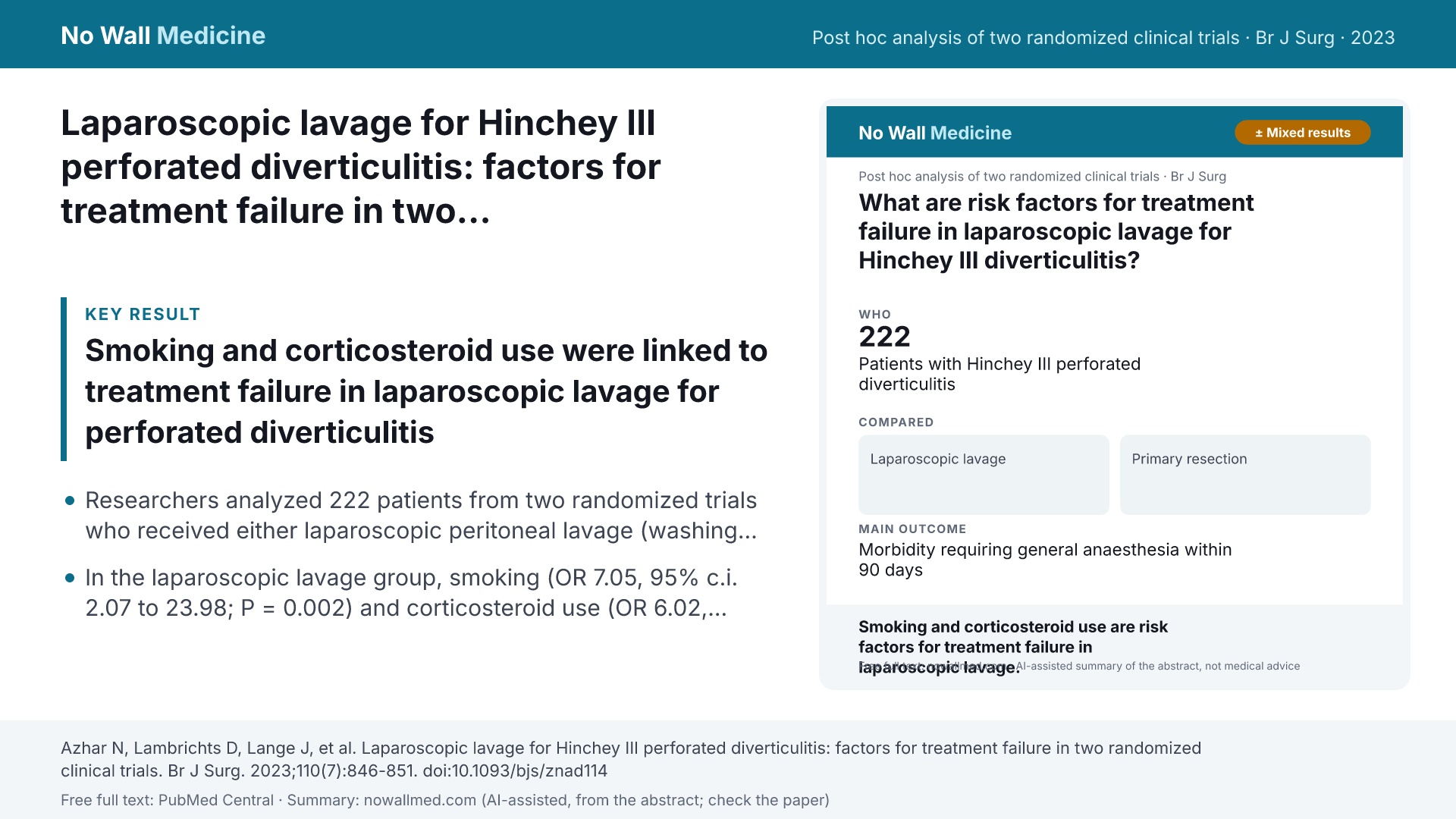
Smoking and corticosteroid use were linked to treatment failure in laparoscopic lavage for perforated diverticulitis
Laparoscopic lavage for Hinchey III perforated diverticulitis: factors for treatment failure in two randomized clinical trials
Post hoc analysis of two randomized clinical trialsMixed results
What are risk factors for treatment failure in laparoscopic lavage for Hinchey III diverticulitis?
Who
222
Patients with Hinchey III perforated diverticulitis
Compared
Laparoscopic lavage
Primary resection
Main outcome
Morbidity requiring general anaesthesia within 90 days
Bottom line: Smoking and corticosteroid use are risk factors for treatment failure in laparoscopic lavage.
Br J Surg · 2023-05-19Download image
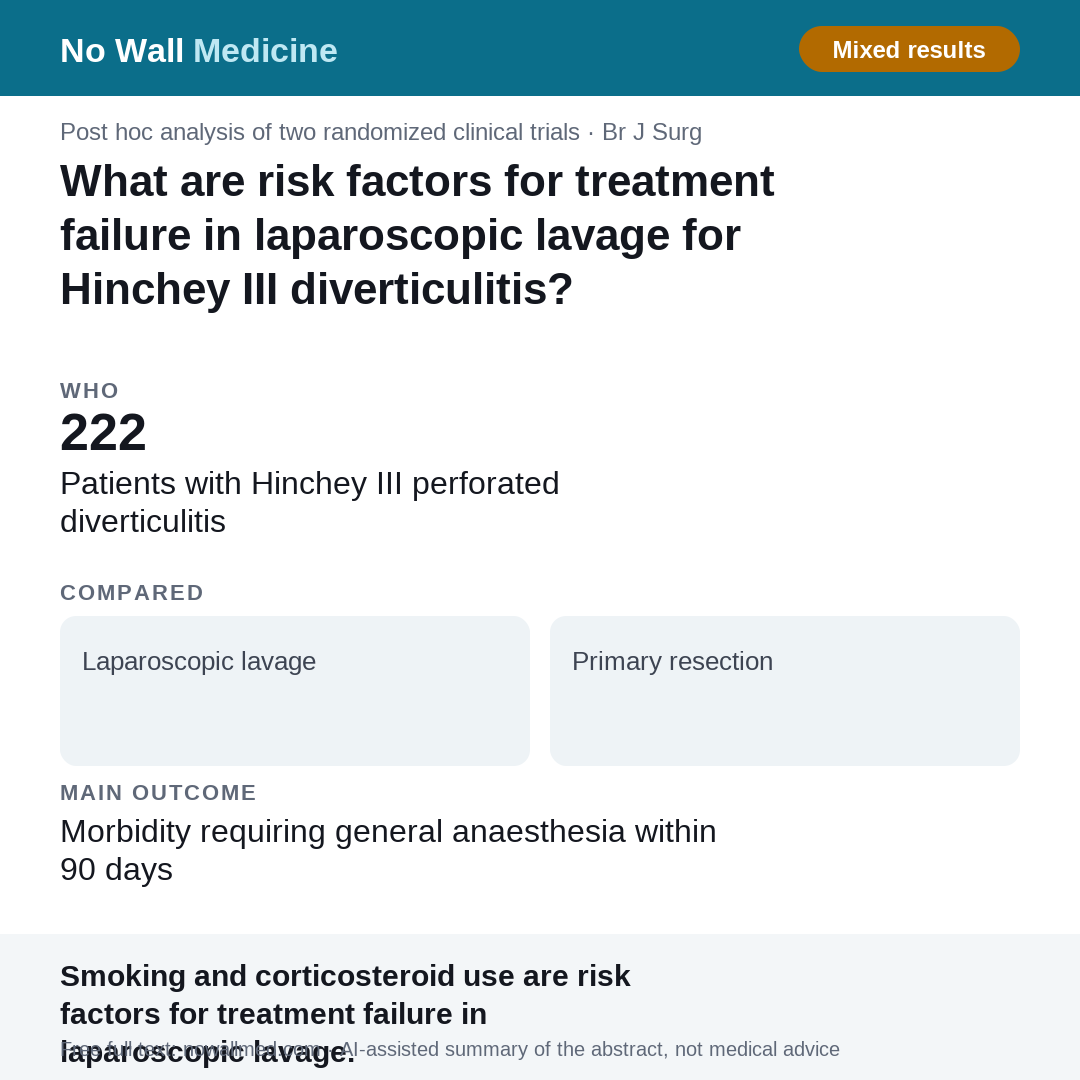
Clinical question: What are risk factors for treatment failure in laparoscopic lavage for Hinchey III diverticulitis?
Why it matters: It was unknown which specific patient characteristics are associated with treatment failure when using laparoscopic lavage for Hinchey III perforated diverticulitis.
Key points
- Researchers analyzed 222 patients from two randomized trials who received either laparoscopic peritoneal lavage (washing out the abdominal cavity) or sigmoid resection (removing part of the colon).
- In the laparoscopic lavage group, smoking (OR 7.05, 95% c.i. 2.07 to 23.98; P = 0.002) and corticosteroid use (OR 6.02, 1.54 to 23.51; P = 0.010) were associated with advanced morbidity.
- Treatment failure was defined as complications requiring general anesthesia within 90 days.
Headline and key points written with AI from the paper’s abstract, with every number checked against it. Read the paper before relying on them.
Was this summary helpful?
Subject terms
Cite this article
Azhar N, Lambrichts D, Lange J, Yaqub S, Øresland T, Schultz J. Laparoscopic lavage for Hinchey III perforated diverticulitis: factors for treatment failure in two randomized clinical trials. Br J Surg. 2023. doi:10.1093/bjs/znad114
Spotted a mistake? Suggest a correction