Lay-led mosque-based intervention improved posttraumatic stress disorder and depression in Somali refugees
Lay-Led Intervention for War and Refugee Trauma: A Randomized Clinical Trial
Randomized clinical trialBenefit found
Does Islamic Trauma Healing improve mental health in Somali refugees?
Who
101
United States-based refugees from Somalia with trauma exposure · Mosques and virtually in Washington and Ohio
Compared
Islamic Trauma Healing
Waiting list
Main outcome
Posttraumatic Diagnostic Scale for DSM-5 PTSD severity
Result: d = -0.67
Bottom line: Islamic Trauma Healing improved PTSD severity, depression, and well-being compared to a waiting list in Somali refugees.
JAMA Netw Open · 2024-08-01Download image
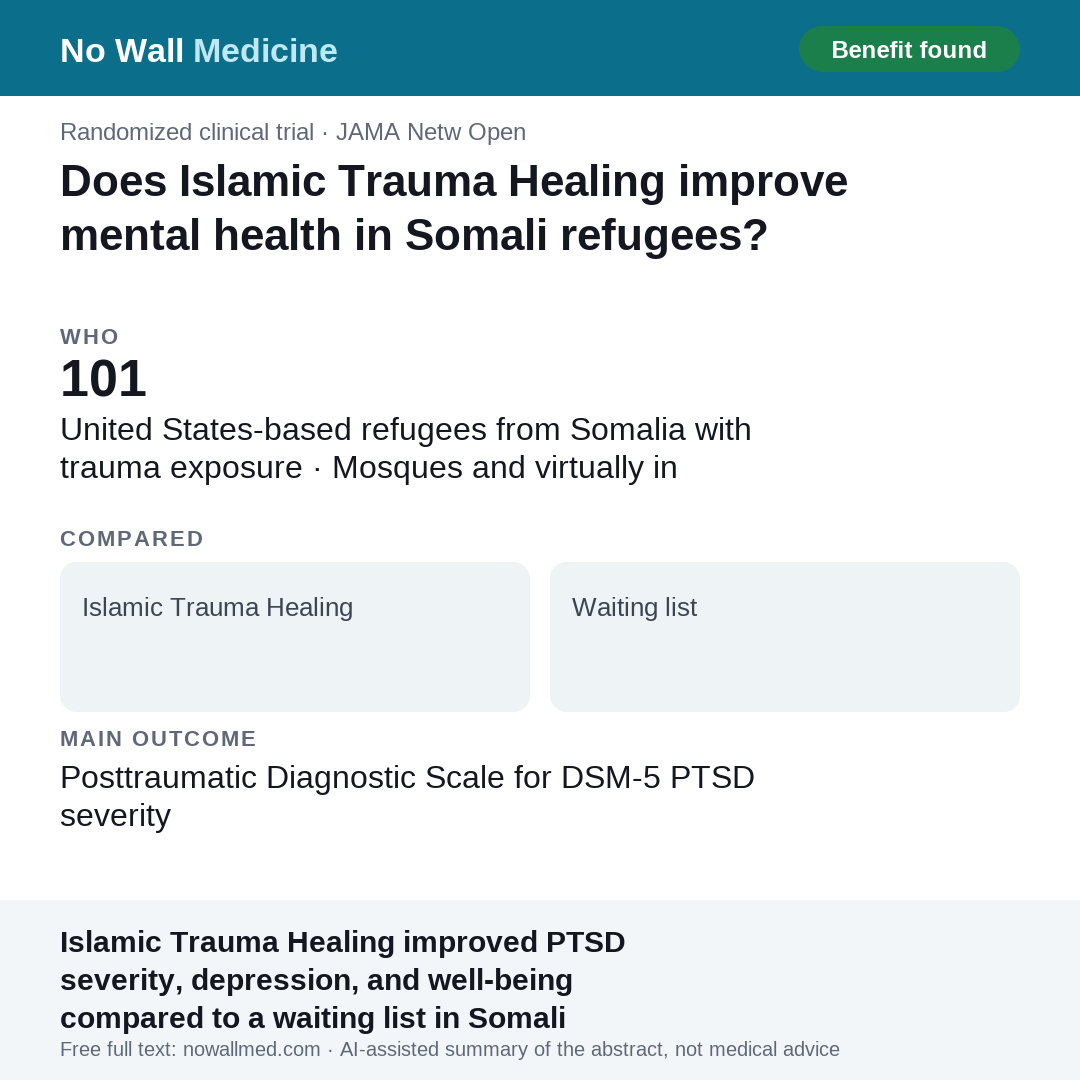
Clinical question: Does Islamic Trauma Healing improve mental health in Somali refugees?
Why it matters: Barriers to psychotherapy uptake and a lack of culturally appropriate interventions exist for refugee groups experiencing trauma.
Key points
- The study randomized 101 Somali refugees in the United States to receive either Islamic Trauma Healing or a delayed intervention waiting list.
- Participants receiving the intervention showed significant improvements in posttraumatic stress disorder severity, depression, and well-being compared to the waiting list group.
- The mental health gains observed after the intervention were maintained through a 12-week follow-up period.
Headline and key points written with AI from the paper’s abstract, with every number checked against it. Read the paper before relying on them.
Topics
Cite this article
Zoellner LA, Bentley JA, Musa K, Mohamed F, Ahmed LB, King KM. Lay-Led Intervention for War and Refugee Trauma: A Randomized Clinical Trial. JAMA Netw Open. 2024. doi:10.1001/jamanetworkopen.2024.29661
Spotted a mistake? Suggest a correction
Top studies every Monday
The week’s key trials and guidelines in your specialties, by email. Free.
Get the weekly digest