Licogliflozin 150 mg reduced liver enzyme levels in patients with nonalcoholic steatohepatitis
Licogliflozin for nonalcoholic steatohepatitis: a randomized, double-blind, placebo-controlled, phase 2a study
Randomized, double-blind, placebo-controlled, phase 2a studyBenefit found
Does licogliflozin improve nonalcoholic steatohepatitis?
Who
107
Patients with phenotypic or histologic nonalcoholic steatohepatitis
Compared
Placebo
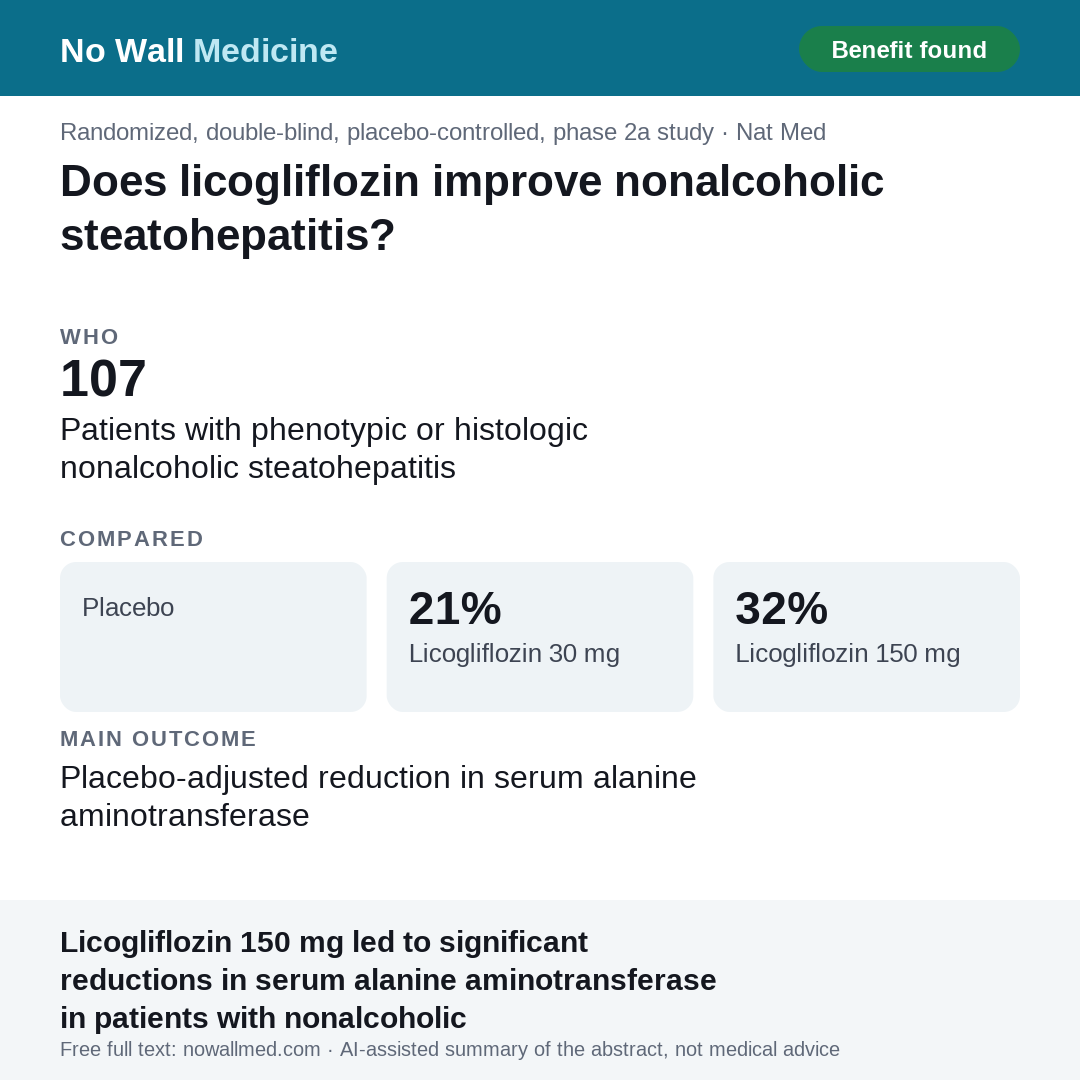
21%Licogliflozin 30 mg (80% CI: 7-32%; P = 0.061)
32%Licogliflozin 150 mg (80% CI: 21-43%; P = 0.002)
Main outcome
Placebo-adjusted reduction in serum alanine aminotransferase
Bottom line: Licogliflozin 150 mg led to significant reductions in serum alanine aminotransferase in patients with nonalcoholic steatohepatitis.
Limitation: Studies of longer duration and in combination with different drugs are needed.
Nat Med · 2022-06-20Download image
Clinical question: Does licogliflozin improve nonalcoholic steatohepatitis?
Why it matters: No pharmacotherapy is currently available for nonalcoholic steatohepatitis, which is a liver disease that may advance to scarring and death.
Key points
- Researchers studied 107 patients with nonalcoholic steatohepatitis, a chronic liver disease, comparing placebo to two doses of licogliflozin over 12 weeks.
- The 150 mg dose showed a 32% (80% CI: 21-43%; P=0.002) placebo-adjusted reduction in serum alanine aminotransferase, a liver enzyme, while the 30 mg dose did not meet the primary endpoint.
- Diarrhea occurred in 77% (33 of 43) of patients receiving 150 mg, 49% (21 of 43) receiving 30 mg, and 43% (9 of 21) receiving placebo.
Headline and key points written with AI from the paper’s abstract, with every number checked against it. Read the paper before relying on them.
Was this summary helpful?
Subject terms
Cite this article
Harrison SA, Manghi FP, Smith WB, Alpenidze D, Aizenberg D, Klarenbeek N. Licogliflozin for nonalcoholic steatohepatitis: a randomized, double-blind, placebo-controlled, phase 2a study. Nat Med. 2022. doi:10.1038/s41591-022-01861-9
Spotted a mistake? Suggest a correction
Top studies every Monday
The week’s key trials and guidelines in your specialties, plus any topics you follow. By email, free.
Get the weekly digest