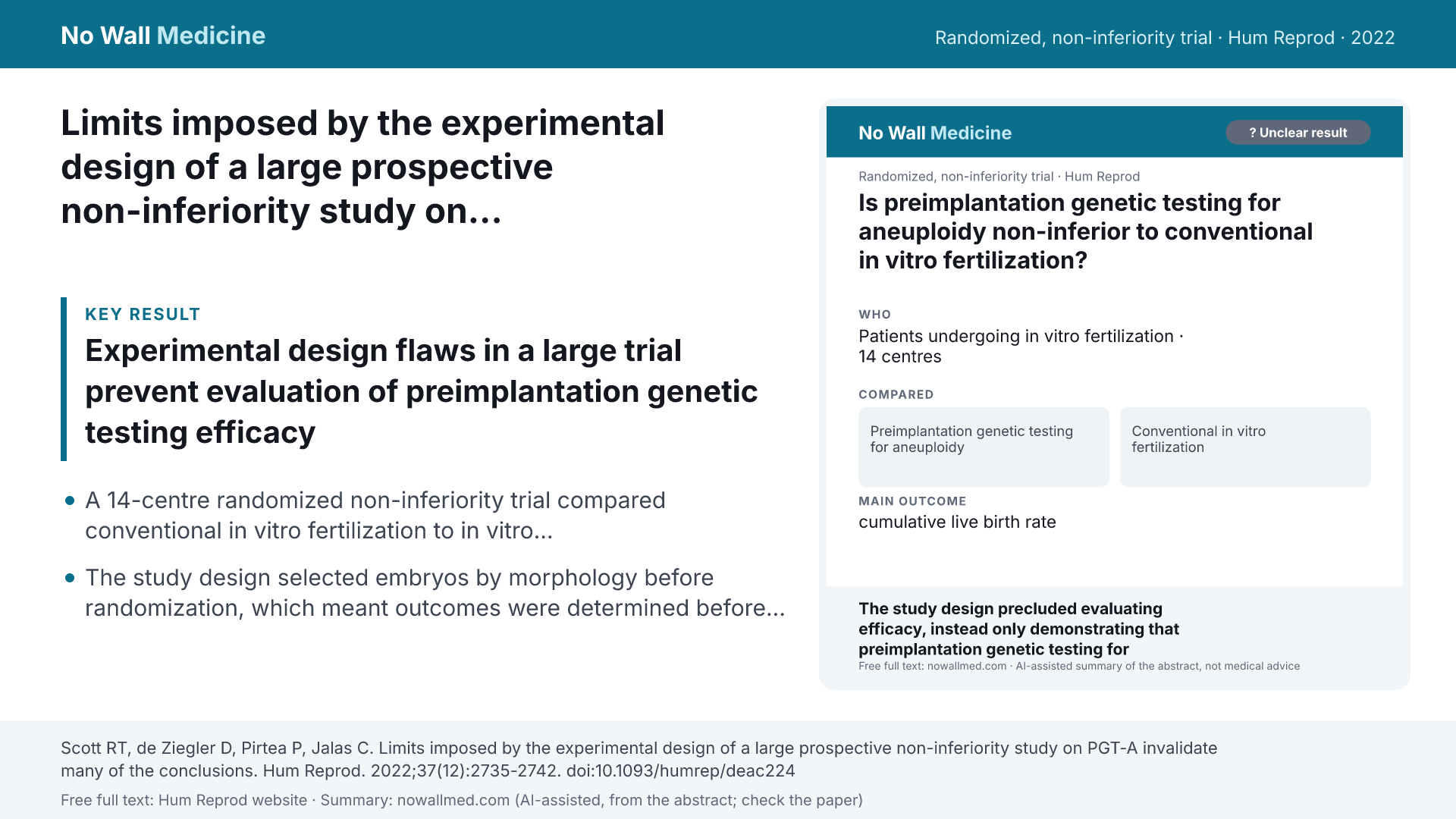
Limits imposed by the experimental design of a large prospective non-inferiority study on PGT-A invalidate many of the conclusions
Key result: Experimental design flaws in a large trial prevent evaluation of preimplantation genetic testing efficacy
Key points
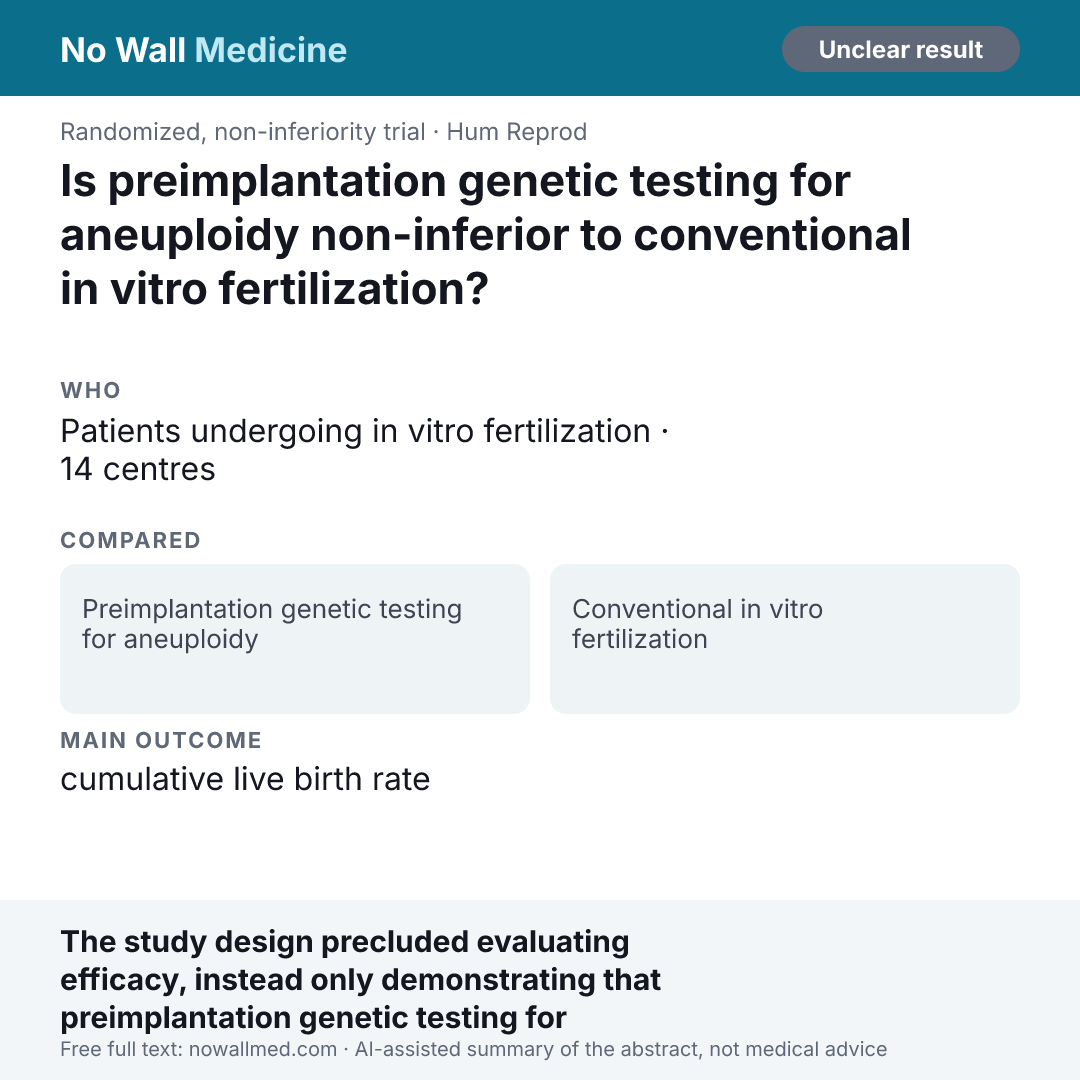
- A 14-centre randomized non-inferiority trial compared conventional in vitro fertilization to in vitro fertilization with preimplantation genetic testing for aneuploidy.
- The study design selected embryos by morphology before randomization, which meant outcomes were determined before the genetic testing intervention occurred.
- The data demonstrate that preimplantation genetic testing is safe but do not support or refute its efficacy for improving cumulative live birth rates.
Limitation the authors note: The experimental design precluded any chance of evaluating the primary endpoint because embryos were selected by morphology prior to randomization.
Discussion prompts
- Would these patients look like yours? Who was left out?
- Is the main outcome one that matters to patients?
- Is the difference large enough to change what you do?
Cite: Scott RT, de Ziegler D, Pirtea P, Jalas C. Limits imposed by the experimental design of a large prospective non-inferiority study on PGT-A invalidate many of the conclusions. Hum Reprod. 2022;37(12):2735-2742. doi:10.1093/humrep/deac224
Free full text: Hum Reprod website · Summary and visual abstract: nowallmed.com/a/limits-imposed-by-the-experimental-design-of-a-large-prospective-non-1hbf03z/ (AI-assisted from the abstract; check the paper before relying on it).