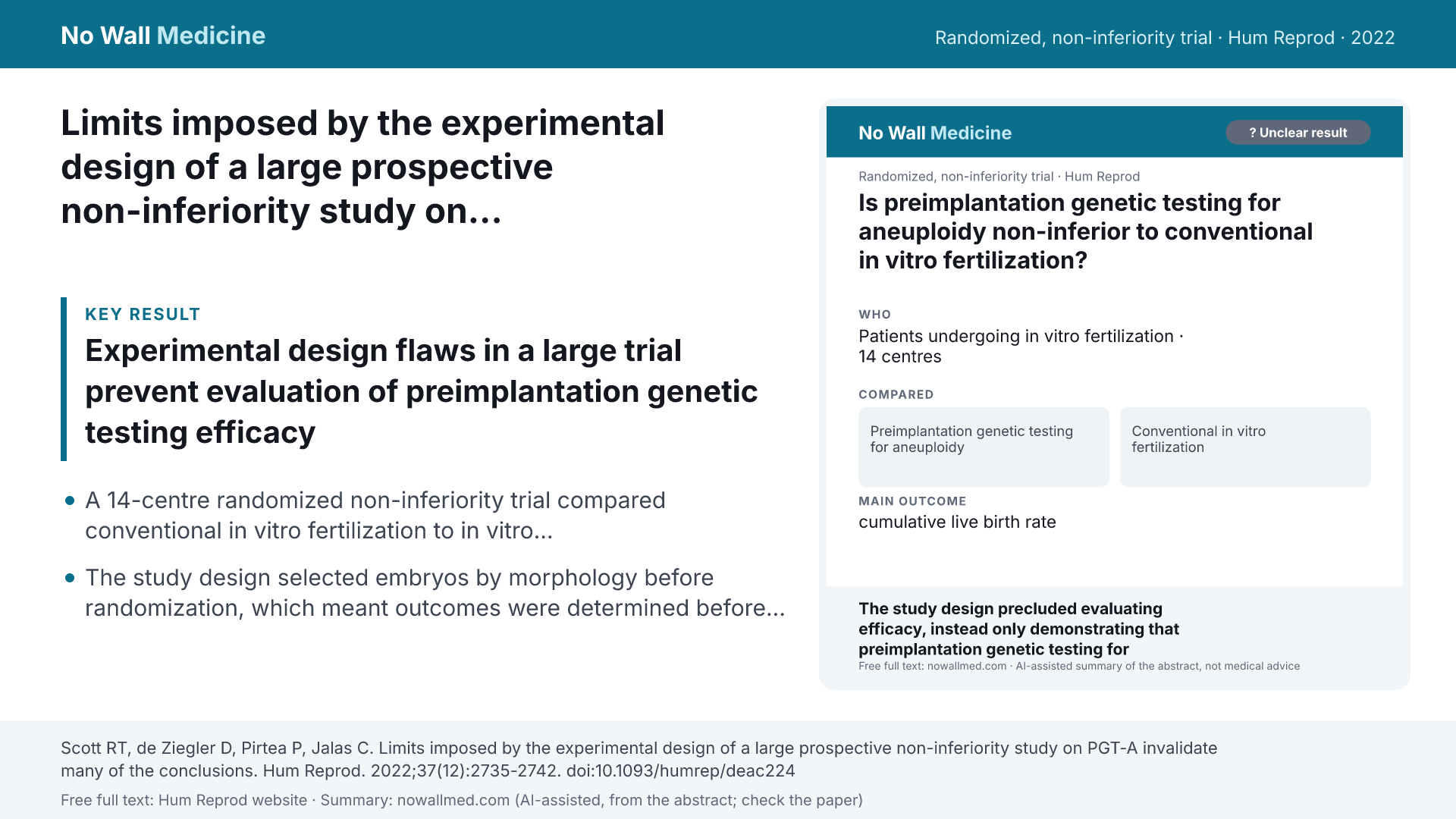
Experimental design flaws in a large trial prevent evaluation of preimplantation genetic testing efficacy
Limits imposed by the experimental design of a large prospective non-inferiority study on PGT-A invalidate many of the conclusions
Randomized, non-inferiority trialUnclear result
Is preimplantation genetic testing for aneuploidy non-inferior to conventional in vitro fertilization?
Who
Patients undergoing in vitro fertilization · 14 centres
Compared
Preimplantation genetic testing for aneuploidy
Conventional in vitro fertilization
Main outcome
cumulative live birth rate
Bottom line: The study design precluded evaluating efficacy, instead only demonstrating that preimplantation genetic testing for aneuploidy is safe.
Limitation: Embryos were selected by morphology before randomization, preventing the testing from influencing embryo selection.
Hum Reprod · 2022-10-27Download image
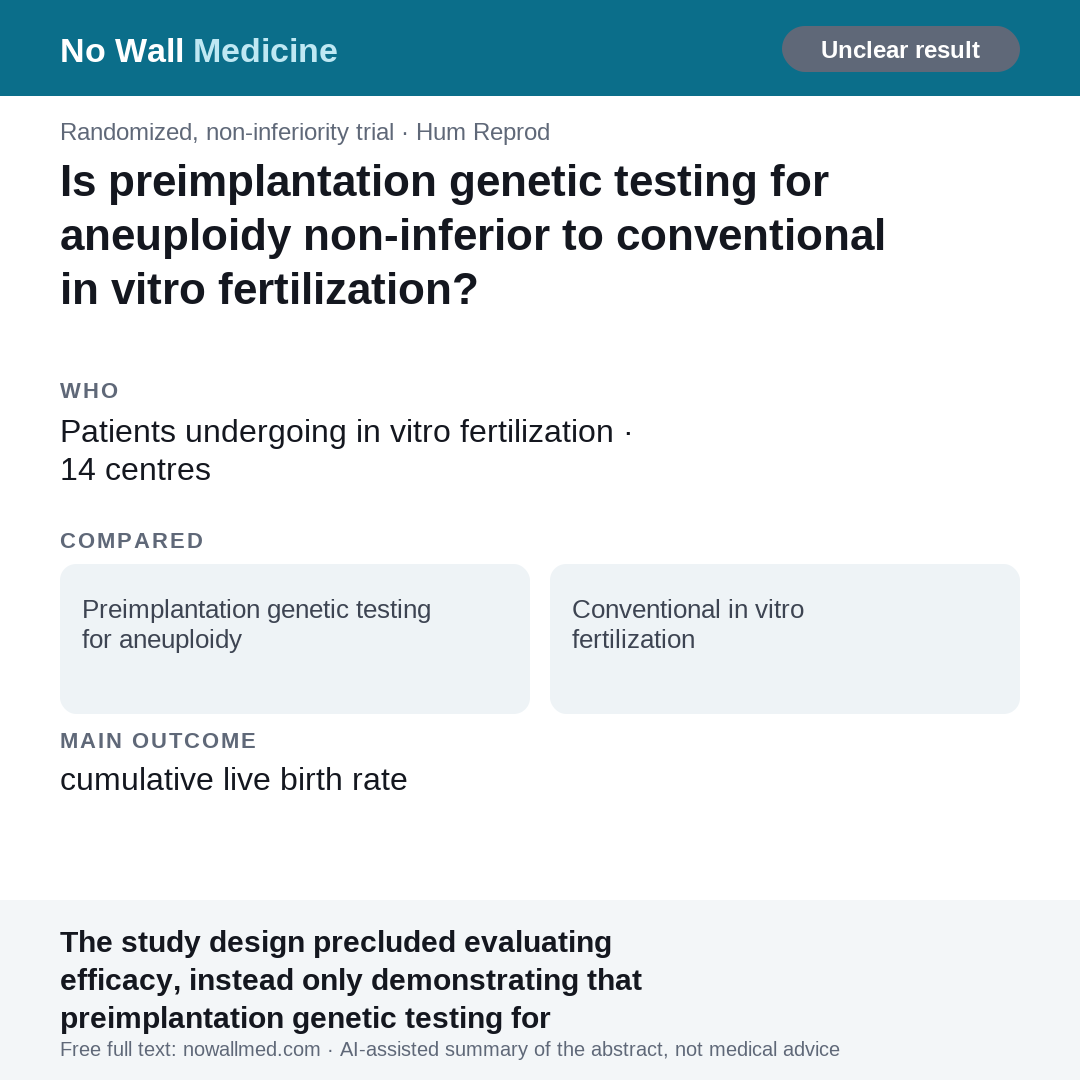
Clinical question: Is preimplantation genetic testing for aneuploidy non-inferior to conventional in vitro fertilization?
Why it matters: It was unknown if preimplantation genetic testing for aneuploidy improves cumulative live birth rates compared to conventional in vitro fertilization.
Key points
- A 14-centre randomized non-inferiority trial compared conventional in vitro fertilization to in vitro fertilization with preimplantation genetic testing for aneuploidy.
- The study design selected embryos by morphology before randomization, which meant outcomes were determined before the genetic testing intervention occurred.
- The data demonstrate that preimplantation genetic testing is safe but do not support or refute its efficacy for improving cumulative live birth rates.
Limitation the authors note: The experimental design precluded any chance of evaluating the primary endpoint because embryos were selected by morphology prior to randomization.
Headline and key points written with AI from the paper’s abstract, with every number checked against it. Read the paper before relying on them.
Was this summary helpful?
Subject terms
Cite this article
Scott RT, de Ziegler D, Pirtea P, Jalas C. Limits imposed by the experimental design of a large prospective non-inferiority study on PGT-A invalidate many of the conclusions. Hum Reprod. 2022. doi:10.1093/humrep/deac224
Spotted a mistake? Suggest a correction
Top studies every Monday
The week’s key trials and guidelines in your specialties, plus any topics you follow. By email, free.
Get the weekly digest