Routine use of embryo chromosome screening shows similar pregnancy outcomes to conventional fertilization methods
The use of preimplantation genetic testing for aneuploidy: a committee opinion
Why it matters: It is unknown if routine chromosome screening for all patients undergoing in vitro fertilization provides better pregnancy outcomes or reduces miscarriage risk.
Key points
- The committee reviewed the use of preimplantation genetic testing for aneuploidy, which is a screening method to check for the correct number of chromosomes in embryos.
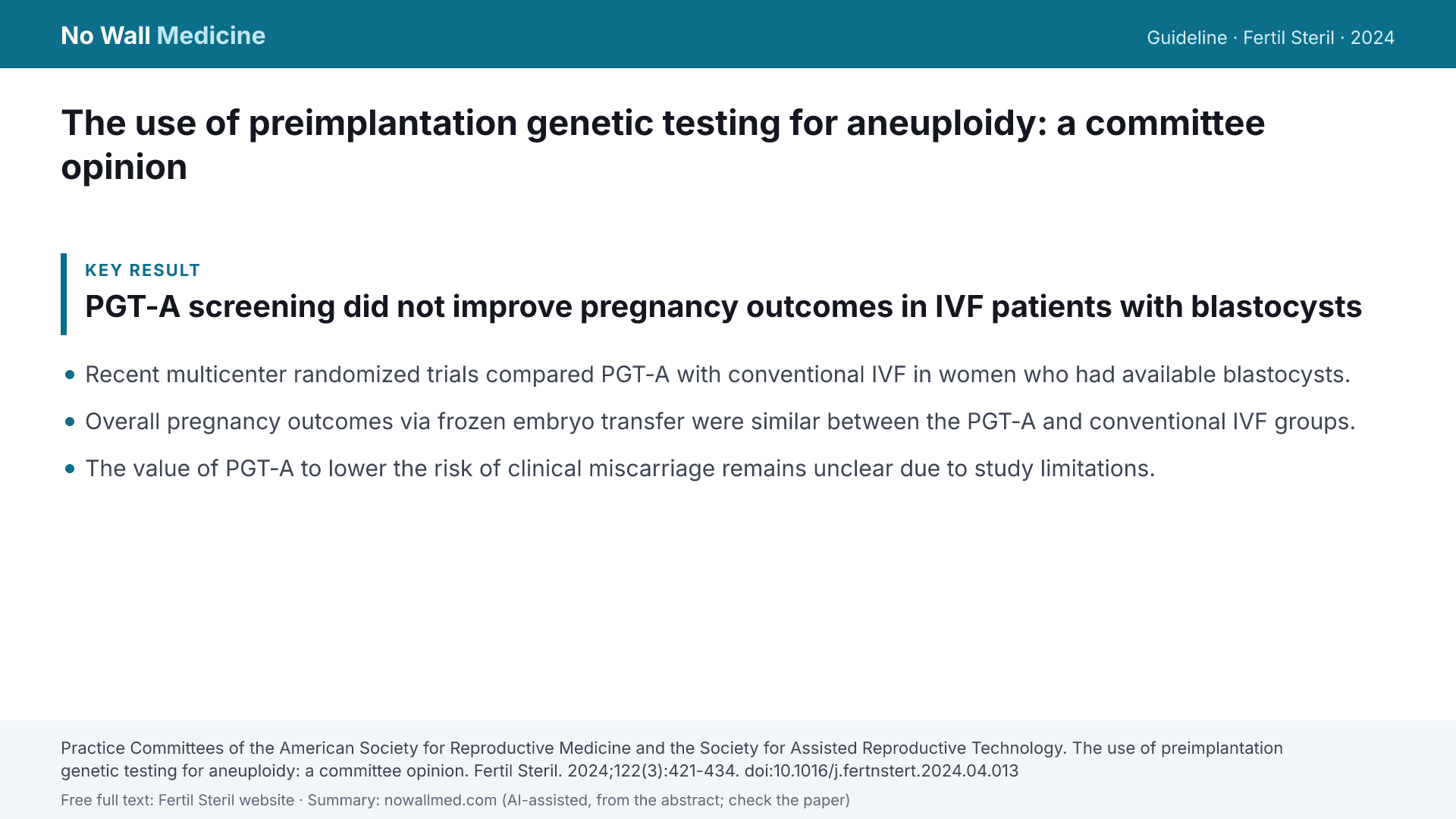
- Recent multicenter, randomized controlled trials in women with available blastocysts showed that overall pregnancy outcomes via frozen embryo transfer were similar between the screening and conventional methods.
- The value of this screening to lower the risk of clinical miscarriage remains unclear.
Limitation the authors note: The abstract notes that studies regarding the reduction of clinical miscarriage risk have important limitations.
Headline and key points written with AI from the paper’s abstract, with every number checked against it. Read the paper before relying on them.
Was this summary helpful?
Subject terms
Cite this article
Practice Committees of the American Society for Reproductive Medicine and the Society for Assisted Reproductive Technology. Electronic address: asrm@asrm.org. The use of preimplantation genetic testing for aneuploidy: a committee opinion. Fertil Steril. 2024. doi:10.1016/j.fertnstert.2024.04.013
Spotted a mistake? Suggest a correction