Genetic testing of embryos may increase live birth rates for unexplained recurrent pregnancy loss
Preimplantation genetic testing for aneuploidy in unexplained recurrent pregnancy loss: a systematic review and meta-analysis
Systematic review and meta-analysisBenefit found
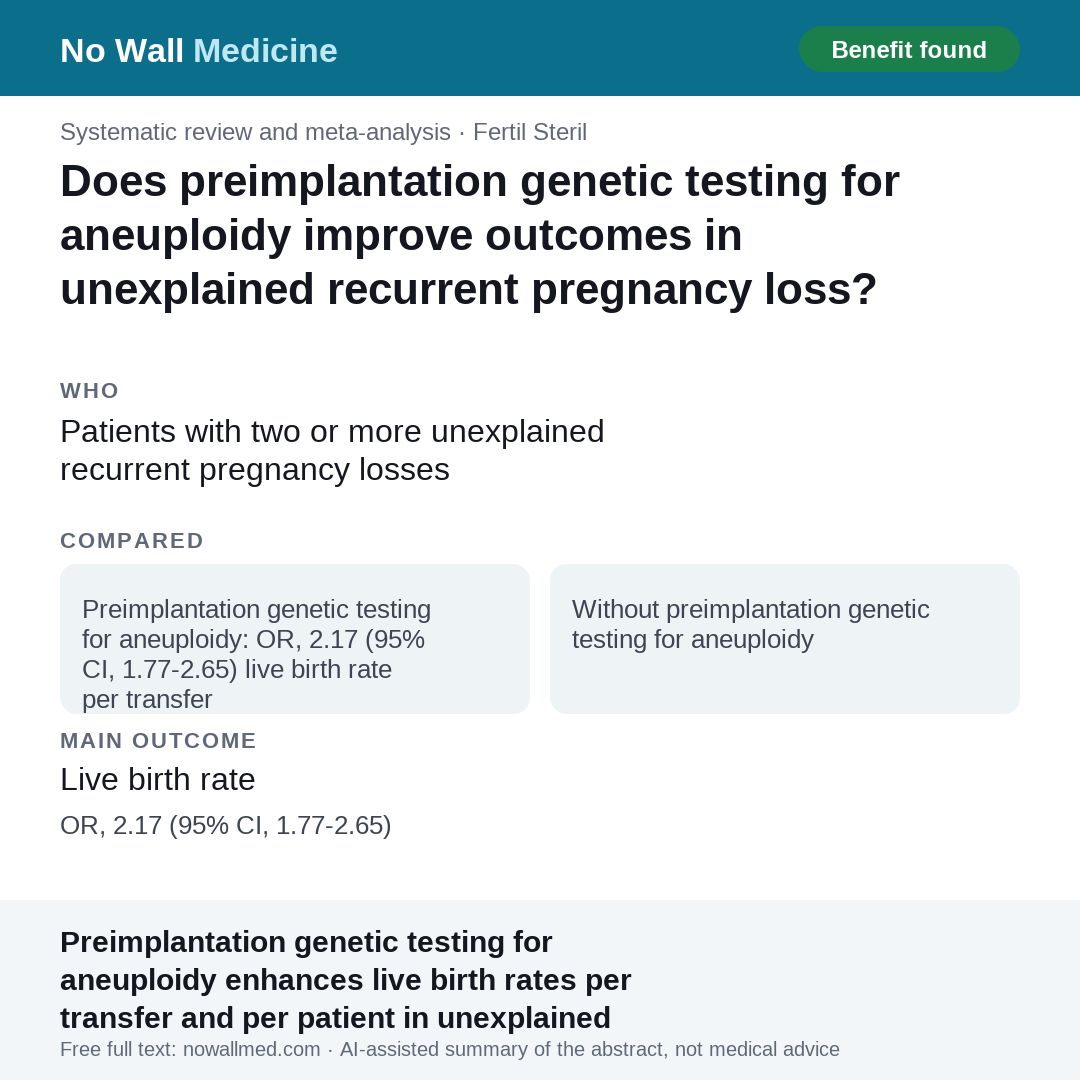
Does preimplantation genetic testing for aneuploidy improve outcomes in unexplained recurrent pregnancy loss?
Who
Patients with two or more unexplained recurrent pregnancy losses
Compared
Preimplantation genetic testing for aneuploidy: OR, 2.17 (95% CI, 1.77-2.65) live birth rate per transfer
Without preimplantation genetic testing for aneuploidy
Main outcome
Live birth rate
Result: OR, 2.17 (95% CI, 1.77-2.65)
Bottom line: Preimplantation genetic testing for aneuploidy enhances live birth rates per transfer and per patient in unexplained recurrent pregnancy loss.
Fertil Steril · 2024-08-14Download image
Clinical question: Does preimplantation genetic testing for aneuploidy improve outcomes in unexplained recurrent pregnancy loss?
Why it matters: It is unknown if testing embryos for chromosomal abnormalities improves pregnancy outcomes or if women with unexplained recurrent pregnancy loss have higher rates of abnormal embryos.
Key points
- Researchers analyzed studies of patients with 2 or more unexplained pregnancy losses to evaluate the effectiveness of preimplantation genetic testing for aneuploidy, which checks embryos for abnormal chromosome numbers.
- In patients with unexplained recurrent pregnancy loss, genetic testing was associated with a decreased clinical pregnancy loss rate (OR, 0.42; 95% CI, 0.27-0.67) and increased live birth rate per transfer (OR, 2.17; 95% CI, 1.77-2.65).
- The analysis found that transferring embryos with normal chromosomes yielded comparable live birth rates (OR, 1.04; 95% CI, 0.74-1.44) and clinical pregnancy loss rates (OR, 1.10; 95% CI, 0.57-2.13) in patients with and without unexplained recurrent pregnancy loss.
Headline and key points written with AI from the paper’s abstract, with every number checked against it. Read the paper before relying on them.
Topics
Cite this article
Mumusoglu S, Telek SB, Ata B. Preimplantation genetic testing for aneuploidy in unexplained recurrent pregnancy loss: a systematic review and meta-analysis. Fertil Steril. 2024. doi:10.1016/j.fertnstert.2024.08.326
Spotted a mistake? Suggest a correction
Top studies every Monday
The week’s key trials and guidelines in your specialties, plus any topics you follow. By email, free.
Get the weekly digest