Two randomized controlled trials show no advantage for genetic testing of embryos before transfer
We have reached a dead end for preimplantation genetic testing for aneuploidy
Analysis of two randomized controlled trialsHarm found
Does preimplantation genetic testing for aneuploidy improve cumulative live birth rates?
Who
Patients undergoing in vitro fertilization
Compared
Preimplantation genetic testing for aneuploidy
Non-use of preimplantation genetic testing for aneuploidy
Main outcome
Cumulative live birth rates following a single oocyte retrieval
Bottom line: Preimplantation genetic testing for aneuploidy failed to show advantages and may cause harm by discarding normal embryos.
Limitation: High embryo mosaicism and false-positive rates from trophectoderm biopsies.
Hum Reprod · 2022-04-01Download image
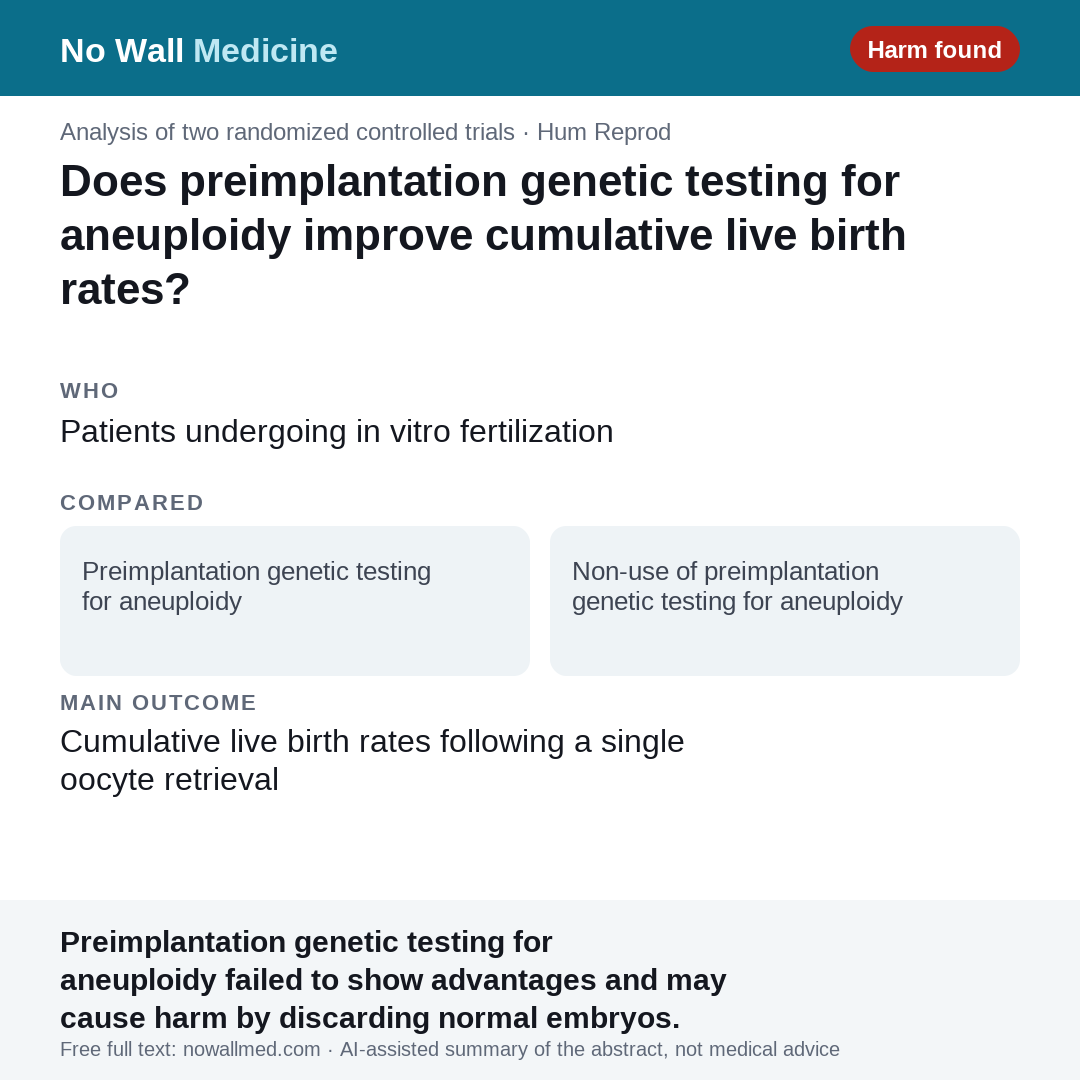
Clinical question: Does preimplantation genetic testing for aneuploidy improve cumulative live birth rates?
Why it matters: It was unknown whether testing embryos for abnormal chromosome numbers before transfer increases pregnancy and live birth rates or reduces miscarriages.
Key points
- Researchers analyzed two randomized controlled trials comparing preimplantation genetic testing for aneuploidy, which checks for abnormal chromosome numbers, against not using the test.
- The analysis of these trials failed to demonstrate significant advantages for cumulative live birth rates following a single egg retrieval when using the testing method.
- The results showed outcome deficits when patient selection biases favoring the testing were reversed and noted that high false-positive rates lead to discarding normal embryos.
Headline and key points written with AI from the paper’s abstract, with every number checked against it. Read the paper before relying on them.
Was this summary helpful?
Subject terms
Cite this article
Gleicher N, Barad DH, Patrizio P, Orvieto R. We have reached a dead end for preimplantation genetic testing for aneuploidy. Hum Reprod. 2022. doi:10.1093/humrep/deac052
Spotted a mistake? Suggest a correction
Top studies every Monday
The week’s key trials and guidelines in your specialties, plus any topics you follow. By email, free.
Get the weekly digest