Linguistic markers show high performance in classification models for identifying post-traumatic stress disorder
Linguistic markers for identifying post-traumatic stress disorder and associated symptoms: a systematic literature review
Meta-analysis of 58 studiesBenefit found
Linguistic markers for post-traumatic stress disorder
Who
people with post-traumatic stress disorder
Compared
PTSD models
control
Main outcome
post-traumatic stress disorder diagnosis
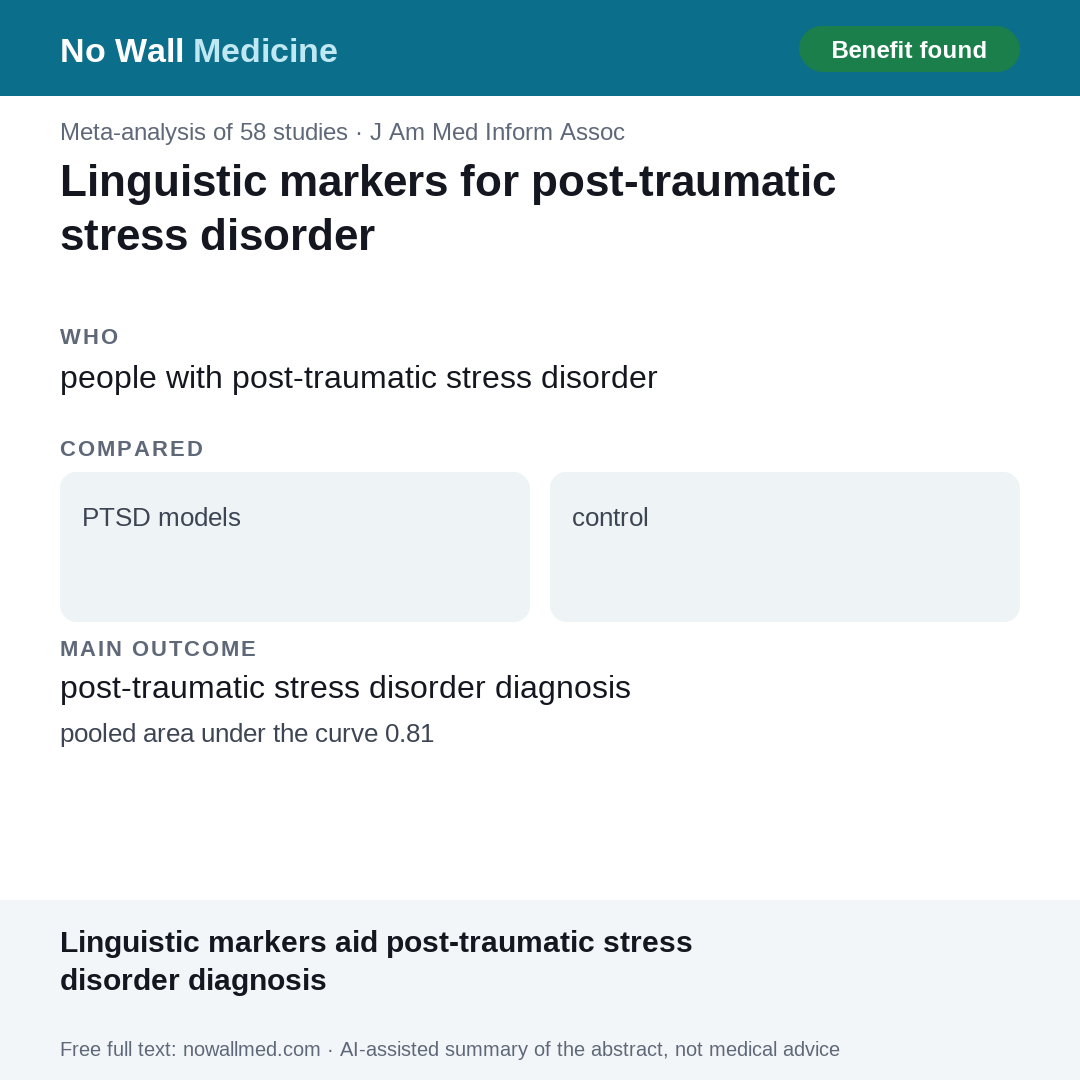
Result: pooled area under the curve 0.81
Bottom line: Linguistic markers aid post-traumatic stress disorder diagnosis
Limitation: methodological inconsistencies and biases
J Am Med Inform Assoc · 2025-05-25Download image
Why it matters: Diagnosing post-traumatic stress disorder is difficult because symptoms vary and patients often have other co-occurring medical conditions.
Key points
- Researchers conducted a systematic review and meta-analysis of 58 studies to identify linguistic features associated with post-traumatic stress disorder.
- The meta-analysis showed a pooled area under the curve of 0.81, indicating high performance for classification models using linguistic markers.
- Only 8 studies were rated with a low risk of bias due to issues like inadequate control groups and unvalidated tools.
Limitation the authors note: The review noted significant publication bias, heterogeneity, and common methodological issues such as unvalidated linguistic and diagnosis tools.
Headline and key points written with AI from the paper’s abstract, with every number checked against it. Read the paper before relying on them.
Was this summary helpful?
Subject terms
Cite this article
Quillivic R, Auxéméry Y, Gayraud F, Dayan J, Mesmoudi S. Linguistic markers for identifying post-traumatic stress disorder and associated symptoms: a systematic literature review. J Am Med Inform Assoc. 2025. doi:10.1093/jamia/ocaf075
Spotted a mistake? Suggest a correction
Top studies every Monday
The week’s key trials and guidelines in your specialties, plus any topics you follow. By email, free.
Get the weekly digest