Machine learning using text, audio, and video data shows potential for predicting anxiety and posttraumatic stress
Use of Machine Learning Algorithms Based on Text, Audio, and Video Data in the Prediction of Anxiety and Posttraumatic Stress in General and Clinical Populations: A Systematic Review
Systematic reviewBenefit found
Can machine learning using text, audio, and video predict anxiety and posttraumatic stress disorder?
Who
128
General and clinical populations
Compared
87Anxiety prediction studies
41Posttraumatic stress disorder prediction studies
Main outcome
Predictive power of machine learning algorithms
Bottom line: Machine learning using natural behavior shows potential for diagnosing anxiety and posttraumatic stress disorder.
Limitation: Methodological quality varied and results of 33 studies were uninterpretable due to missing information.
Biol Psychiatry · 2024-06-10Download image
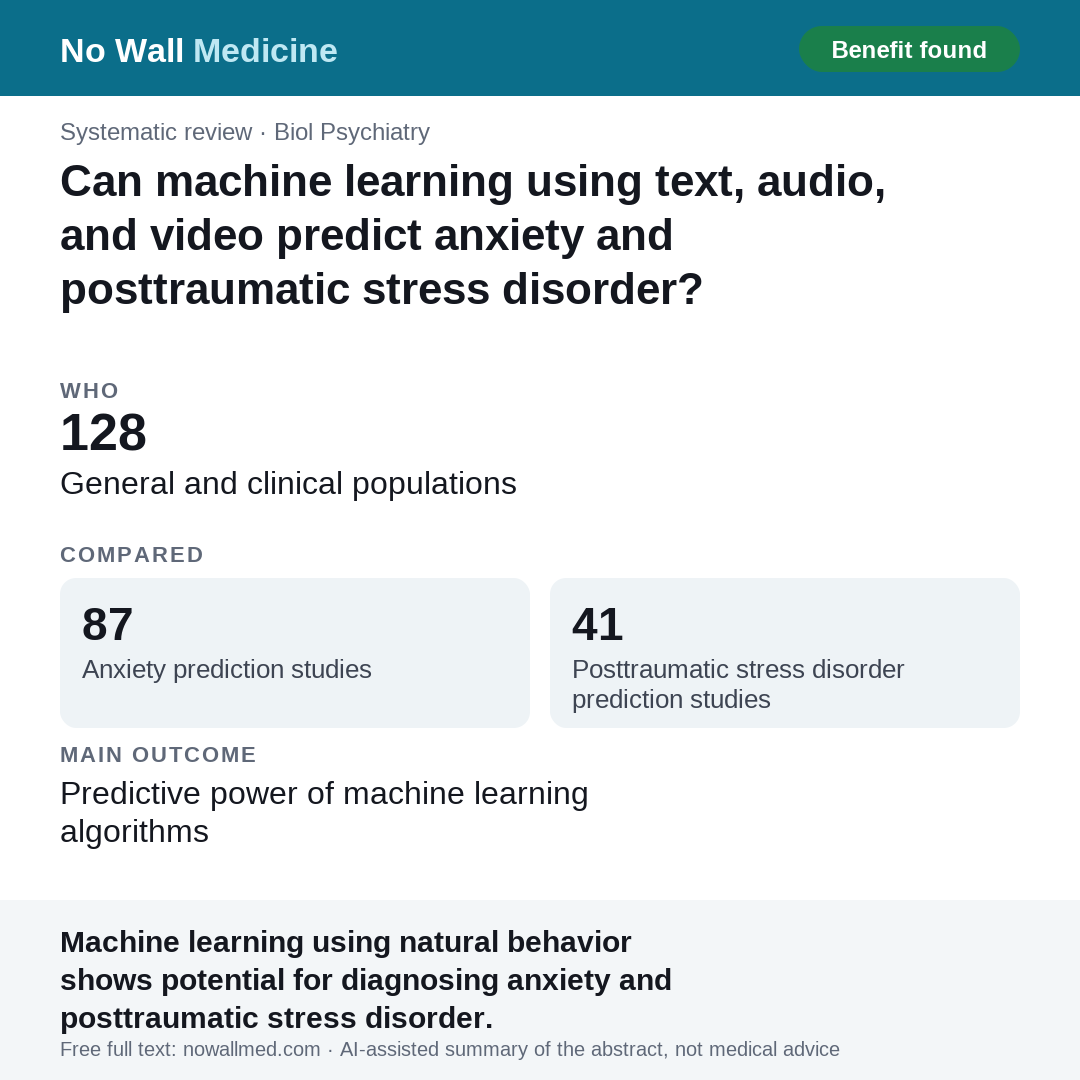
Clinical question: Can machine learning using text, audio, and video predict anxiety and posttraumatic stress disorder?
Why it matters: The current state of the art regarding machine learning algorithms for predicting anxiety and posttraumatic stress disorder using natural behavior data was unknown.
Key points
- Researchers reviewed 128 studies that used machine learning algorithms to predict anxiety and posttraumatic stress disorder using text, audio, or video data.
- Two-thirds of studies focusing on both disorders reported acceptable to very good predictive power when looking only at high-quality studies.
- The majority of studies focused on general populations (n = 92) rather than clinical populations (n = 13).
Headline and key points written with AI from the paper’s abstract, with every number checked against it. Read the paper before relying on them.
Was this summary helpful?
Subject terms
Cite this article
Ciharova M, Amarti K, van Breda W, Peng X, Lorente-Català R, Funk B. Use of Machine Learning Algorithms Based on Text, Audio, and Video Data in the Prediction of Anxiety and Posttraumatic Stress in General and Clinical Populations: A Systematic Review. Biol Psychiatry. 2024. doi:10.1016/j.biopsych.2024.06.002
Spotted a mistake? Suggest a correction
Top studies every Monday
The week’s key trials and guidelines in your specialties, plus any topics you follow. By email, free.
Get the weekly digest