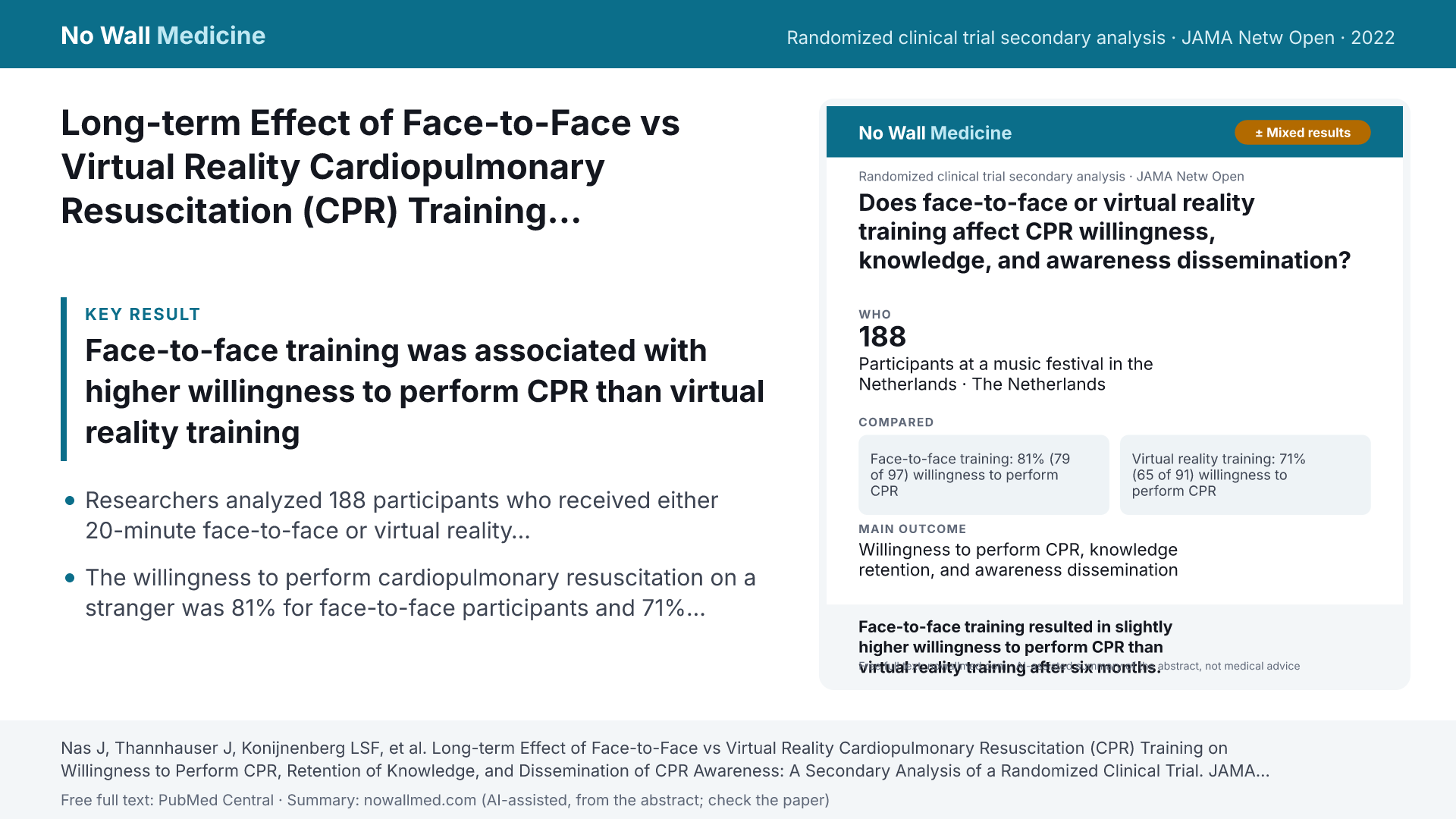
Face-to-face training was associated with higher willingness to perform CPR than virtual reality training
Long-term Effect of Face-to-Face vs Virtual Reality Cardiopulmonary Resuscitation (CPR) Training on Willingness to Perform CPR, Retention of Knowledge, and Dissemination of CPR Awareness: A Secondary Analysis of a Randomized Clinical Trial
Randomized clinical trial secondary analysisMixed results
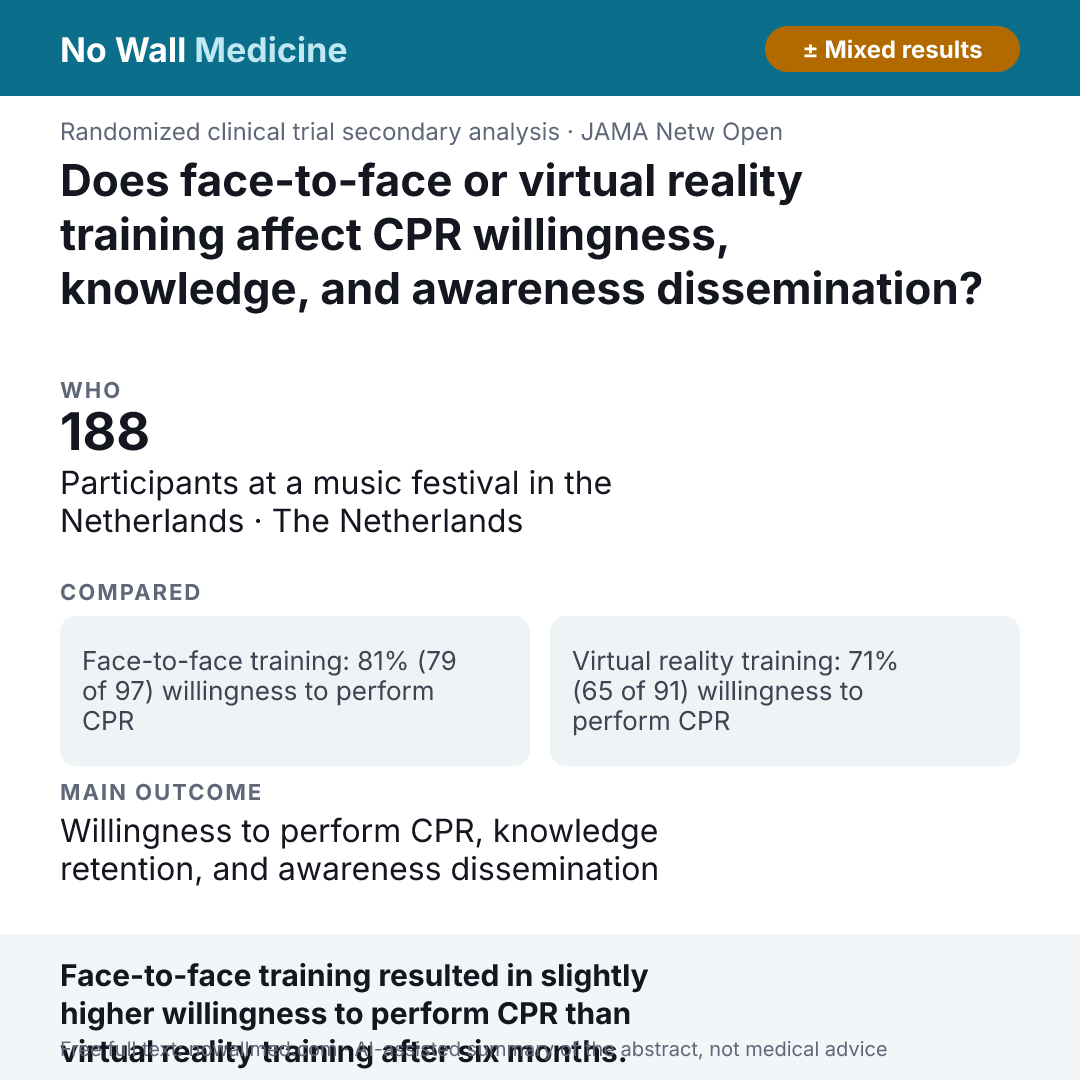
Does face-to-face or virtual reality training affect CPR willingness, knowledge, and awareness dissemination?
Who
188
Participants at a music festival in the Netherlands · The Netherlands
Compared
Face-to-face training: 81% (79 of 97) willingness to perform CPR
Virtual reality training: 71% (65 of 91) willingness to perform CPR
Main outcome
Willingness to perform CPR, knowledge retention, and awareness dissemination
Bottom line: Face-to-face training resulted in slightly higher willingness to perform CPR than virtual reality training after six months.
JAMA Netw Open · 2022-05-02 · NCT04013633
Same trial (NCT04013633)
Papers we list that report this registered trial, oldest first. Read a secondary analysis alongside the main results.
- Secondary analysis Mixed results
This paper JAMA Netw Open 2022-05 - Secondary analysis No clear difference
Alcohol levels were not associated with cardiopulmonary resuscitation quality among festival attendees Resuscitation 2022-10
Headline and visual abstract written with AI from the paper’s abstract, with every number checked against it. Read the paper before relying on them.
Was this summary helpful?
Subject terms
Cite this article
Nas J, Thannhauser J, Konijnenberg LSF, et al. Long-term Effect of Face-to-Face vs Virtual Reality Cardiopulmonary Resuscitation (CPR) Training on Willingness to Perform CPR, Retention of Knowledge, and Dissemination of CPR Awareness: A Secondary Analysis of a Randomized Clinical Trial. JAMA Netw Open. 2022;5(5):e2212964. doi:10.1001/jamanetworkopen.2022.12964
Spotted a mistake? Suggest a correction