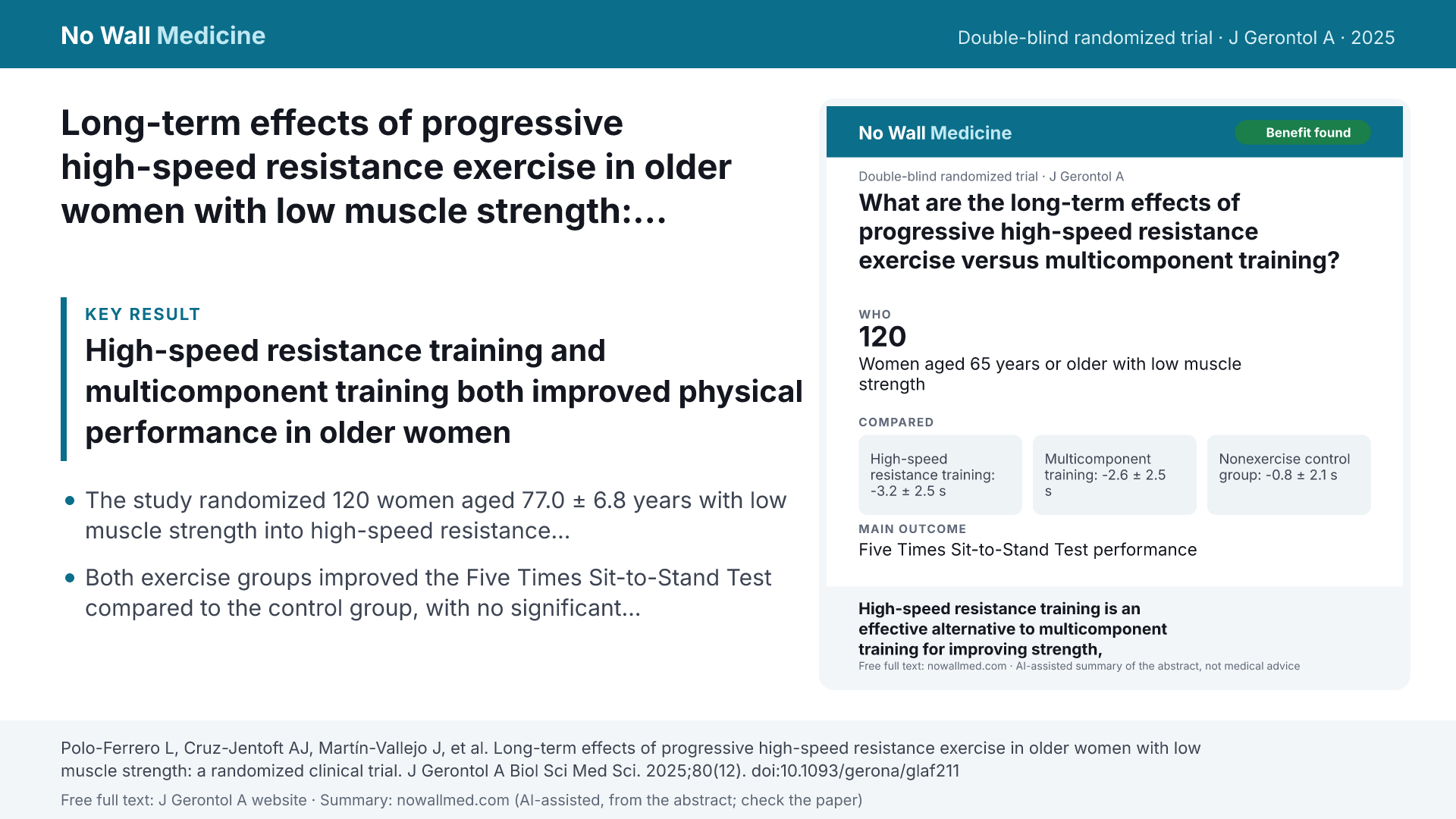
High-speed resistance training and multicomponent training both improved physical performance in older women
Long-term effects of progressive high-speed resistance exercise in older women with low muscle strength: a randomized clinical trial
Double-blind randomized trialBenefit found
What are the long-term effects of progressive high-speed resistance exercise versus multicomponent training?
Who
120
Women aged 65 years or older with low muscle strength
Compared
High-speed resistance training: -3.2 ± 2.5 s
Multicomponent training: -2.6 ± 2.5 s
Nonexercise control group: -0.8 ± 2.1 s
Main outcome
Five Times Sit-to-Stand Test performance
Bottom line: High-speed resistance training is an effective alternative to multicomponent training for improving strength, performance, and body composition.
Limitation: Further studies should confirm its role in preserving intrinsic capacity and preventing sarcopenic obesity.
J Gerontol A · 2025-09-29Download image
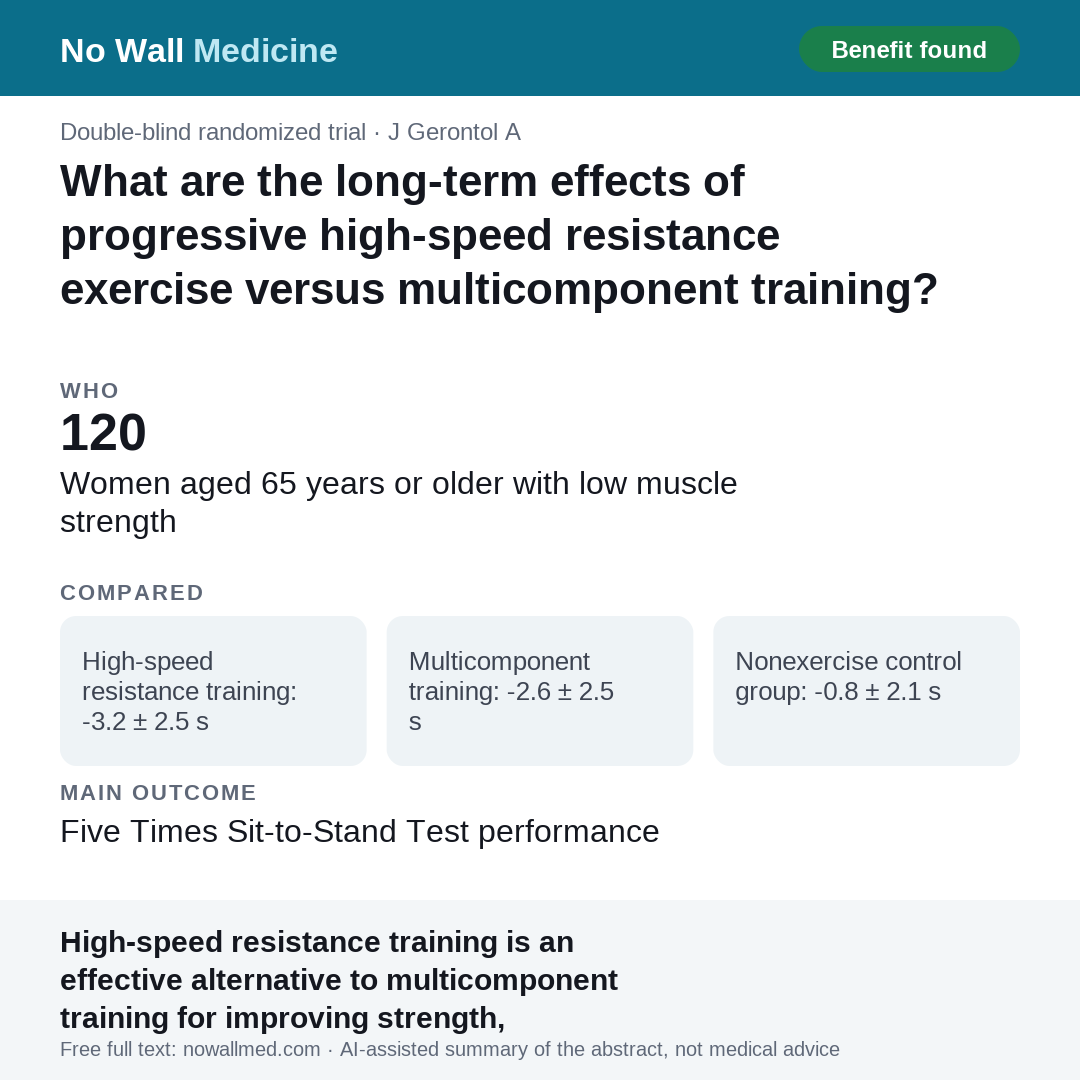
Clinical question: What are the long-term effects of progressive high-speed resistance exercise versus multicomponent training?
Why it matters: The long-term effects of high-speed resistance training in older women with low muscle strength remain unclear compared to multicomponent training.
Key points
- The study randomized 120 women aged 77.0 ± 6.8 years with low muscle strength into high-speed resistance training, multicomponent training, or a nonexercise control group.
- Both exercise groups improved the Five Times Sit-to-Stand Test compared to the control group, with no significant difference between high-speed resistance training and multicomponent training.
- High-speed resistance training was associated with greater improvements in the Timed Up & Go Test and waist circumference, while multicomponent training showed better aerobic capacity results.
Headline and key points written with AI from the paper’s abstract, with every number checked against it. Read the paper before relying on them.
Was this summary helpful?
Subject terms
Cite this article
Polo-Ferrero L, Cruz-Jentoft AJ, Martín-Vallejo J, Puente-González AS, Sánchez-Sánchez MC, Barbero-Iglesias FJ. Long-term effects of progressive high-speed resistance exercise in older women with low muscle strength: a randomized clinical trial. J Gerontol A. 2025. doi:10.1093/gerona/glaf211
Spotted a mistake? Suggest a correction
Top studies every Monday
The week’s key trials and guidelines in your specialties, plus any topics you follow. By email, free.
Get the weekly digest