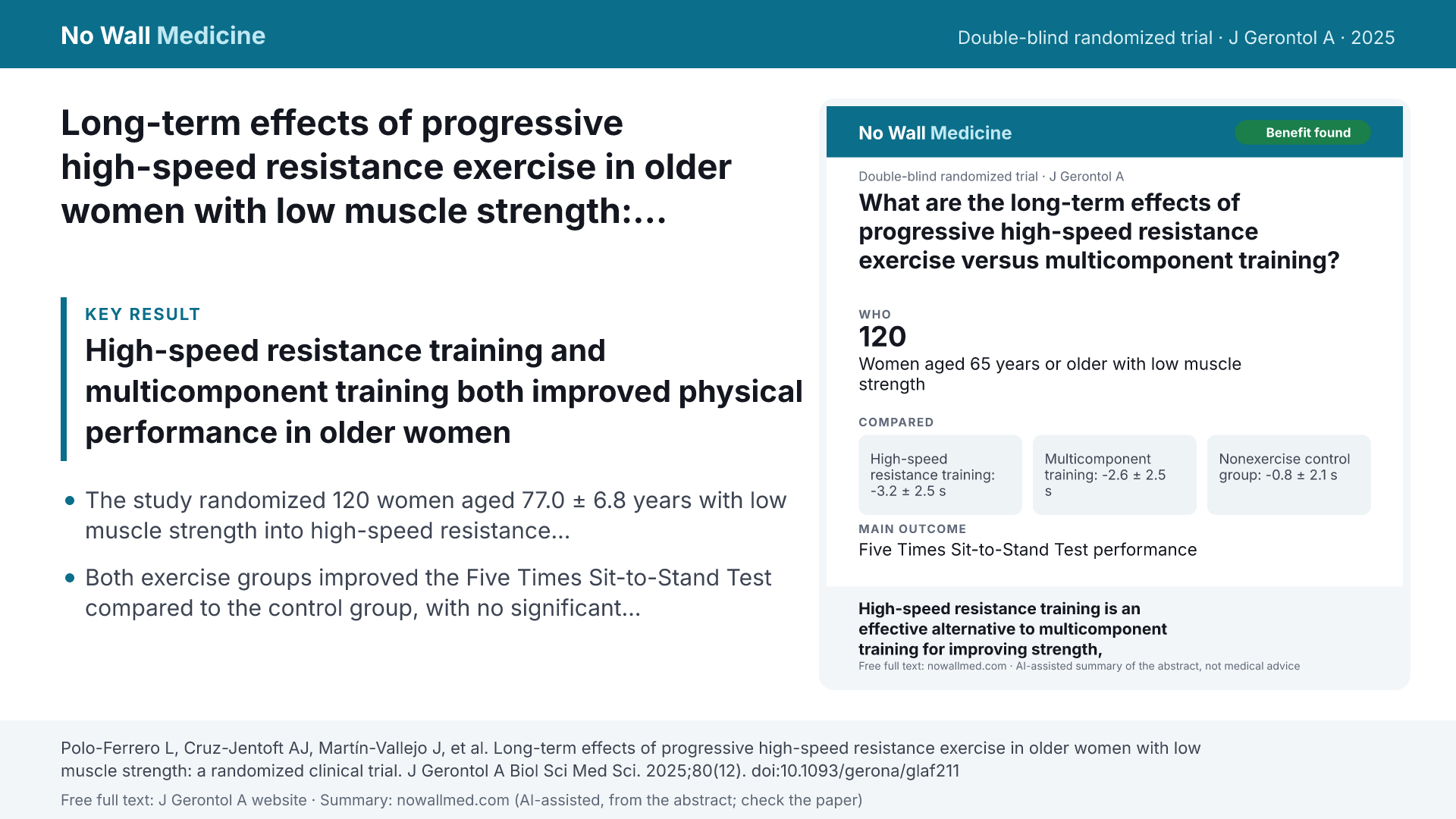
Long-term effects of progressive high-speed resistance exercise in older women with low muscle strength: a randomized clinical trial
Key result: High-speed resistance training and multicomponent training both improved physical performance in older women
Key points
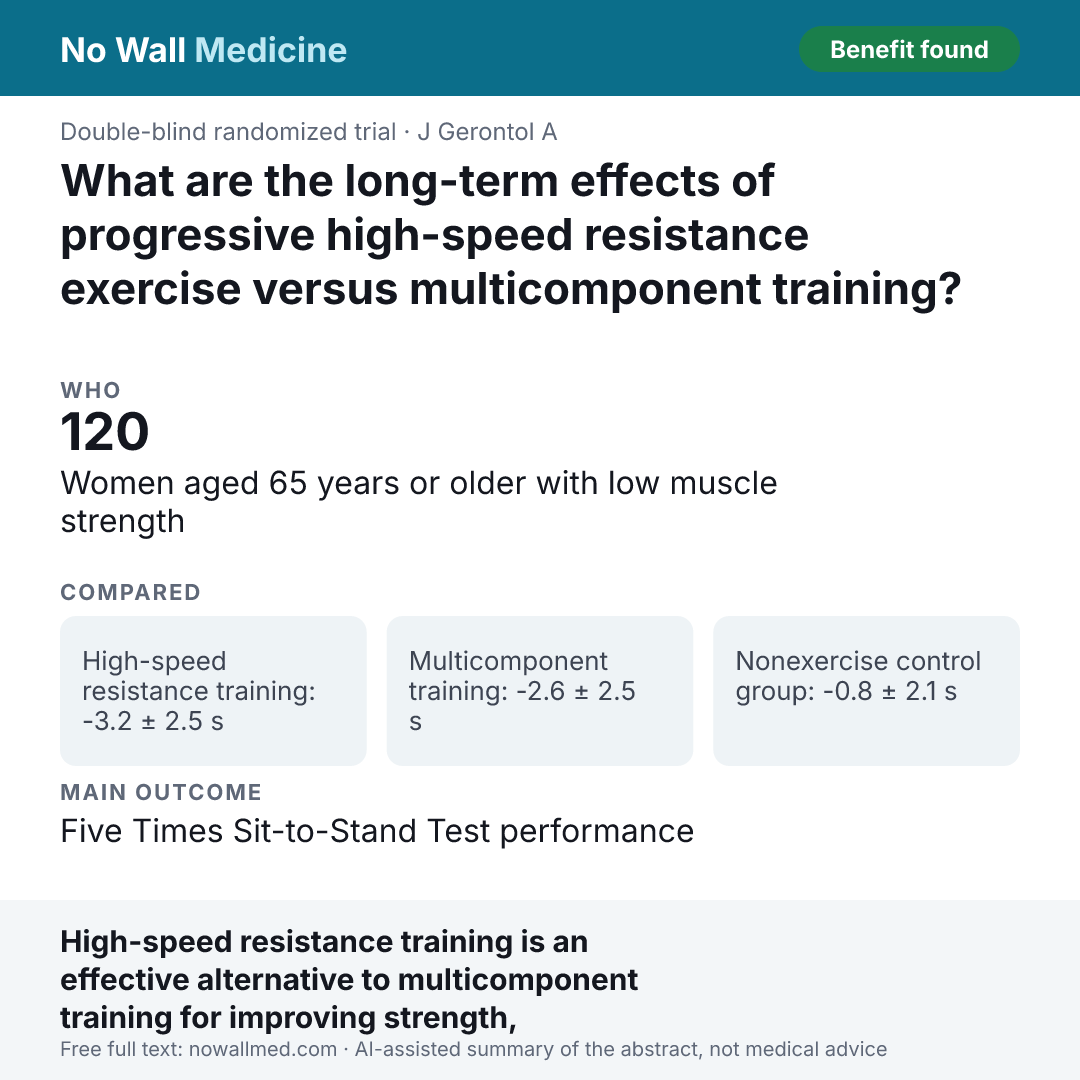
- The study randomized 120 women aged 77.0 ± 6.8 years with low muscle strength into high-speed resistance training, multicomponent training, or a nonexercise control group.
- Both exercise groups improved the Five Times Sit-to-Stand Test compared to the control group, with no significant difference between high-speed resistance training and multicomponent training.
- High-speed resistance training was associated with greater improvements in the Timed Up & Go Test and waist circumference, while multicomponent training showed better aerobic capacity results.
Why it matters: The long-term effects of high-speed resistance training in older women with low muscle strength remain unclear compared to multicomponent training.
Discussion prompts
- Would these patients look like yours? Who was left out?
- Is the main outcome one that matters to patients?
- Is the difference large enough to change what you do?
Cite: Polo-Ferrero L, Cruz-Jentoft AJ, Martín-Vallejo J, et al. Long-term effects of progressive high-speed resistance exercise in older women with low muscle strength: a randomized clinical trial. J Gerontol A Biol Sci Med Sci. 2025;80(12). doi:10.1093/gerona/glaf211
Free full text: J Gerontol A website · Summary and visual abstract: nowallmed.com/a/long-term-effects-of-progressive-high-speed-resistance-exercise-in-1f616wx/ (AI-assisted from the abstract; check the paper before relying on it).