Noncompliant diameter repairs for abdominal aortic aneurysm repair were associated with better long-term survival
Long-term implications of elective evar that is non-compliant with clinical practice guideline diameter thresholds
Status not yet checked. We have not confirmed that this is still the issuing body's current recommendation. Check the issuing body before using it in practice.
Why it matters: It is unknown whether performing endovascular aneurysm repair outside of recommended diameter thresholds for men and women affects long-term patient outcomes and quality metrics.
Key points
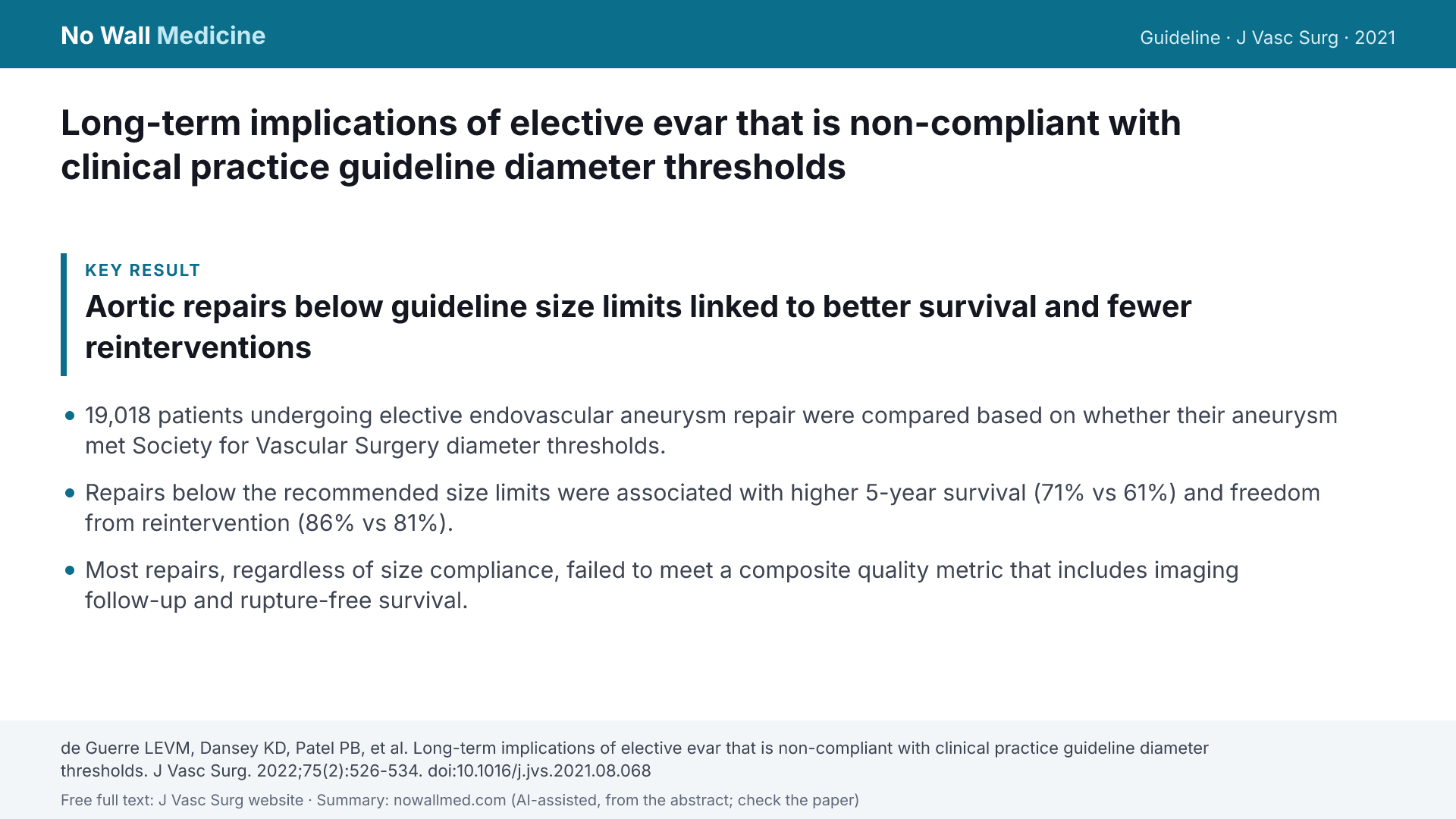
- Researchers reviewed 19,018 elective endovascular aneurysm repair procedures performed between 2003 and 2016 to compare outcomes between those meeting and not meeting diameter guidelines.
- Patients receiving noncompliant repairs had 5-year rupture-free survival of 94% compared to 92% for compliant repairs, and overall survival of 71% compared to 61%.
- Noncompliant repairs were associated with 86% freedom from reintervention compared to 81% for repairs that met the diameter thresholds.
Headline and key points written with AI from the paper’s abstract, with every number checked against it. Read the paper before relying on them.
Was this summary helpful?
Subject terms
Cite this article
de Guerre LEVM, Dansey KD, Patel PB, et al. Long-term implications of elective evar that is non-compliant with clinical practice guideline diameter thresholds. J Vasc Surg. 2021. doi:10.1016/j.jvs.2021.08.068
Spotted a mistake? Suggest a correction