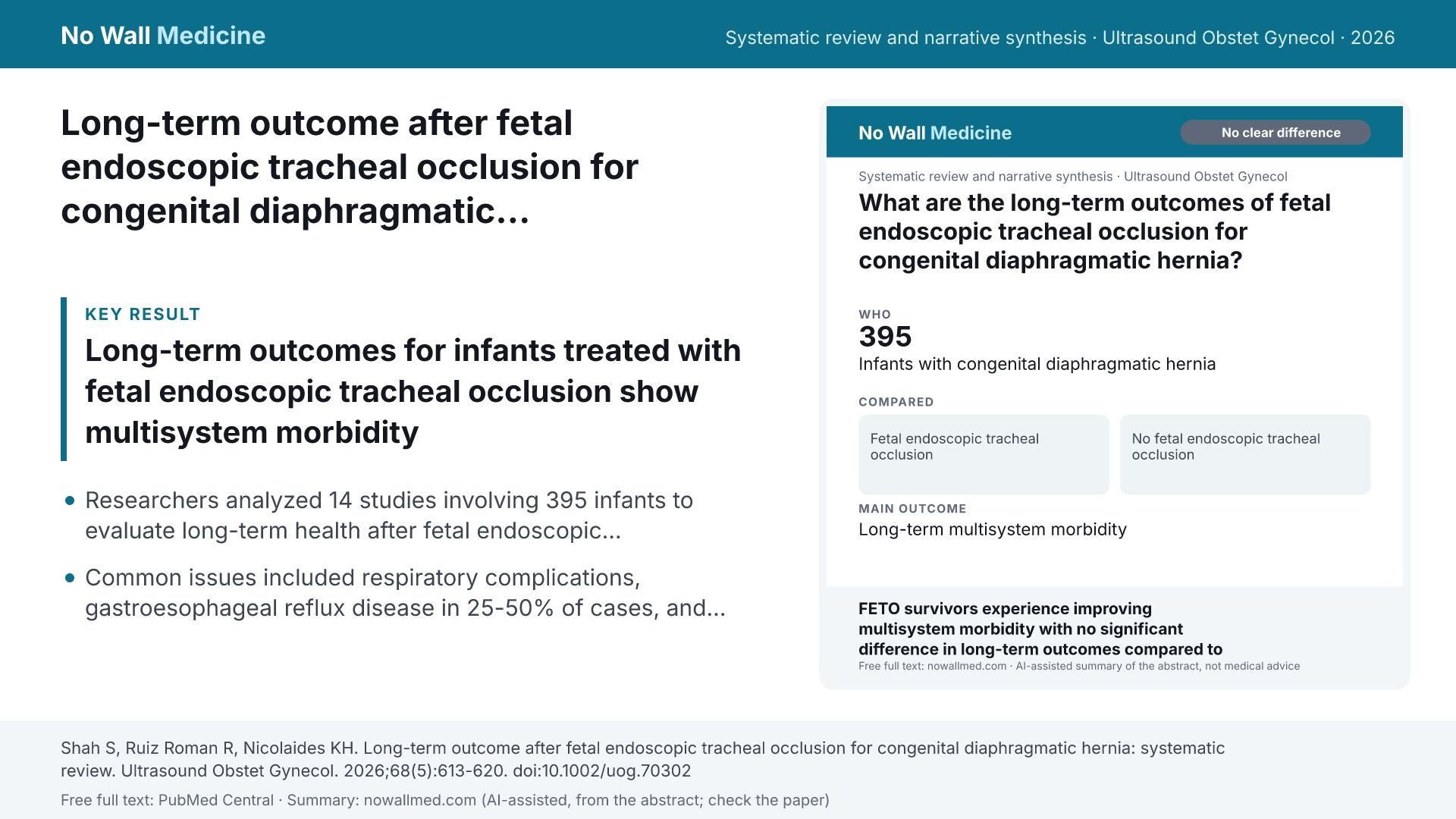
Long-term outcome after fetal endoscopic tracheal occlusion for congenital diaphragmatic hernia: systematic review
Key result: Long-term outcomes for infants treated with fetal endoscopic tracheal occlusion show multisystem morbidity
Key points
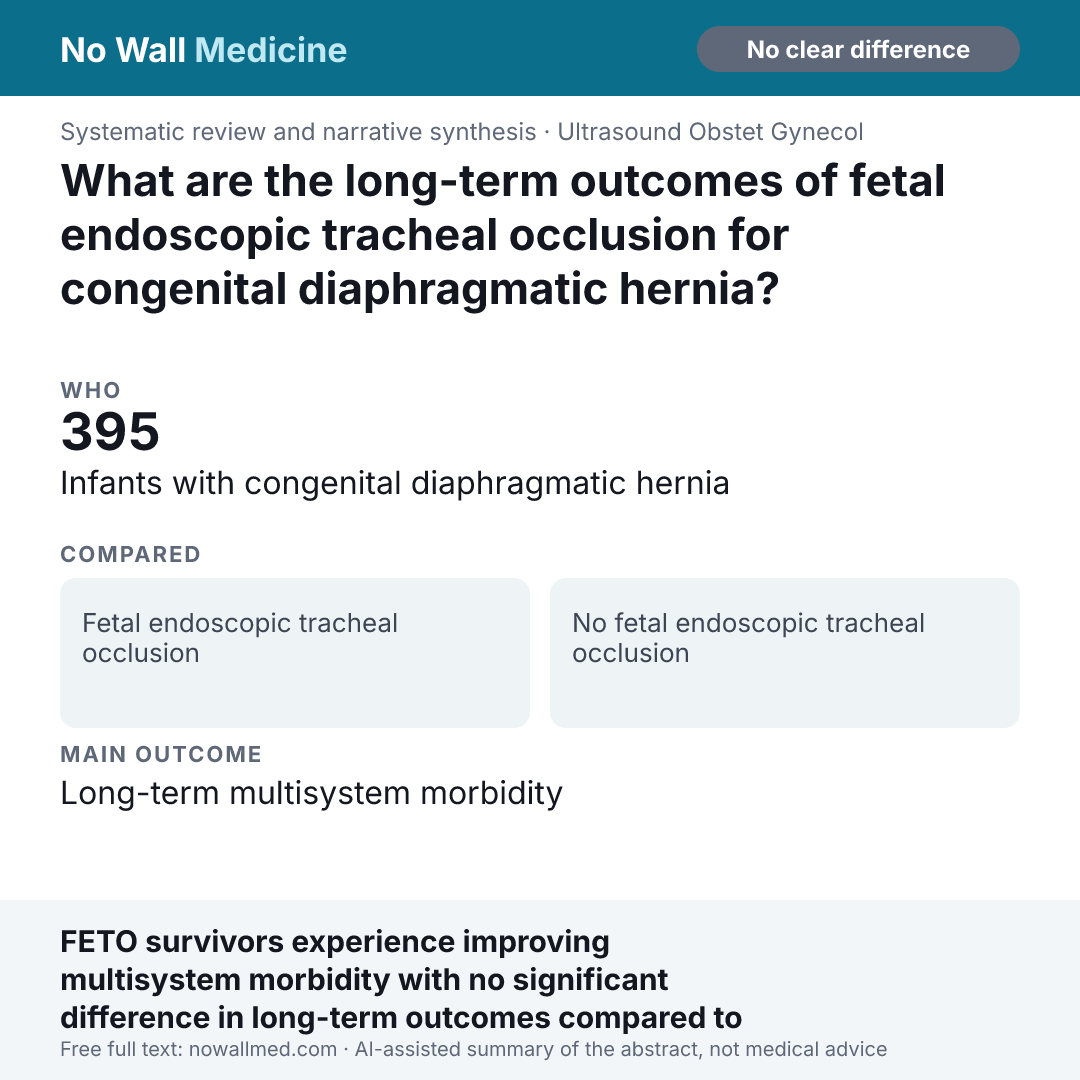
- Researchers analyzed 14 studies involving 395 infants to evaluate long-term health after fetal endoscopic tracheal occlusion for congenital diaphragmatic hernia.
- Common issues included respiratory complications, gastroesophageal reflux disease in 25-50% of cases, and hernia recurrence in 21-43% of cases.
- After adjusting for disease severity, multiple studies found no significant differences in long-term outcomes between infants who underwent the procedure and those who did not.
Why it matters: The long-term health effects across multiple body systems for infants treated with fetal endoscopic tracheal occlusion were not fully synthesized.
Limitation the authors note: A meta-analysis could not be performed due to outcome heterogeneity.
Discussion prompts
- Would these patients look like yours? Who was left out?
- Is the main outcome one that matters to patients?
- Is the difference large enough to change what you do?
Cite: Shah S, Ruiz Roman R, Nicolaides KH. Long-term outcome after fetal endoscopic tracheal occlusion for congenital diaphragmatic hernia: systematic review. Ultrasound Obstet Gynecol. 2026;68(5):613-620. doi:10.1002/uog.70302
Free full text: PubMed Central · Summary and visual abstract: nowallmed.com/a/long-term-outcome-after-fetal-endoscopic-tracheal-occlusion-for-1aiw20v/ (AI-assisted from the abstract; check the paper before relying on it).