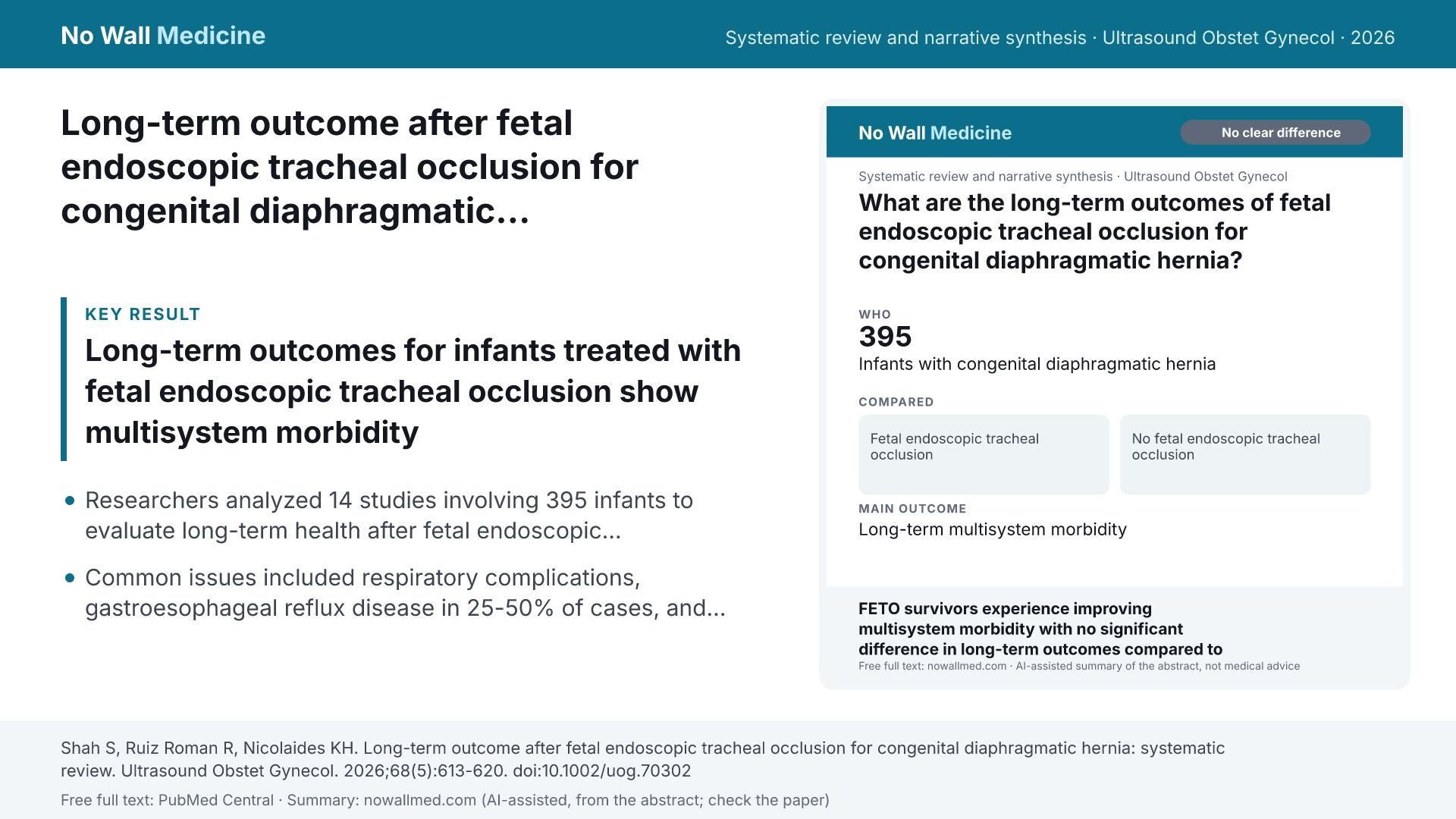
Long-term outcomes for infants treated with fetal endoscopic tracheal occlusion show multisystem morbidity
Long-term outcome after fetal endoscopic tracheal occlusion for congenital diaphragmatic hernia: systematic review
Systematic review and narrative synthesisNo clear difference
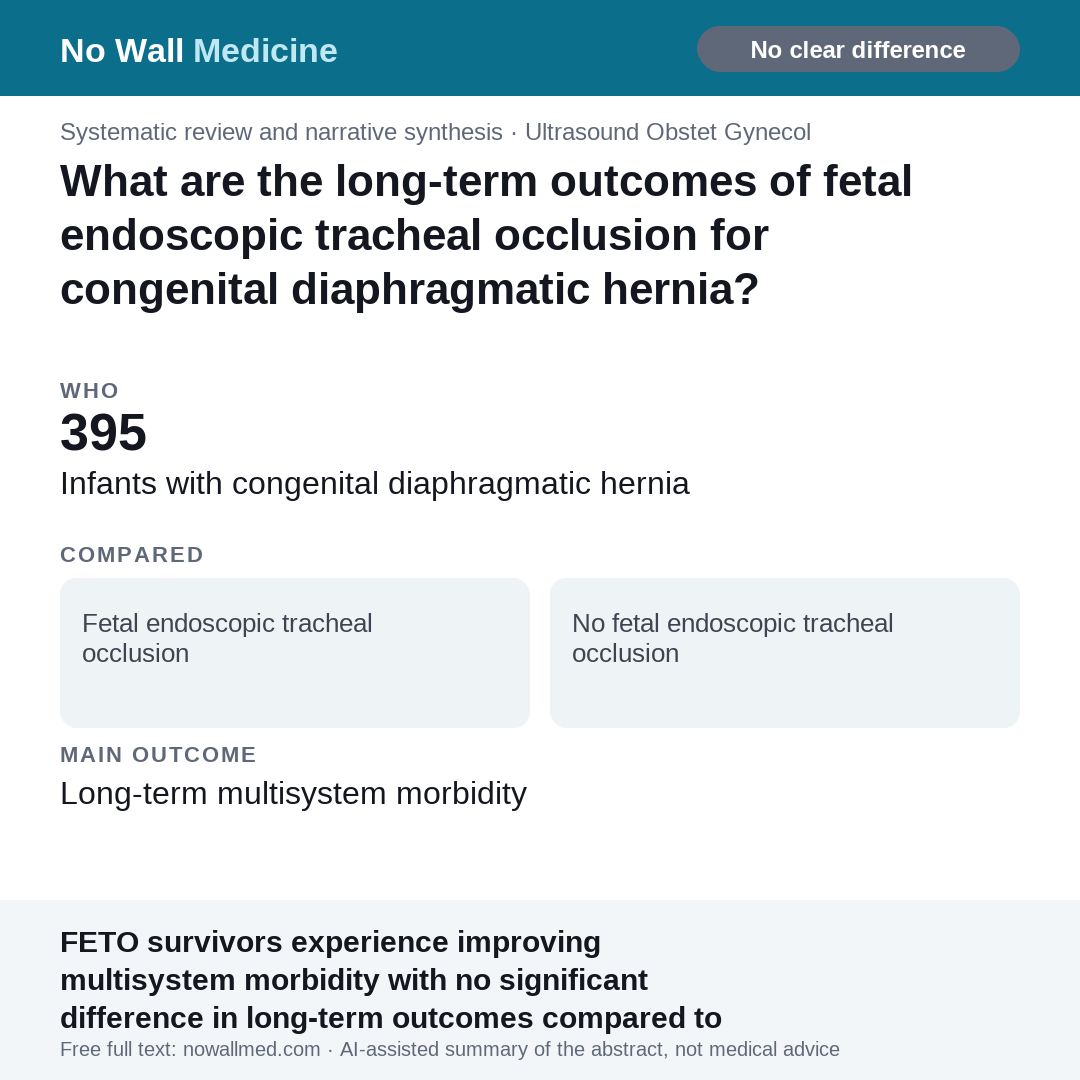
What are the long-term outcomes of fetal endoscopic tracheal occlusion for congenital diaphragmatic hernia?
Who
395
Infants with congenital diaphragmatic hernia
Compared
Fetal endoscopic tracheal occlusion
No fetal endoscopic tracheal occlusion
Main outcome
Long-term multisystem morbidity
Bottom line: FETO survivors experience improving multisystem morbidity with no significant difference in long-term outcomes compared to non-FETO infants.
Limitation: Meta-analysis was not performed due to outcome heterogeneity.
Ultrasound Obstet Gynecol · 2026-08-29Download image
Clinical question: What are the long-term outcomes of fetal endoscopic tracheal occlusion for congenital diaphragmatic hernia?
Why it matters: The long-term health effects across multiple body systems for infants treated with fetal endoscopic tracheal occlusion were not fully synthesized.
Key points
- Researchers analyzed 14 studies involving 395 infants to evaluate long-term health after fetal endoscopic tracheal occlusion for congenital diaphragmatic hernia.
- Common issues included respiratory complications, gastroesophageal reflux disease in 25-50% of cases, and hernia recurrence in 21-43% of cases.
- After adjusting for disease severity, multiple studies found no significant differences in long-term outcomes between infants who underwent the procedure and those who did not.
Limitation the authors note: A meta-analysis could not be performed due to outcome heterogeneity.
Headline and key points written with AI from the paper’s abstract, with every number checked against it. Read the paper before relying on them.
Was this summary helpful?
Subject terms
Cite this article
Shah S, Ruiz Roman R, Nicolaides KH. Long-term outcome after fetal endoscopic tracheal occlusion for congenital diaphragmatic hernia: systematic review. Ultrasound Obstet Gynecol. 2026. doi:10.1002/uog.70302
Spotted a mistake? Suggest a correction