Long-term outcomes by bone marrow B-cell depletion from the R2W trial of bortezomib with cyclophosphamide and rituximab in Waldenstrőm macroglobulinaemia
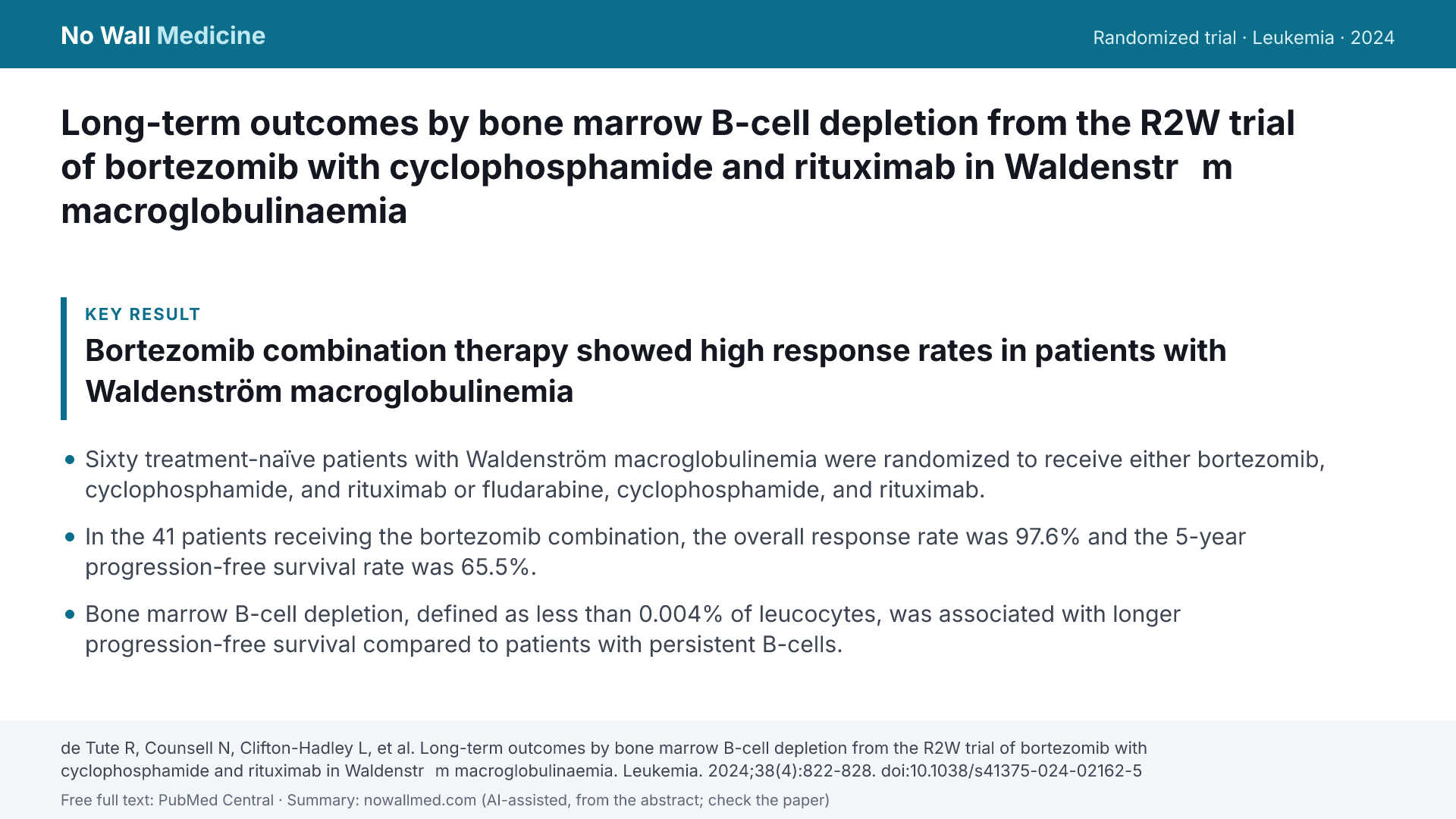
Key result: Bortezomib combination therapy showed high response rates in patients with Waldenström macroglobulinemia
Key points
- Sixty treatment-naïve patients with Waldenström macroglobulinemia were randomized to receive either bortezomib, cyclophosphamide, and rituximab or fludarabine, cyclophosphamide, and rituximab.
- In the 41 patients receiving the bortezomib combination, the overall response rate was 97.6% and the 5-year progression-free survival rate was 65.5%.
- Bone marrow B-cell depletion, defined as less than 0.004% of leucocytes, was associated with longer progression-free survival compared to patients with persistent B-cells.
Discussion prompts
- Would these patients look like yours? Who was left out?
- Is the main outcome one that matters to patients?
- Is the difference large enough to change what you do?
Cite: de Tute R, Counsell N, Clifton-Hadley L, et al. Long-term outcomes by bone marrow B-cell depletion from the R2W trial of bortezomib with cyclophosphamide and rituximab in Waldenstrőm macroglobulinaemia. Leukemia. 2024;38(4):822-828. doi:10.1038/s41375-024-02162-5
Free full text: PubMed Central · Summary and visual abstract: nowallmed.com/a/long-term-outcomes-by-bone-marrow-b-cell-depletion-from-the-r2w-trial-fyevaj/ (AI-assisted from the abstract; check the paper before relying on it).