Longitudinal genome-wide methylation study of PTSD treatment using prolonged exposure and hydrocortisone
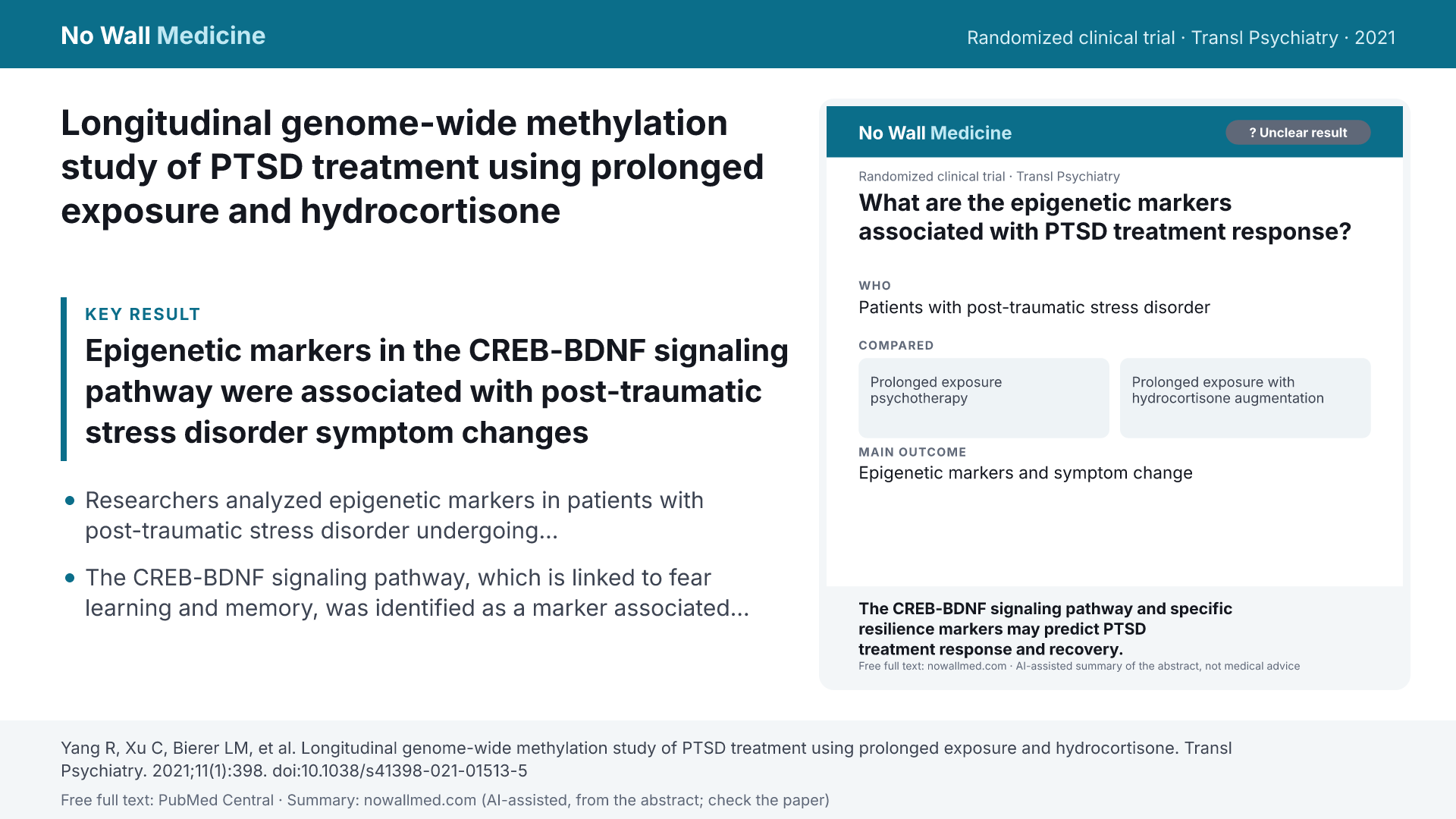
Key result: Epigenetic markers in the CREB-BDNF signaling pathway were associated with post-traumatic stress disorder symptom changes
Randomized clinical trialUnclear result
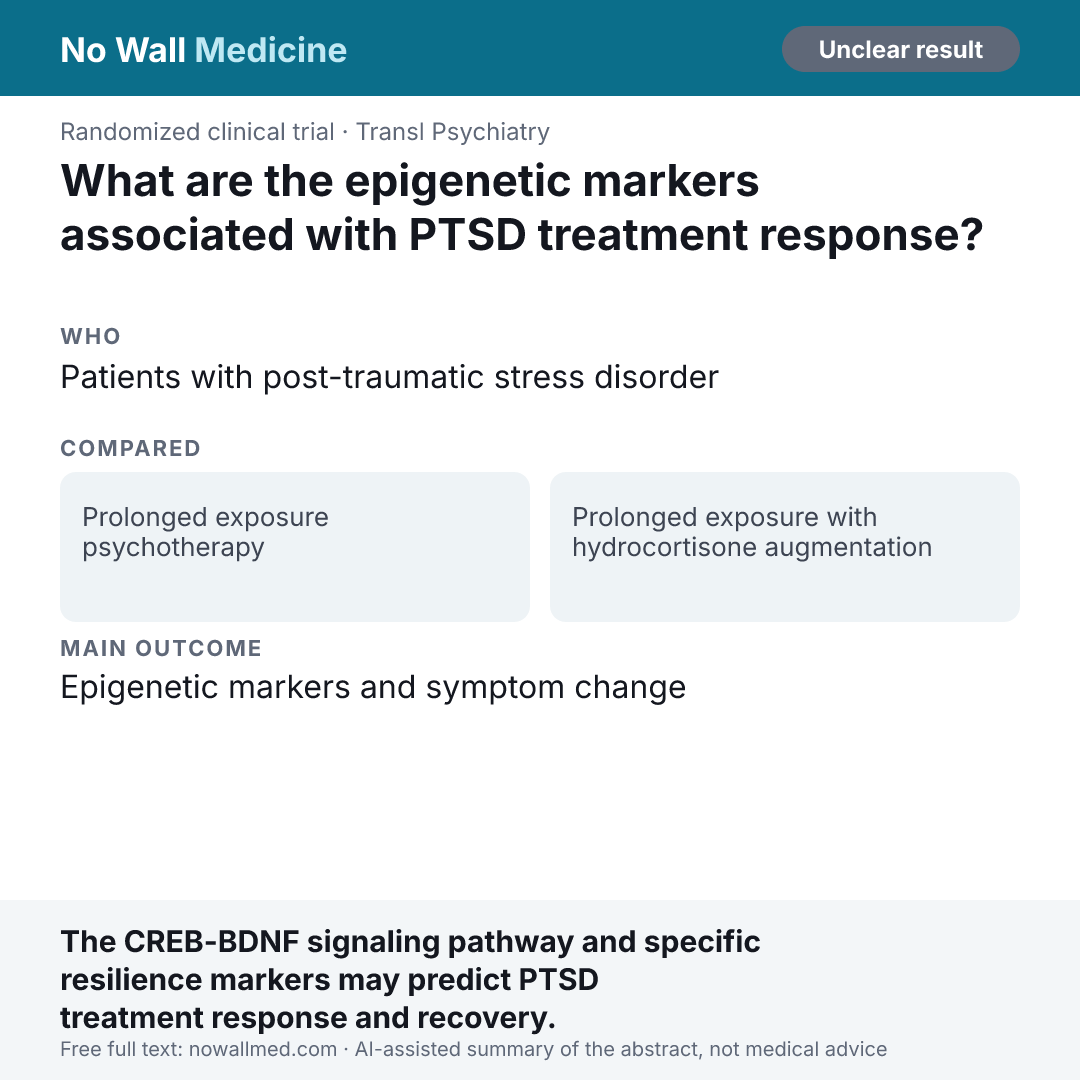
What are the epigenetic markers associated with PTSD treatment response?
Who
Patients with post-traumatic stress disorder
Compared
Prolonged exposure psychotherapy
Prolonged exposure with hydrocortisone augmentation
Main outcome
Epigenetic markers and symptom change
Bottom line: The CREB-BDNF signaling pathway and specific resilience markers may predict PTSD treatment response and recovery.
Transl Psychiatry · 2021-07-13 · Save PNG
Key points
- Researchers analyzed epigenetic markers in patients with post-traumatic stress disorder undergoing prolonged-exposure psychotherapy with or without hydrocortisone augmentation.
- The CREB-BDNF signaling pathway, which is linked to fear learning and memory, was identified as a marker associated with symptom change and severity.
- Decreased methylation levels in the gene body region of FKBP5 were associated with decreasing CAPS scores in treatment responders.
Discussion prompts
- Would these patients look like yours? Who was left out?
- Is the main outcome one that matters to patients?
- Is the difference large enough to change what you do?
Cite: Yang R, Xu C, Bierer LM, et al. Longitudinal genome-wide methylation study of PTSD treatment using prolonged exposure and hydrocortisone. Transl Psychiatry. 2021;11(1):398. doi:10.1038/s41398-021-01513-5
Free full text: PubMed Central · Summary and visual abstract: nowallmed.com/a/longitudinal-genome-wide-methylation-study-of-ptsd-treatment-using-1jaxn22/ (AI-assisted from the abstract; check the paper before relying on it).