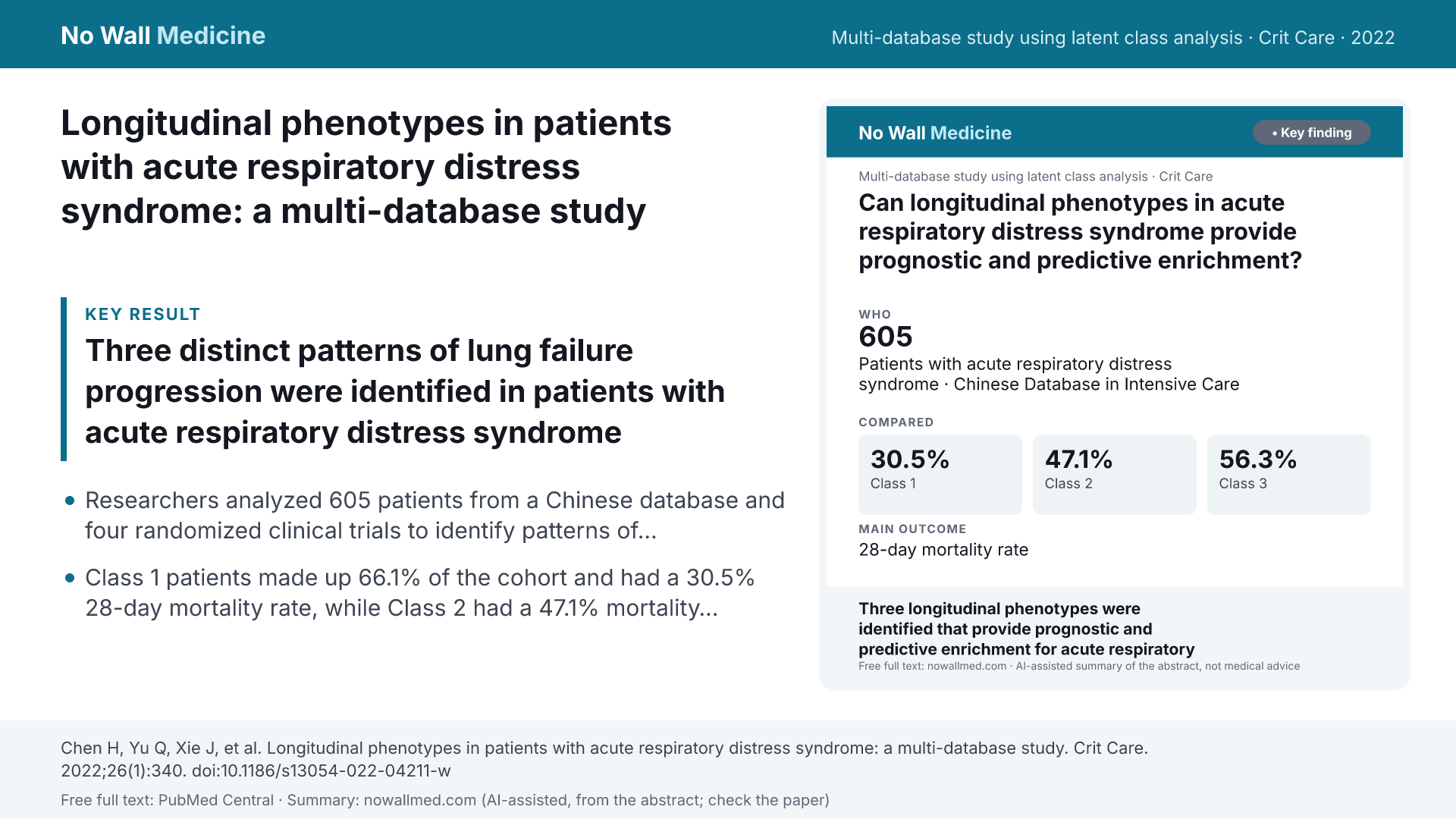
Three distinct patterns of lung failure progression were identified in patients with acute respiratory distress syndrome
Longitudinal phenotypes in patients with acute respiratory distress syndrome: a multi-database study
Multi-database study using latent class analysisBenefit found
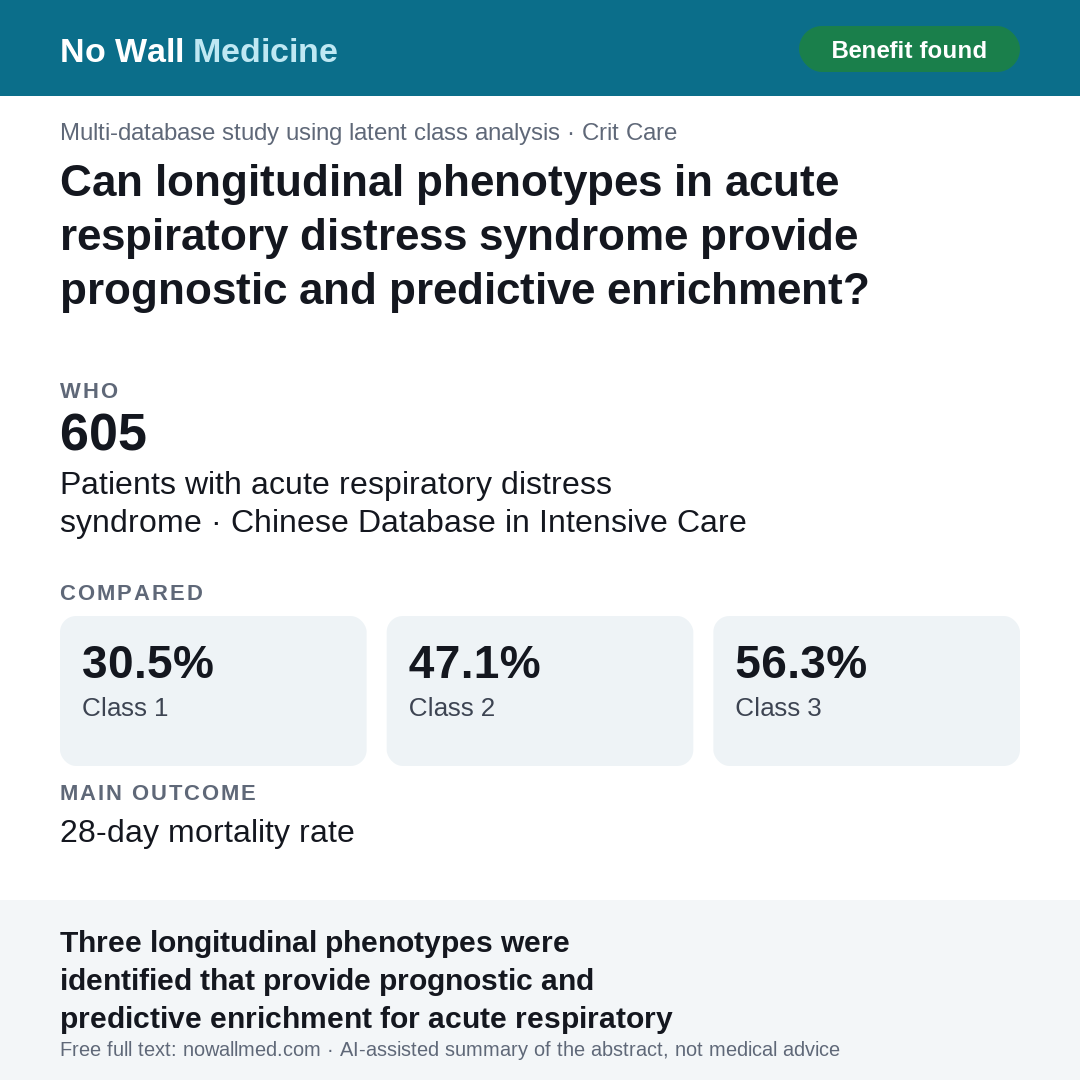
Can longitudinal phenotypes in acute respiratory distress syndrome provide prognostic and predictive enrichment?
Who
605
Patients with acute respiratory distress syndrome · Chinese Database in Intensive Care and four randomized clinical trials
Compared
30.5%Class 1
47.1%Class 2
56.3%Class 3
Main outcome
28-day mortality rate
Bottom line: Three longitudinal phenotypes were identified that provide prognostic and predictive enrichment for acute respiratory distress syndrome patients.
Limitation: The phenotypes can be accurately identified with simple classifier models, except for Class 3.
Crit Care · 2022-11-04Download image
Clinical question: Can longitudinal phenotypes in acute respiratory distress syndrome provide prognostic and predictive enrichment?
Why it matters: Previous identification of acute respiratory distress syndrome phenotypes often disregarded how patient characteristics change over time.
Key points
- Researchers analyzed 605 patients from a Chinese database and four randomized clinical trials to identify patterns of acute respiratory distress syndrome over the first four days of mechanical ventilation.
- Class 1 patients made up 66.1% of the cohort and had a 30.5% 28-day mortality rate, while Class 2 had a 47.1% mortality rate and Class 3 had a 56.3% mortality rate.
- Time-varying mechanical power, a measure of energy transferred to the lungs, was more significantly associated with 28-day mortality in Class 2 patients than in other groups.
Headline and key points written with AI from the paper’s abstract, with every number checked against it. Read the paper before relying on them.
Was this summary helpful?
Subject terms
Cite this article
Chen H, Yu Q, Xie J, Liu S, Pan C, Liu L. Longitudinal phenotypes in patients with acute respiratory distress syndrome: a multi-database study. Crit Care. 2022. doi:10.1186/s13054-022-04211-w
Spotted a mistake? Suggest a correction
Top studies every Monday
The week’s key trials and guidelines in your specialties, plus any topics you follow. By email, free.
Get the weekly digest