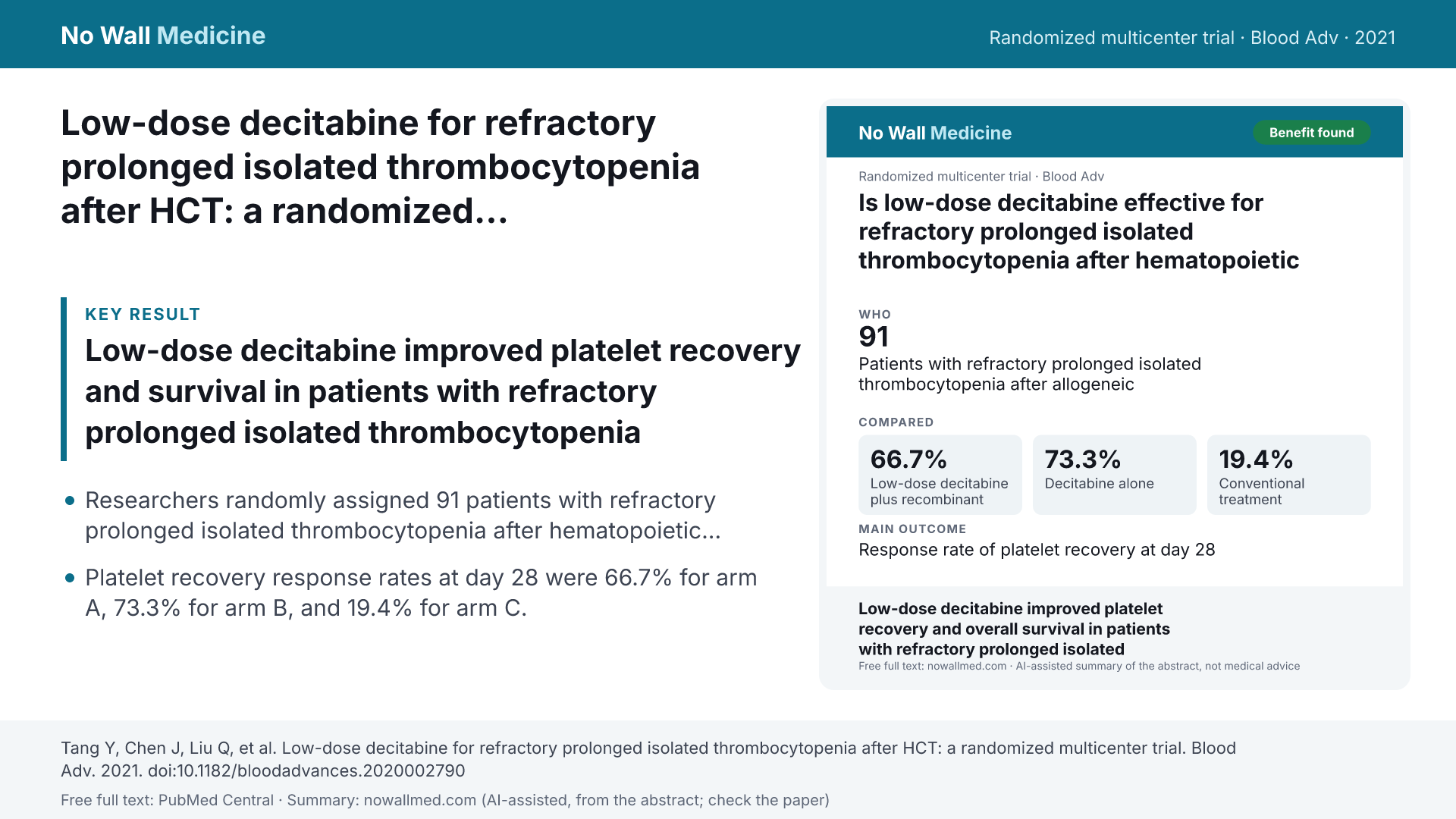
Low-dose decitabine improved platelet recovery and survival in patients with refractory prolonged isolated thrombocytopenia
Low-dose decitabine for refractory prolonged isolated thrombocytopenia after HCT: a randomized multicenter trial
Randomized multicenter trialBenefit found
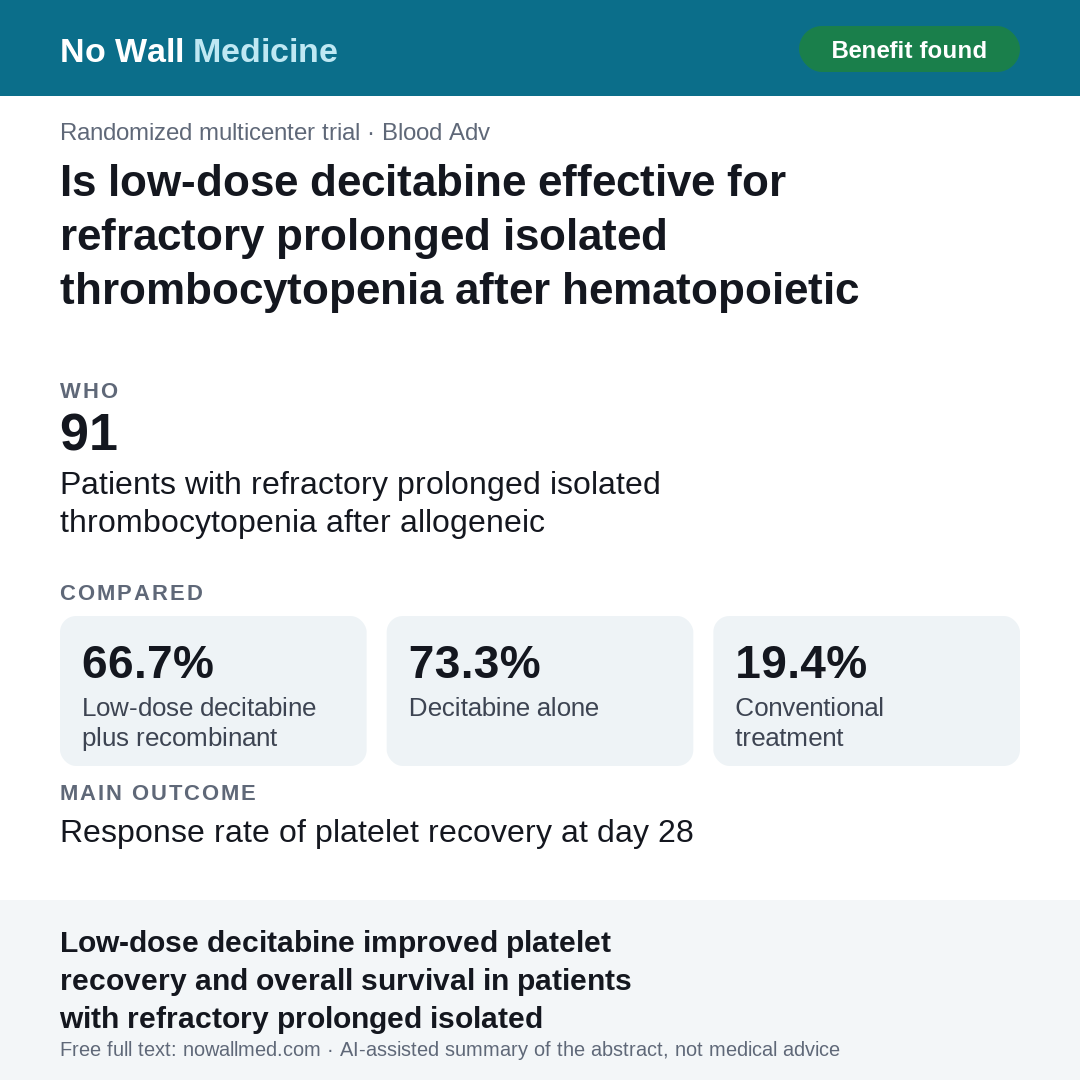
Is low-dose decitabine effective for refractory prolonged isolated thrombocytopenia after hematopoietic cell transplantation?
Who
91
Patients with refractory prolonged isolated thrombocytopenia after allogeneic hematopoietic cell transplantation
Compared
66.7%Low-dose decitabine plus recombinant human thrombopoietin
73.3%Decitabine alone
19.4%Conventional treatment
Main outcome
Response rate of platelet recovery at day 28
Bottom line: Low-dose decitabine improved platelet recovery and overall survival in patients with refractory prolonged isolated thrombocytopenia.
Blood Adv · 2021-03-01Download image
Clinical question: Is low-dose decitabine effective for refractory prolonged isolated thrombocytopenia after hematopoietic cell transplantation?
Why it matters: Refractory prolonged isolated thrombocytopenia is an intractable complication after allogeneic hematopoietic cell transplantation that often leads to a poor prognosis.
Key points
- Researchers randomly assigned 91 patients with refractory prolonged isolated thrombocytopenia after hematopoietic cell transplantation to receive low-dose decitabine plus thrombopoietin, decitabine alone, or conventional treatment.
- Platelet recovery response rates at day 28 were 66.7% for arm A, 73.3% for arm B, and 19.4% for arm C.
- One-year survival rates were 64.4% ± 9.1% for arm A and 73.4% ± 8.8% for arm B, compared to 41.0% ± 9.8% for arm C.
Headline and key points written with AI from the paper’s abstract, with every number checked against it. Read the paper before relying on them.
Was this summary helpful?
Subject terms
Cite this article
Tang Y, Chen J, Liu Q, et al. Low-dose decitabine for refractory prolonged isolated thrombocytopenia after HCT: a randomized multicenter trial. Blood Adv. 2021. doi:10.1182/bloodadvances.2020002790
Spotted a mistake? Suggest a correction