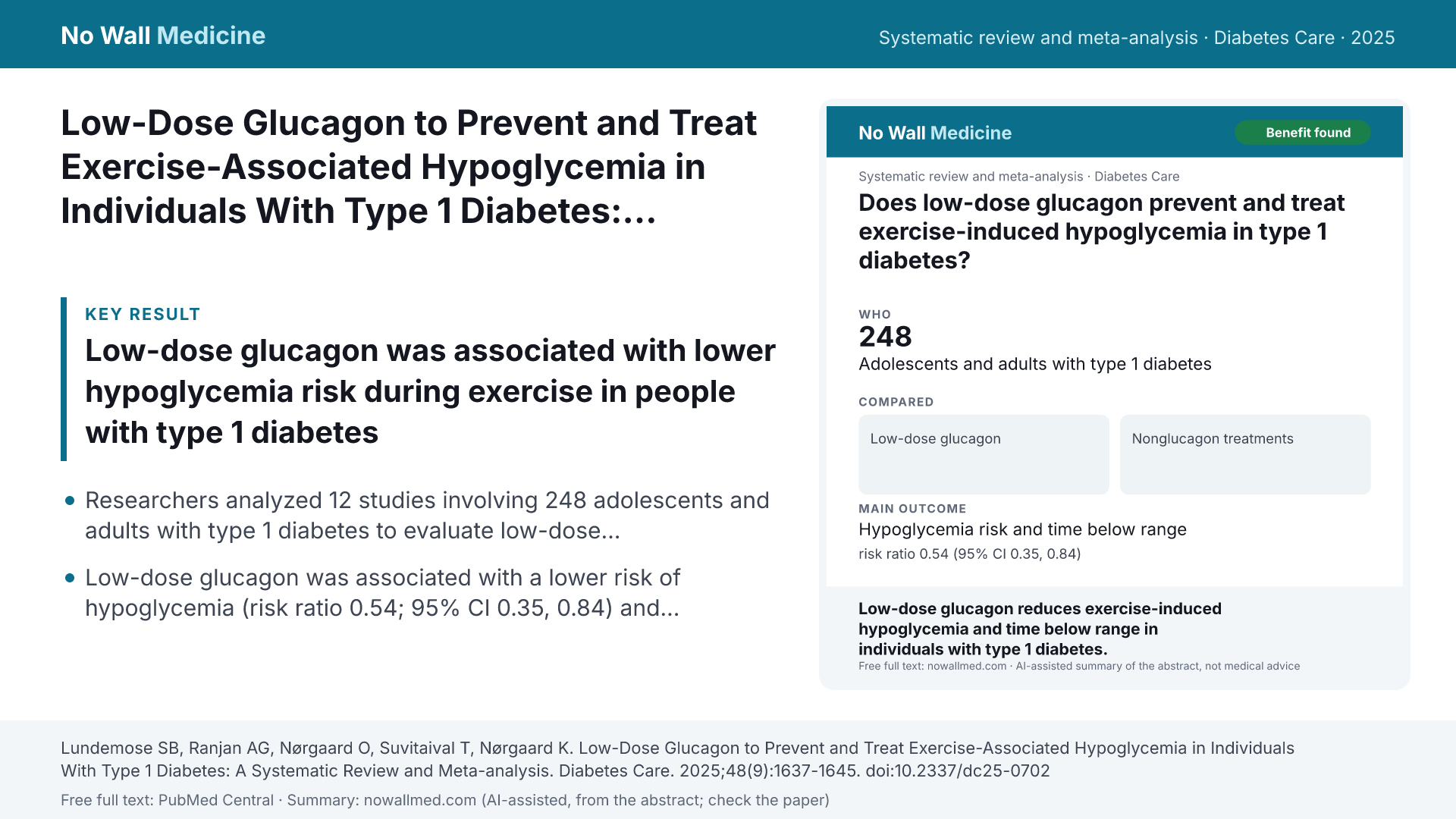
Low-Dose Glucagon to Prevent and Treat Exercise-Associated Hypoglycemia in Individuals With Type 1 Diabetes: A Systematic Review and Meta-analysis
Key result: Low-dose glucagon was associated with lower hypoglycemia risk during exercise in people with type 1 diabetes
Key points
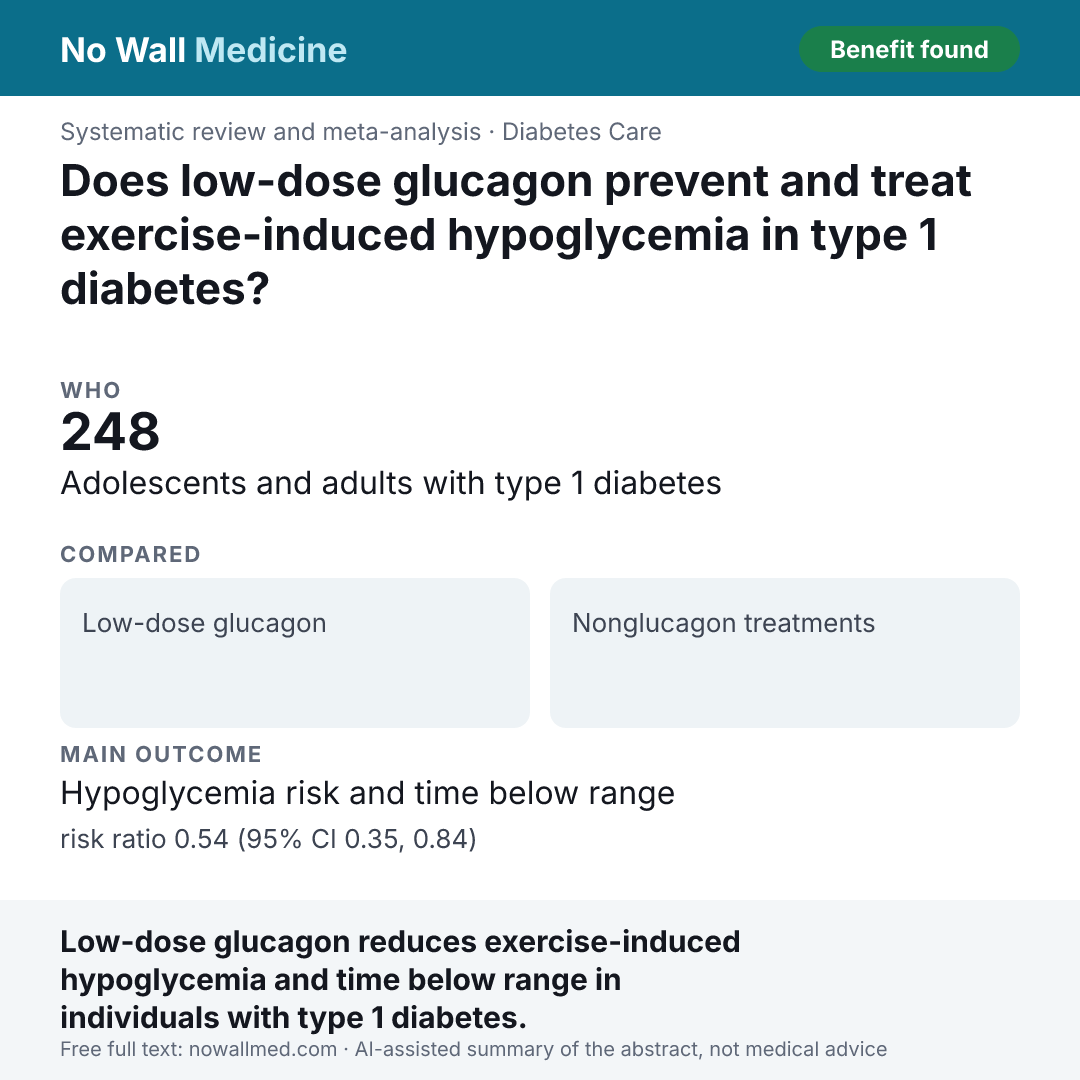
- Researchers analyzed 12 studies involving 248 adolescents and adults with type 1 diabetes to evaluate low-dose glucagon compared to other treatments.
- Low-dose glucagon was associated with a lower risk of hypoglycemia (risk ratio 0.54; 95% CI 0.35, 0.84) and a decrease in time below range of -3.91 percentage points.
- The use of low-dose glucagon was associated with an increase in overall adverse events (risk ratio 2.75; 95% CI 1.07, 7.08).
Why it matters: People with type 1 diabetes face a high risk of hypoglycemia, or low blood sugar, when exercising.
Limitation the authors note: The included studies were few and heterogeneous, which may have influenced the overall outcomes.
Discussion prompts
- Would these patients look like yours? Who was left out?
- Is the main outcome one that matters to patients?
- Is the difference large enough to change what you do?
Cite: Lundemose SB, Ranjan AG, Nørgaard O, Suvitaival T, Nørgaard K. Low-Dose Glucagon to Prevent and Treat Exercise-Associated Hypoglycemia in Individuals With Type 1 Diabetes: A Systematic Review and Meta-analysis. Diabetes Care. 2025;48(9):1637-1645. doi:10.2337/dc25-0702
Free full text: PubMed Central · Summary and visual abstract: nowallmed.com/a/low-dose-glucagon-to-prevent-and-treat-exercise-associated-1dagjyg/ (AI-assisted from the abstract; check the paper before relying on it).