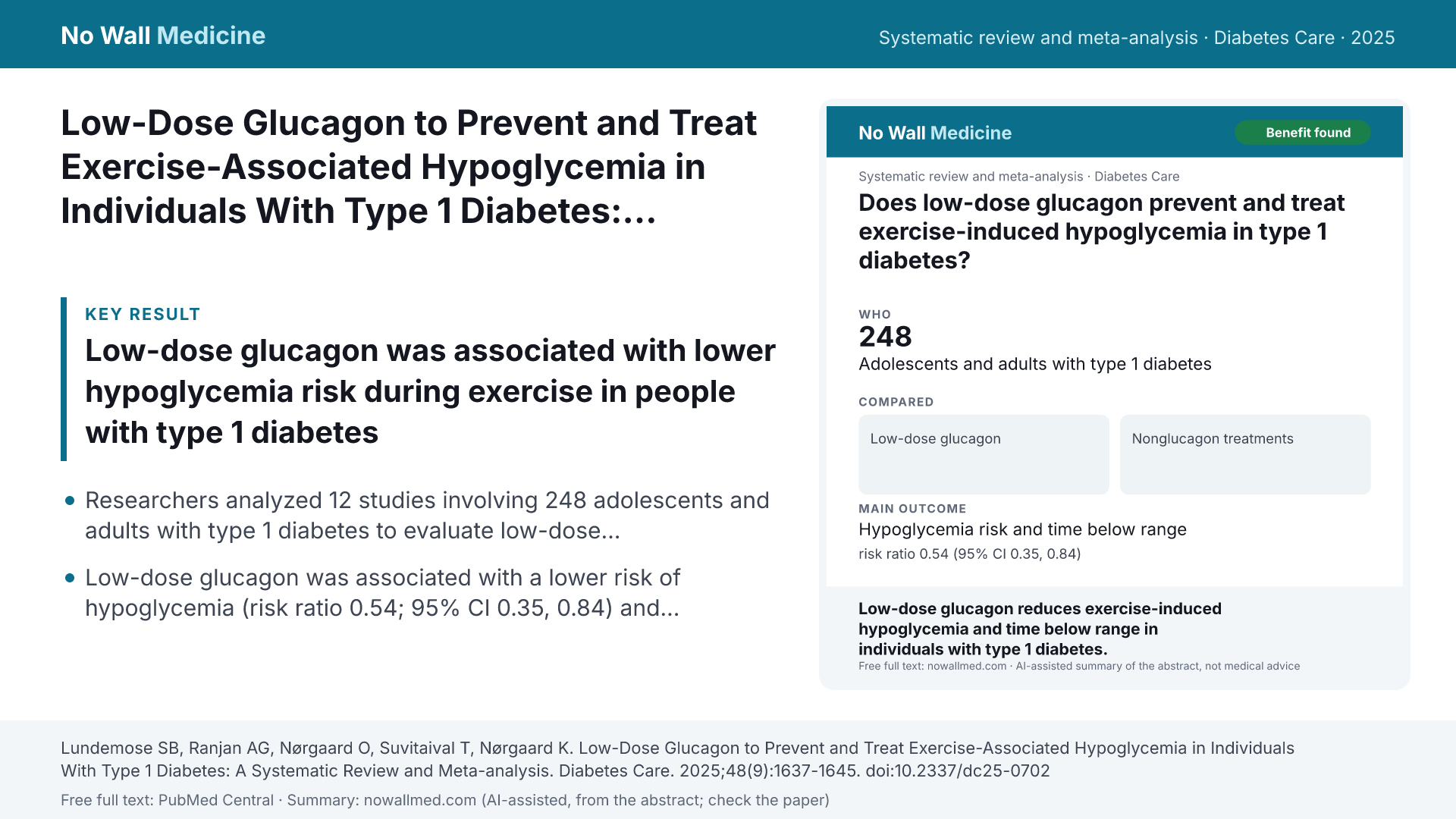
Low-dose glucagon was associated with lower hypoglycemia risk during exercise in people with type 1 diabetes
Low-Dose Glucagon to Prevent and Treat Exercise-Associated Hypoglycemia in Individuals With Type 1 Diabetes: A Systematic Review and Meta-analysis
Systematic review and meta-analysisBenefit found
Does low-dose glucagon prevent and treat exercise-induced hypoglycemia in type 1 diabetes?
Who
248
Adolescents and adults with type 1 diabetes
Compared
Low-dose glucagon
Nonglucagon treatments
Main outcome
Hypoglycemia risk and time below range
Result: risk ratio 0.54 (95% CI 0.35, 0.84)
Bottom line: Low-dose glucagon reduces exercise-induced hypoglycemia and time below range in individuals with type 1 diabetes.
Limitation: The included studies were few and heterogeneous.
Diabetes Care · 2025-08-20Download image
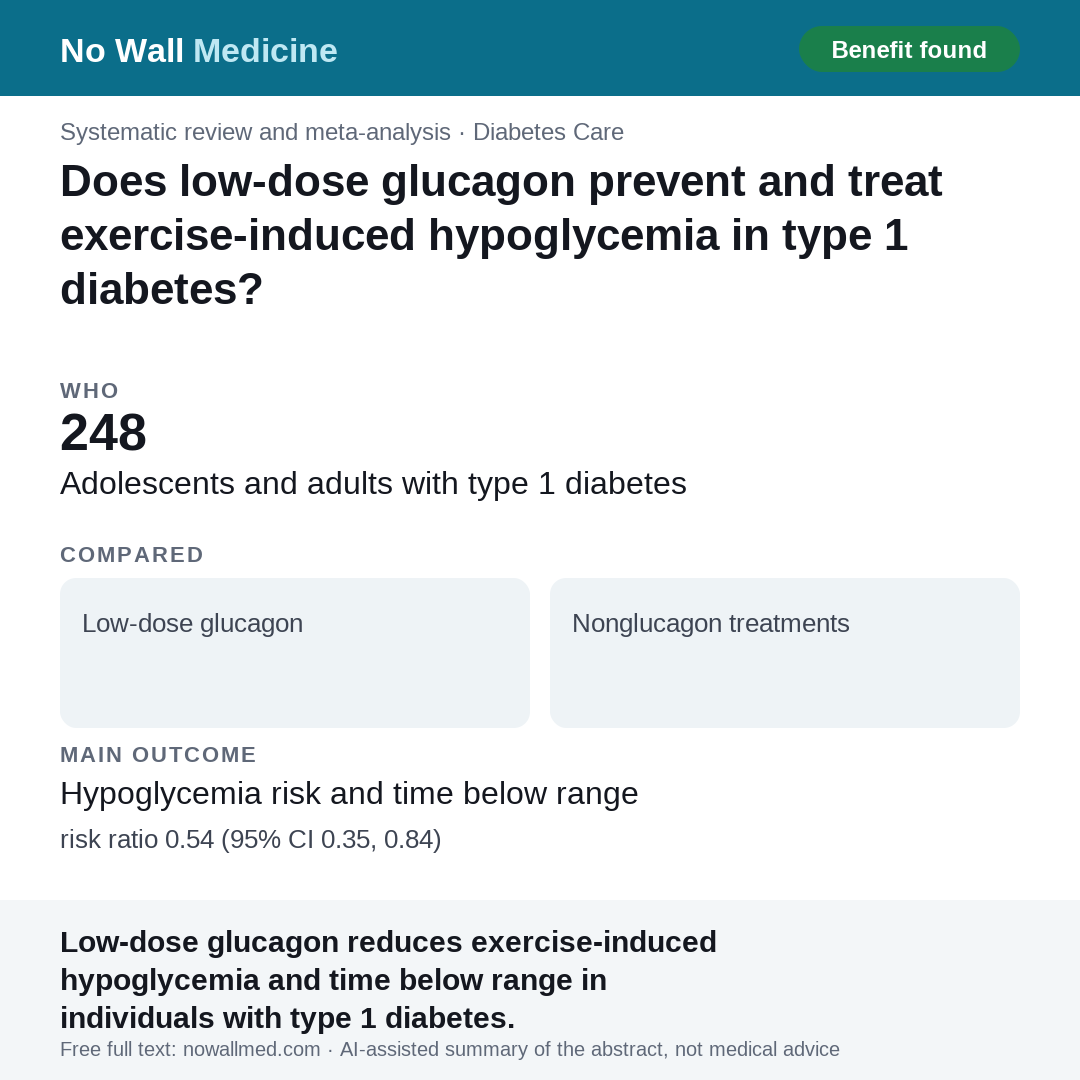
Clinical question: Does low-dose glucagon prevent and treat exercise-induced hypoglycemia in type 1 diabetes?
Why it matters: People with type 1 diabetes face a high risk of hypoglycemia, or low blood sugar, when exercising.
Key points
- Researchers analyzed 12 studies involving 248 adolescents and adults with type 1 diabetes to evaluate low-dose glucagon compared to other treatments.
- Low-dose glucagon was associated with a lower risk of hypoglycemia (risk ratio 0.54; 95% CI 0.35, 0.84) and a decrease in time below range of -3.91 percentage points.
- The use of low-dose glucagon was associated with an increase in overall adverse events (risk ratio 2.75; 95% CI 1.07, 7.08).
Limitation the authors note: The included studies were few and heterogeneous, which may have influenced the overall outcomes.
Headline and key points written with AI from the paper’s abstract, with every number checked against it. Read the paper before relying on them.
Was this summary helpful?
Subject terms
Cite this article
Lundemose SB, Ranjan AG, Nørgaard O, Suvitaival T, Nørgaard K. Low-Dose Glucagon to Prevent and Treat Exercise-Associated Hypoglycemia in Individuals With Type 1 Diabetes: A Systematic Review and Meta-analysis. Diabetes Care. 2025. doi:10.2337/dc25-0702
Spotted a mistake? Suggest a correction