Low gas pressure during laparoscopic liver resection was associated with fewer severe gas embolism cases
Low Pneumoperitoneum Pressure Reduces Gas Embolism During Laparoscopic Liver Resection: A Randomized Controlled Trial
Parallel, dual-arm, double-blind, randomized controlled trialBenefit found
Does low pneumoperitoneal pressure reduce gas embolism during laparoscopic liver resection?
Who
141
Patients undergoing elective laparoscopic liver resection
Compared
47Standard pressure (15 mm Hg) (67.1%)
29Low pressure (10 mm Hg) (40.8%)
Main outcome
Severe gas embolism grade 3 or higher
Result: P = 0.003
Bottom line: Low pneumoperitoneal pressure reduces the incidence and duration of severe gas embolism during laparoscopic liver resection.
Ann Surg · 2023-10-17Download image
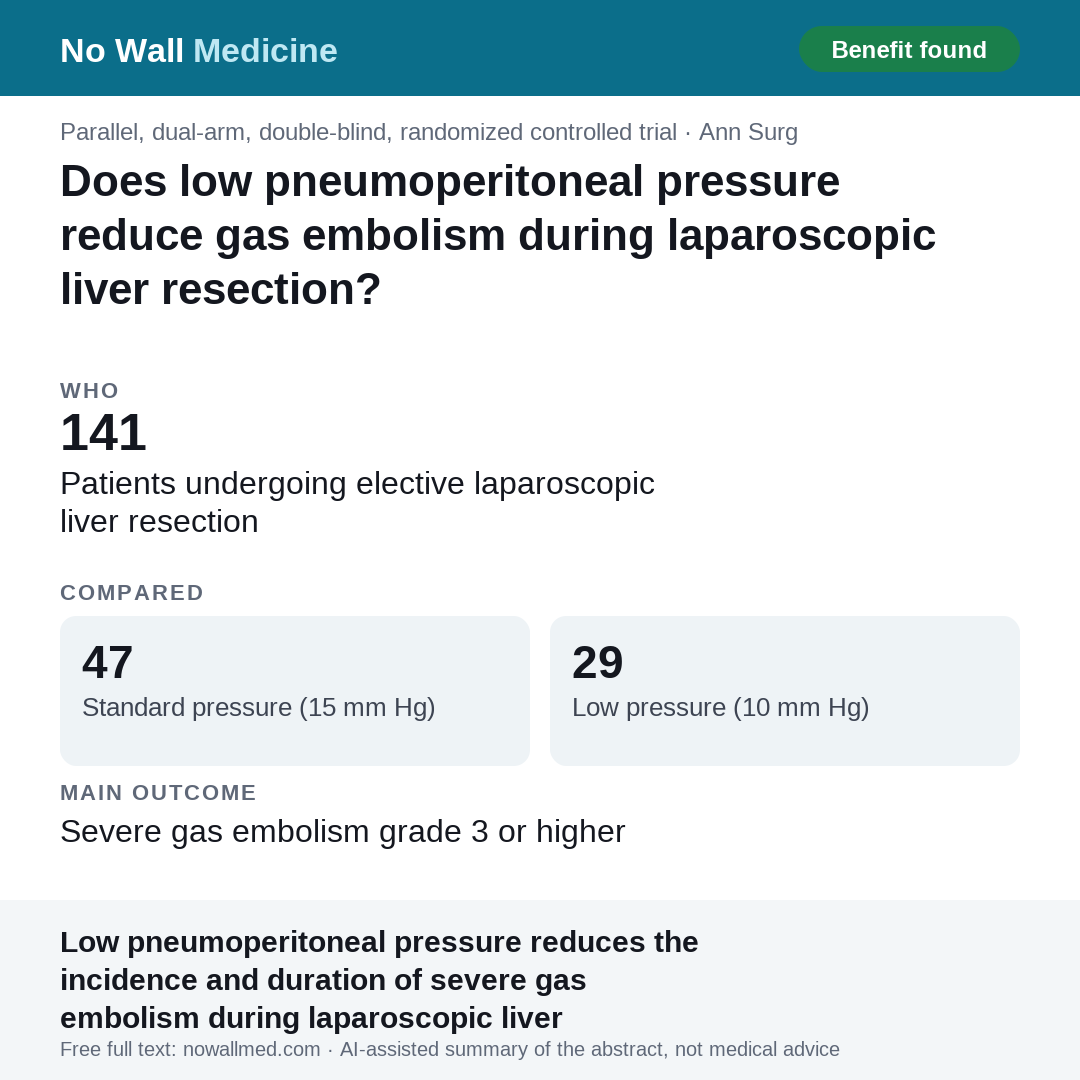
Clinical question: Does low pneumoperitoneal pressure reduce gas embolism during laparoscopic liver resection?
Why it matters: Clinical evidence was lacking regarding whether low pneumoperitoneal pressure, the pressure used to inflate the abdomen with gas during surgery, reduces gas embolism during laparoscopic liver resection.
Key points
- Researchers conducted a randomized controlled trial with 141 patients undergoing elective laparoscopic liver resection, comparing standard pressure of 15 mm Hg to low pressure of 10 mm Hg.
- The low pressure group had fewer severe gas embolism cases at 40.8% compared to 67.1% in the standard pressure group.
- Patients in the low pressure group also experienced shorter gas embolism duration and fewer increases in heart rate and lactate during episodes.
Headline and key points written with AI from the paper’s abstract, with every number checked against it. Read the paper before relying on them.
Was this summary helpful?
Subject terms
Cite this article
Luo W, Jin D, Huang J, Zhang J, Xu Y, Gu J. Low Pneumoperitoneum Pressure Reduces Gas Embolism During Laparoscopic Liver Resection: A Randomized Controlled Trial. Ann Surg. 2023. doi:10.1097/SLA.0000000000006130
Spotted a mistake? Suggest a correction
Top studies every Monday
The week’s key trials and guidelines in your specialties, plus any topics you follow. By email, free.
Get the weekly digest