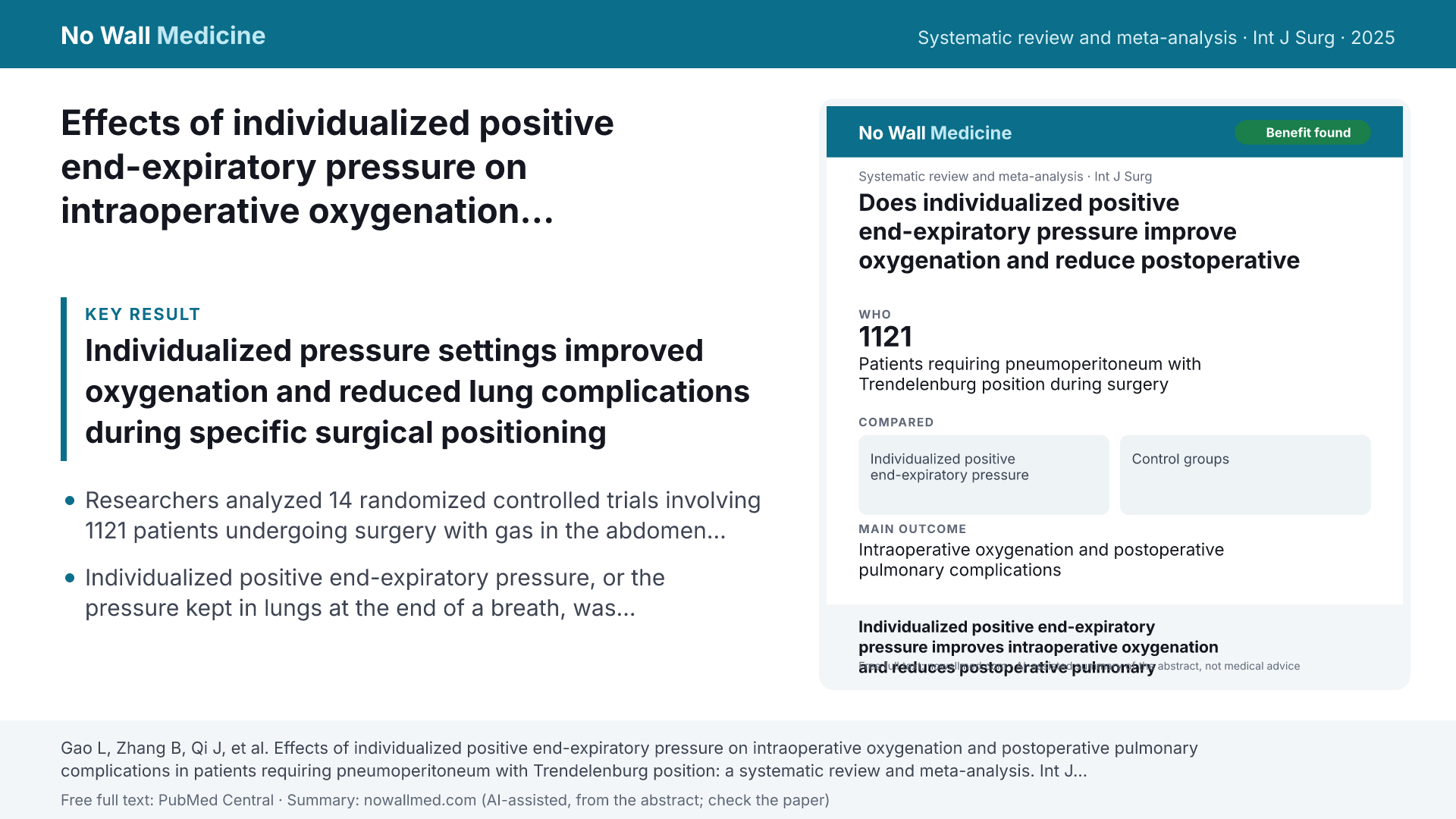
Individualized pressure settings improved oxygenation and reduced lung complications during specific surgical positioning
Effects of individualized positive end-expiratory pressure on intraoperative oxygenation and postoperative pulmonary complications in patients requiring pneumoperitoneum with Trendelenburg position: a systematic review and meta-analysis
Systematic review and meta-analysisBenefit found
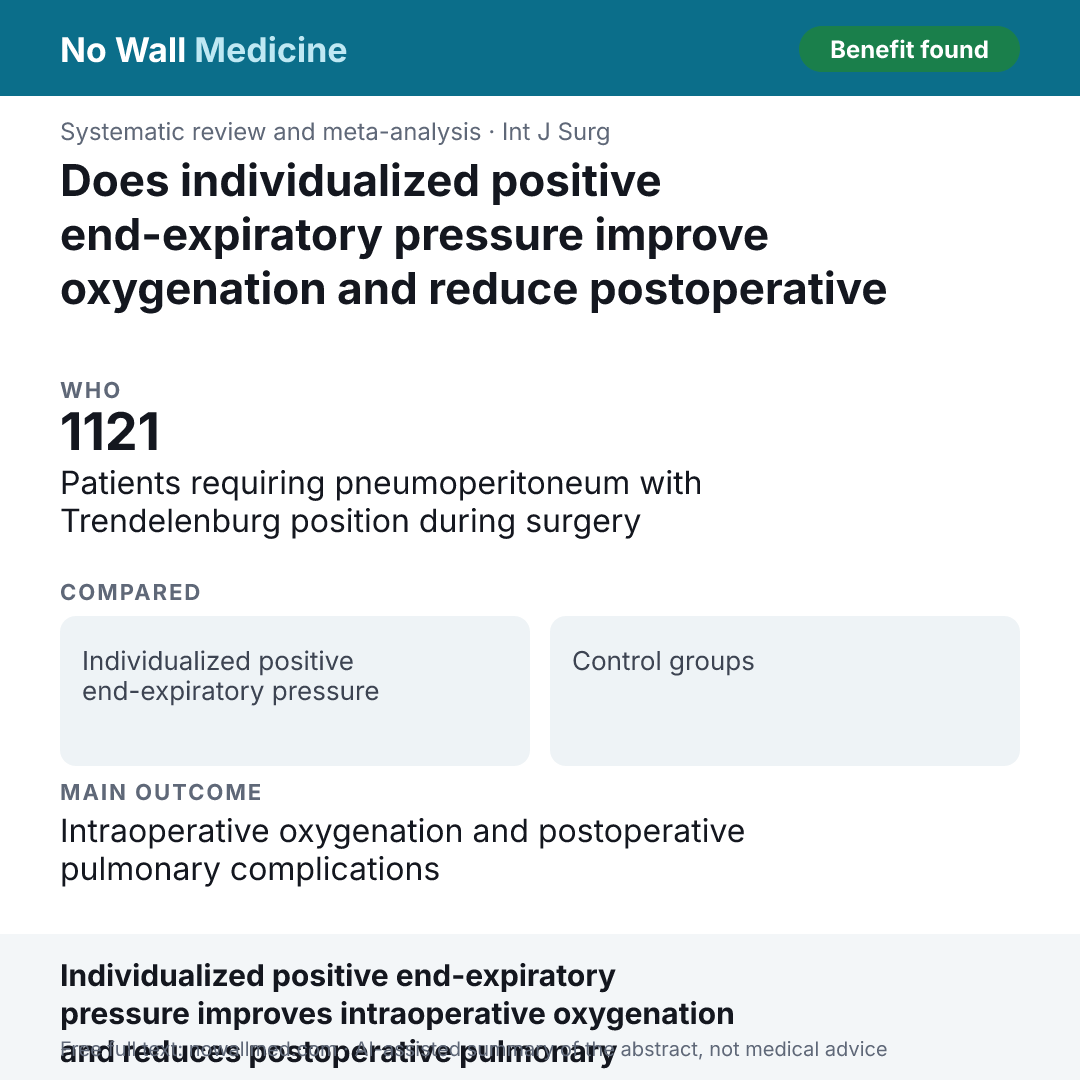
Does individualized positive end-expiratory pressure improve oxygenation and reduce postoperative pulmonary complications?
Who
1121
Patients requiring pneumoperitoneum with Trendelenburg position during surgery
Compared
Individualized positive end-expiratory pressure
Control groups
Main outcome
Intraoperative oxygenation and postoperative pulmonary complications
Result: PaO2/FiO2 mean difference 56.52 mmHg (95% CI 33.98 to 79.06); PPC log risk ratio -0.50 (95% CI -0.84 to -0.16)
Bottom line: Individualized positive end-expiratory pressure improves intraoperative oxygenation and reduces postoperative pulmonary complications in these patients.
Int J Surg · 2025-01-01 · Save PNG
Clinical question: Does individualized positive end-expiratory pressure improve oxygenation and reduce postoperative pulmonary complications?
Key points
- Researchers analyzed 14 randomized controlled trials involving 1121 patients undergoing surgery with gas in the abdomen and head-down positioning.
- Individualized positive end-expiratory pressure, or the pressure kept in lungs at the end of a breath, was associated with an improved oxygenation level of 56.52 mmHg.
- The use of individualized pressure settings was associated with a reduced incidence of postoperative pulmonary complications and improved lung compliance.
Headline and key points written with AI from the paper’s abstract, with every number checked against it. Read the paper before relying on them.
Was this summary helpful?
Subject terms
Headline, design, result, key points, caveat and citation as plain text.
Cite this article
Gao L, Zhang B, Qi J, et al. Effects of individualized positive end-expiratory pressure on intraoperative oxygenation and postoperative pulmonary complications in patients requiring pneumoperitoneum with Trendelenburg position: a systematic review and meta-analysis. Int J Surg. 2025. doi:10.1097/JS9.0000000000002041
Spotted a mistake? Suggest a correction