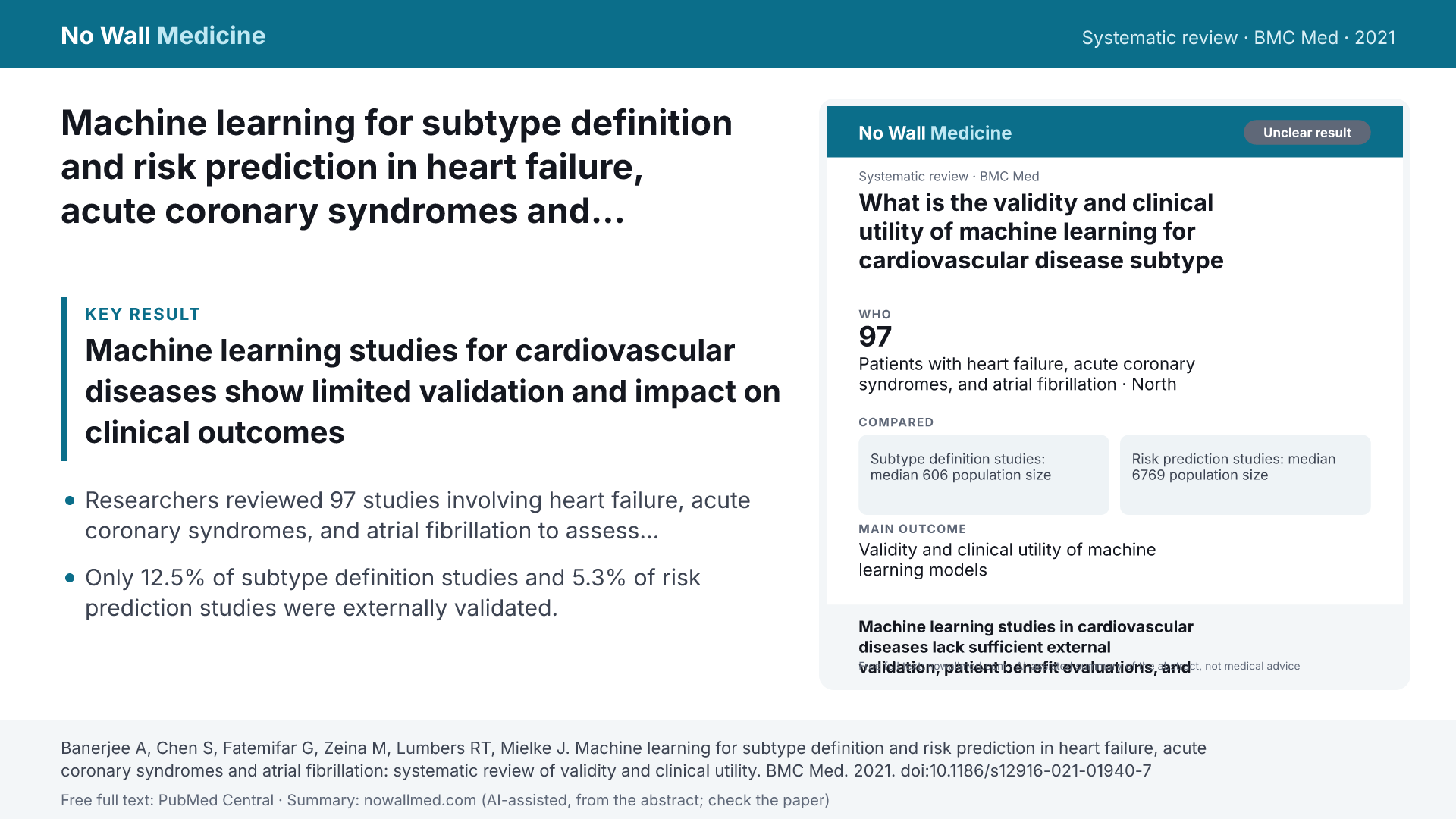
Machine learning for subtype definition and risk prediction in heart failure, acute coronary syndromes and atrial fibrillation: systematic review of validity and clinical utility
Key result: Machine learning studies for cardiovascular diseases show limited validation and impact on clinical outcomes
Key points
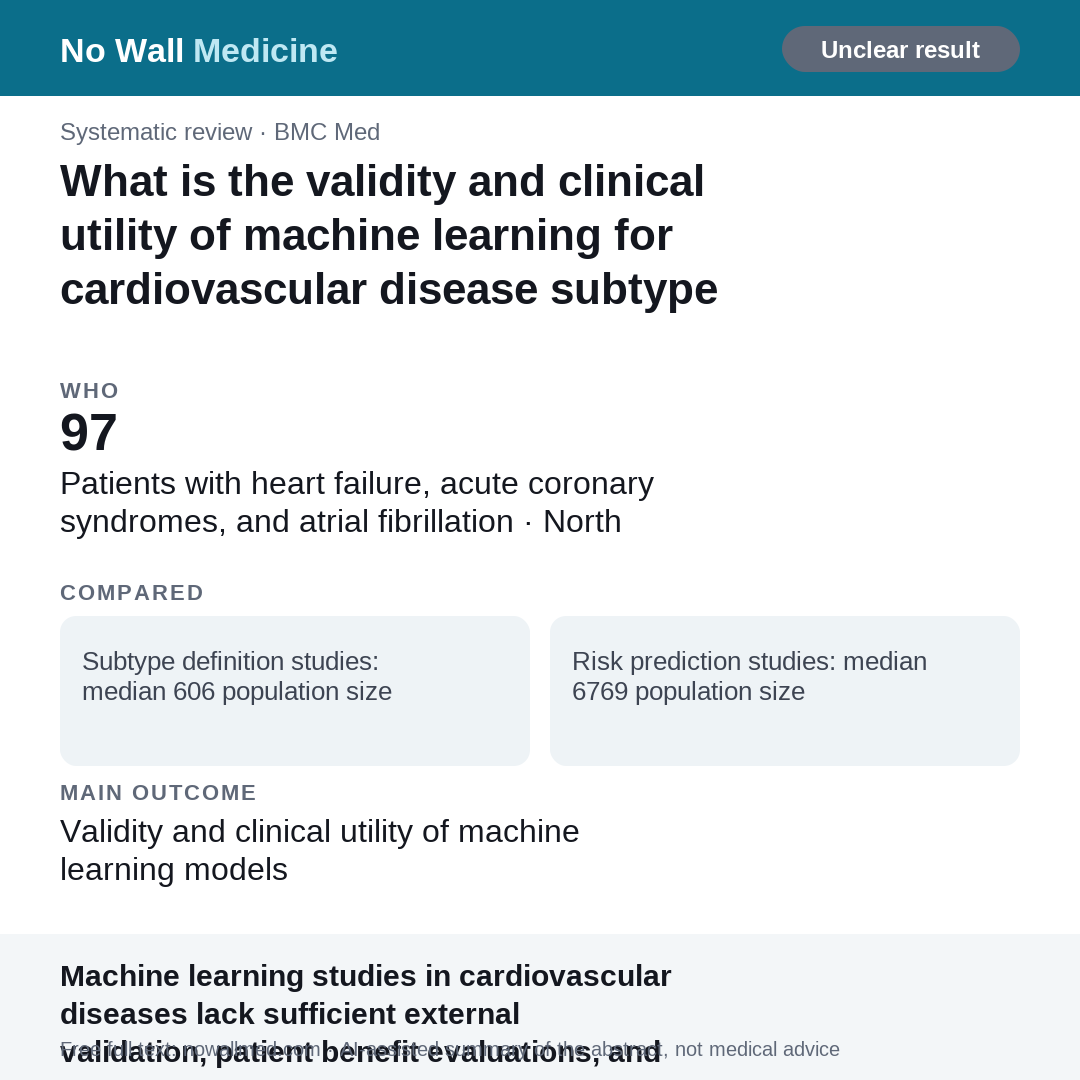
- Researchers reviewed 97 studies involving heart failure, acute coronary syndromes, and atrial fibrillation to assess machine learning for subtype definition and risk prediction.
- Only 12.5% of subtype definition studies and 5.3% of risk prediction studies were externally validated.
- While 32.5% of subtype definition studies and 91.2% of risk prediction studies improved outcome prediction, no studies evaluated effectiveness or cost-effectiveness.
Why it matters: It is unknown how machine learning models for subtype definition and risk prediction in cardiovascular diseases perform regarding clinical utility and implementation.
Limitation the authors note: The included studies were mostly from North America, focused on single diseases rather than multimorbidity, and lacked evaluations of effectiveness or cost-effectiveness.
Discussion prompts
- Would these patients look like yours? Who was left out?
- Is the main outcome one that matters to patients?
- Is the difference large enough to change what you do?
Cite: Banerjee A, Chen S, Fatemifar G, Zeina M, Lumbers RT, Mielke J. Machine learning for subtype definition and risk prediction in heart failure, acute coronary syndromes and atrial fibrillation: systematic review of validity and clinical utility. BMC Med. 2021. doi:10.1186/s12916-021-01940-7
Free full text: PubMed Central · Summary and visual abstract: nowallmed.com/a/machine-learning-for-subtype-definition-and-risk-prediction-in-heart-bt68bm/ (AI-assisted from the abstract; check the paper before relying on it).