Machine learning of electrophysiological signals for the prediction of ventricular arrhythmias: systematic review and examination of heterogeneity between studies
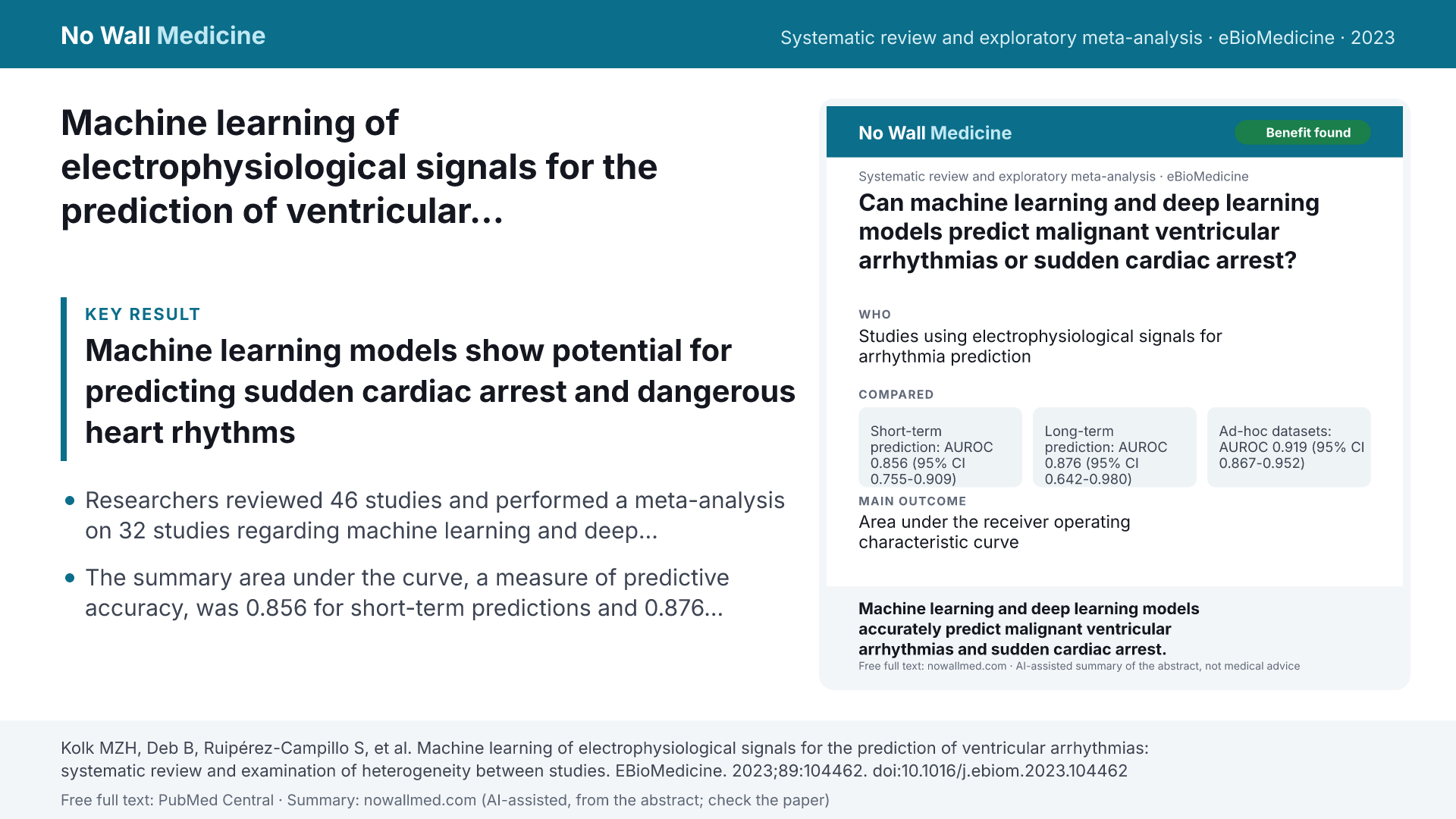
Key result: Machine learning models show potential for predicting sudden cardiac arrest and dangerous heart rhythms
Key points
- Researchers reviewed 46 studies and performed a meta-analysis on 32 studies regarding machine learning and deep learning models for predicting malignant ventricular arrhythmias.
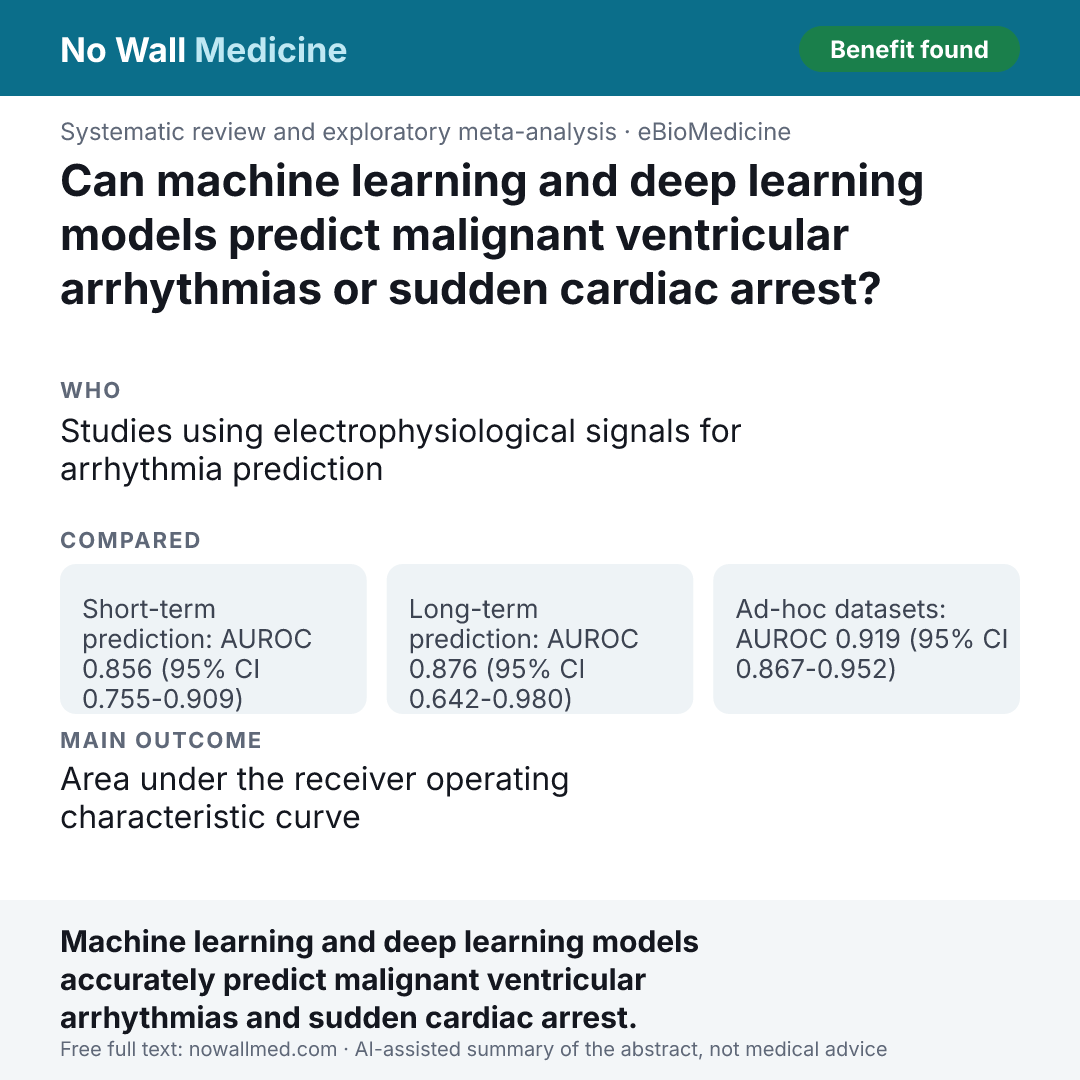
- The summary area under the curve, a measure of predictive accuracy, was 0.856 for short-term predictions and 0.876 for long-term predictions.
- Models using ad-hoc datasets had a higher pooled performance of 0.919 but carried a high risk of bias due to small datasets and lack of external validation.
Limitation the authors note: Wide heterogeneity between studies, caused by small ad-hoc datasets and different model choices, may reduce the ability to generalize results.
Discussion prompts
- Would these patients look like yours? Who was left out?
- Is the main outcome one that matters to patients?
- Is the difference large enough to change what you do?
Cite: Kolk MZH, Deb B, Ruipérez-Campillo S, et al. Machine learning of electrophysiological signals for the prediction of ventricular arrhythmias: systematic review and examination of heterogeneity between studies. EBioMedicine. 2023;89:104462. doi:10.1016/j.ebiom.2023.104462
Free full text: PubMed Central · Summary and visual abstract: nowallmed.com/a/machine-learning-of-electrophysiological-signals-for-the-prediction-171hos3/ (AI-assisted from the abstract; check the paper before relying on it).