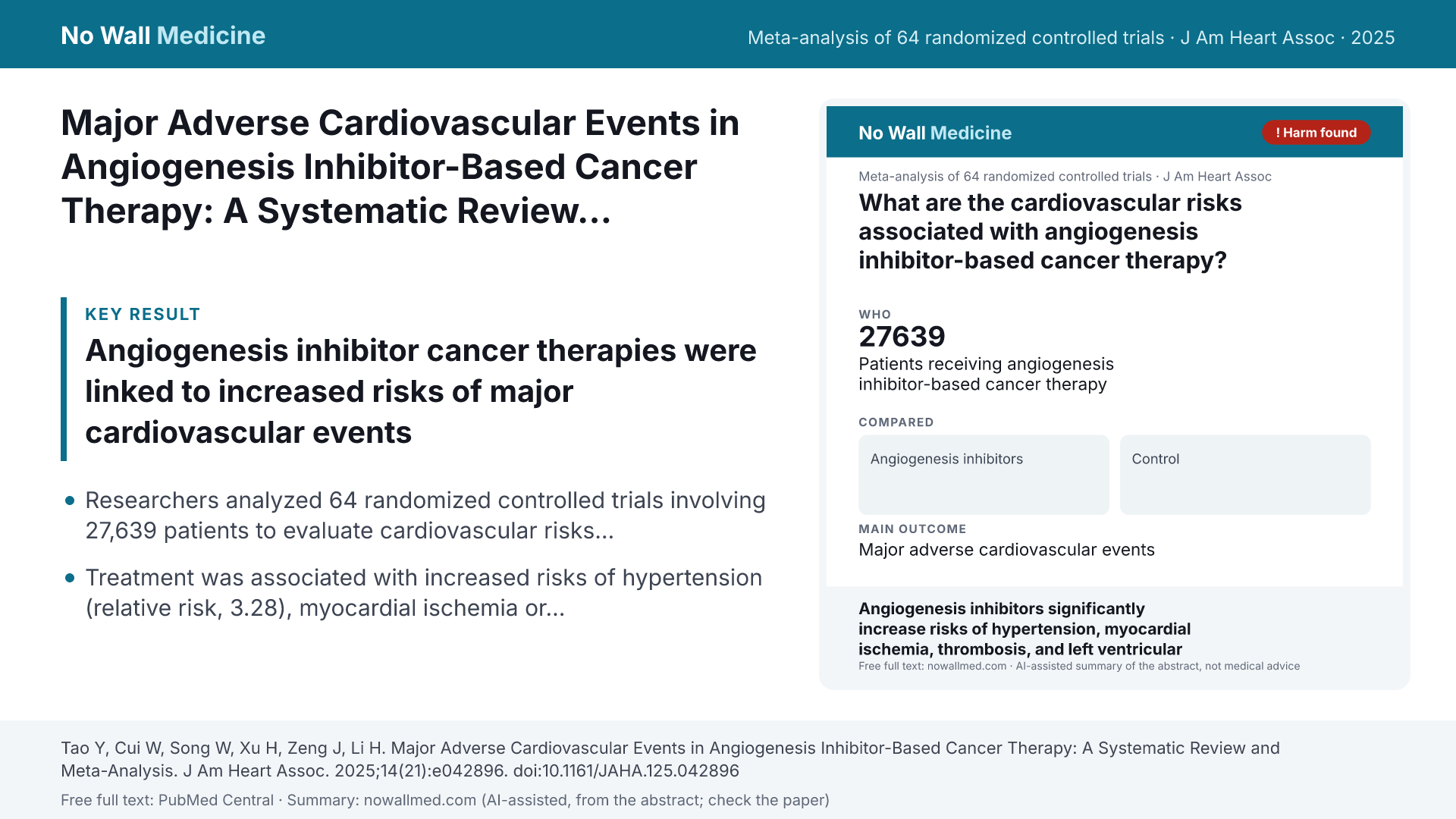
Angiogenesis inhibitor cancer therapies were linked to increased risks of major cardiovascular events
Major Adverse Cardiovascular Events in Angiogenesis Inhibitor-Based Cancer Therapy: A Systematic Review and Meta-Analysis
Meta-analysis of 64 randomized controlled trialsHarm found
What are the cardiovascular risks associated with angiogenesis inhibitor-based cancer therapy?
Who
27639
Patients receiving angiogenesis inhibitor-based cancer therapy
Compared
Angiogenesis inhibitors
Control
Main outcome
Major adverse cardiovascular events
Result: hypertension relative risk 3.28 (95% CI 2.82-4.30)
Bottom line: Angiogenesis inhibitors significantly increase risks of hypertension, myocardial ischemia, thrombosis, and left ventricular dysfunction in cancer patients.
J Am Heart Assoc · 2025-11-03Download image
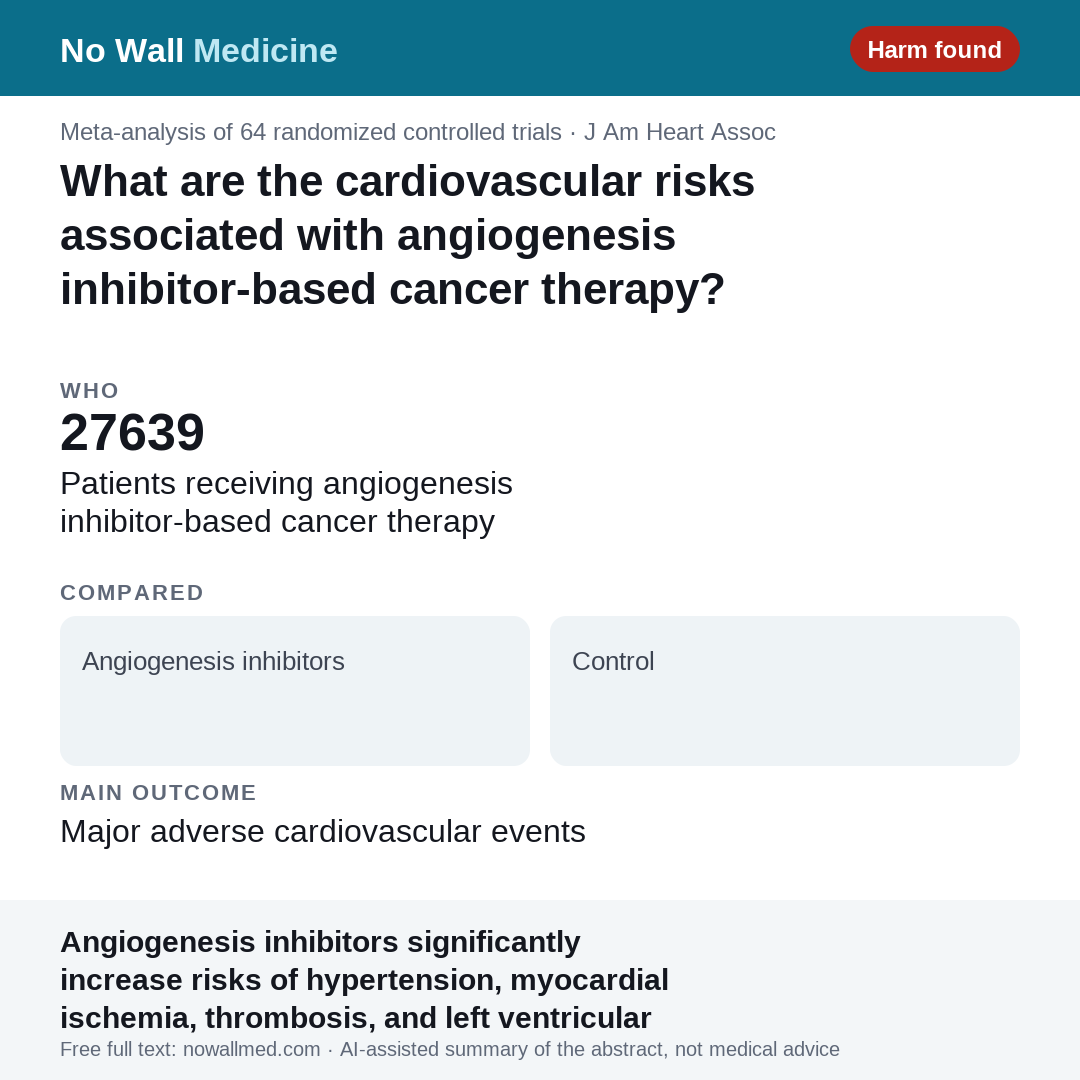
Clinical question: What are the cardiovascular risks associated with angiogenesis inhibitor-based cancer therapy?
Why it matters: The cardiovascular toxicities of angiogenesis inhibitors, such as high blood pressure and heart failure, may increase when these drugs are used alongside other cancer treatments.
Key points
- Researchers analyzed 64 randomized controlled trials involving 27,639 patients to evaluate cardiovascular risks from angiogenesis inhibitors, which are drugs that suppress tumor blood vessel growth.
- Treatment was associated with increased risks of hypertension (relative risk, 3.28), myocardial ischemia or infarction (relative risk, 2.09), thrombotic events (relative risk, 1.46), and left ventricular dysfunction (relative risk, 2.00).
- The risk of these cardiovascular events was higher when angiogenesis inhibitors were combined with chemotherapy or other targeted therapies.
Headline and key points written with AI from the paper’s abstract, with every number checked against it. Read the paper before relying on them.
Was this summary helpful?
Subject terms
Cite this article
Tao Y, Cui W, Song W, Xu H, Zeng J, Li H. Major Adverse Cardiovascular Events in Angiogenesis Inhibitor-Based Cancer Therapy: A Systematic Review and Meta-Analysis. J Am Heart Assoc. 2025. doi:10.1161/JAHA.125.042896
Spotted a mistake? Suggest a correction