Untreated maternal depression is linked to higher opioid use six weeks after cesarean delivery
Maternal Depression and Opioid Use After Cesarean Delivery
Secondary analysis of a multicenter randomized trialMixed results
Does maternal depression history and treatment status associate with opioid use after cesarean delivery?
Who
5504
Individuals who underwent cesarean delivery · 12 United States hospitals
Compared
No depression
Treated depression
Untreated depression
Main outcome
Inpatient oral opioid use in morphine milligram equivalents per day
Bottom line: Depression was not associated with inpatient opioid use, but untreated depression increased opioid use through 6 weeks postpartum.
Obstet Gynecol · 2026-03-19Download image
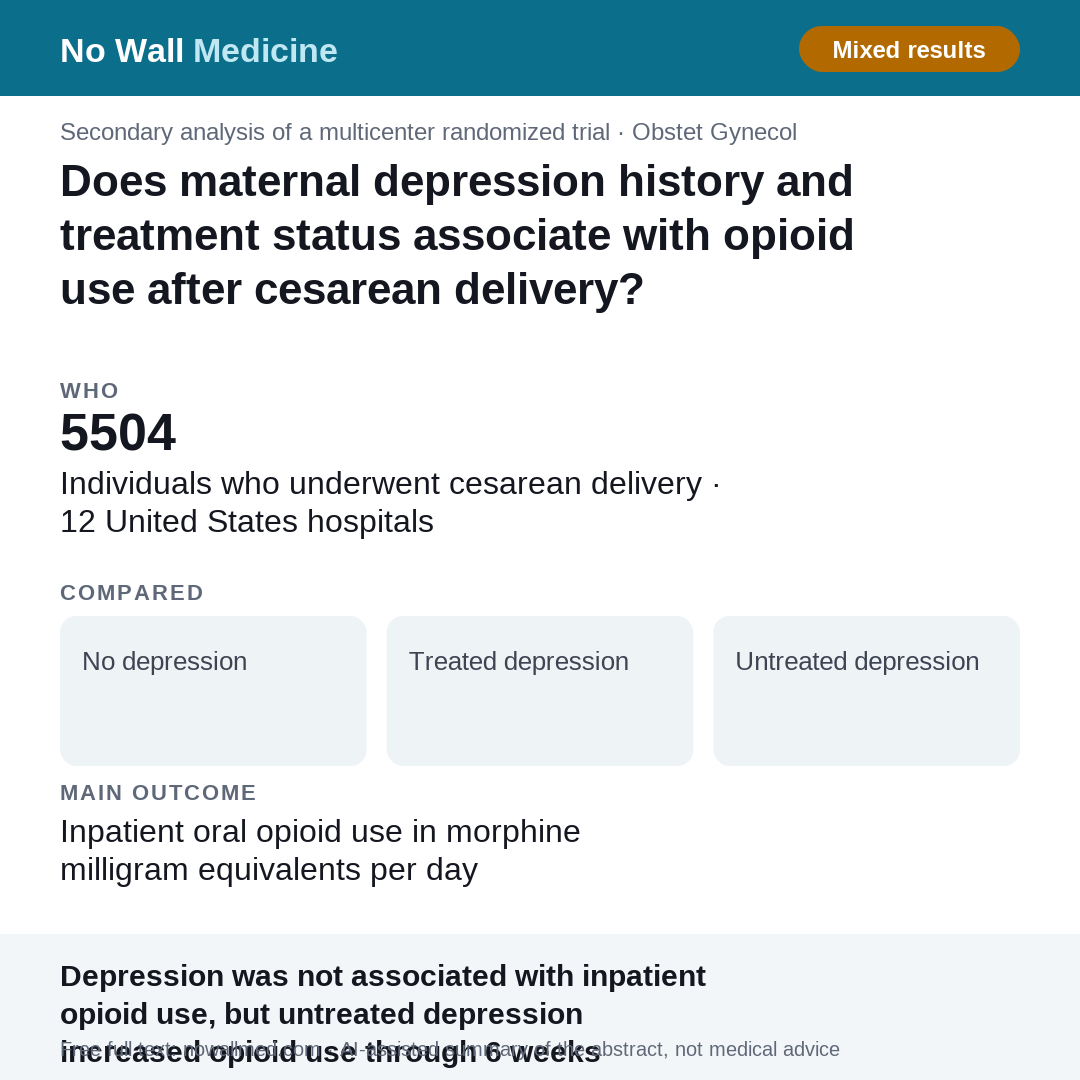
Clinical question: Does maternal depression history and treatment status associate with opioid use after cesarean delivery?
Why it matters: Researchers sought to understand how a history of depression and its treatment status relate to opioid use following cesarean delivery.
Key points
- Researchers analyzed 5,504 participants who underwent cesarean delivery at 12 hospitals to compare opioid use between those with and without depression.
- While inpatient opioid use did not differ based on depression or treatment status, untreated depression was associated with increased opioid use through 6 weeks postpartum.
- Among the 1,507 participants with self-reported depression, 663 (44.0%) were receiving treatment during pregnancy.
Headline and key points written with AI from the paper’s abstract, with every number checked against it. Read the paper before relying on them.
Topics
Spotted a mistake? Suggest a correction