MEDI6012 increases high-density lipoprotein cholesterol and reduces atherogenic particles in coronary heart disease patients
MEDI6012: Recombinant Human Lecithin Cholesterol Acyltransferase, High-Density Lipoprotein, and Low-Density Lipoprotein Receptor-Mediated Reverse Cholesterol Transport
Phase 2a double-blind randomized trialBenefit found
What are the safety, pharmacokinetic, and pharmacodynamic profiles of MEDI6012?
Who
48
48 subjects with stable coronary heart disease on a statin
Compared
Placebo
MEDI6012: Peak mean high-density lipoprotein cholesterol percent change was 31.4%, 71.4%, 125%, and 177.8%
Main outcome
safety, pharmacokinetic, and pharmacodynamic profile
Bottom line: MEDI6012 demonstrated an acceptable safety profile and increased high-density lipoprotein cholesterol and cholesterol efflux capacity.
J Am Heart Assoc · 2021-06-14Download image
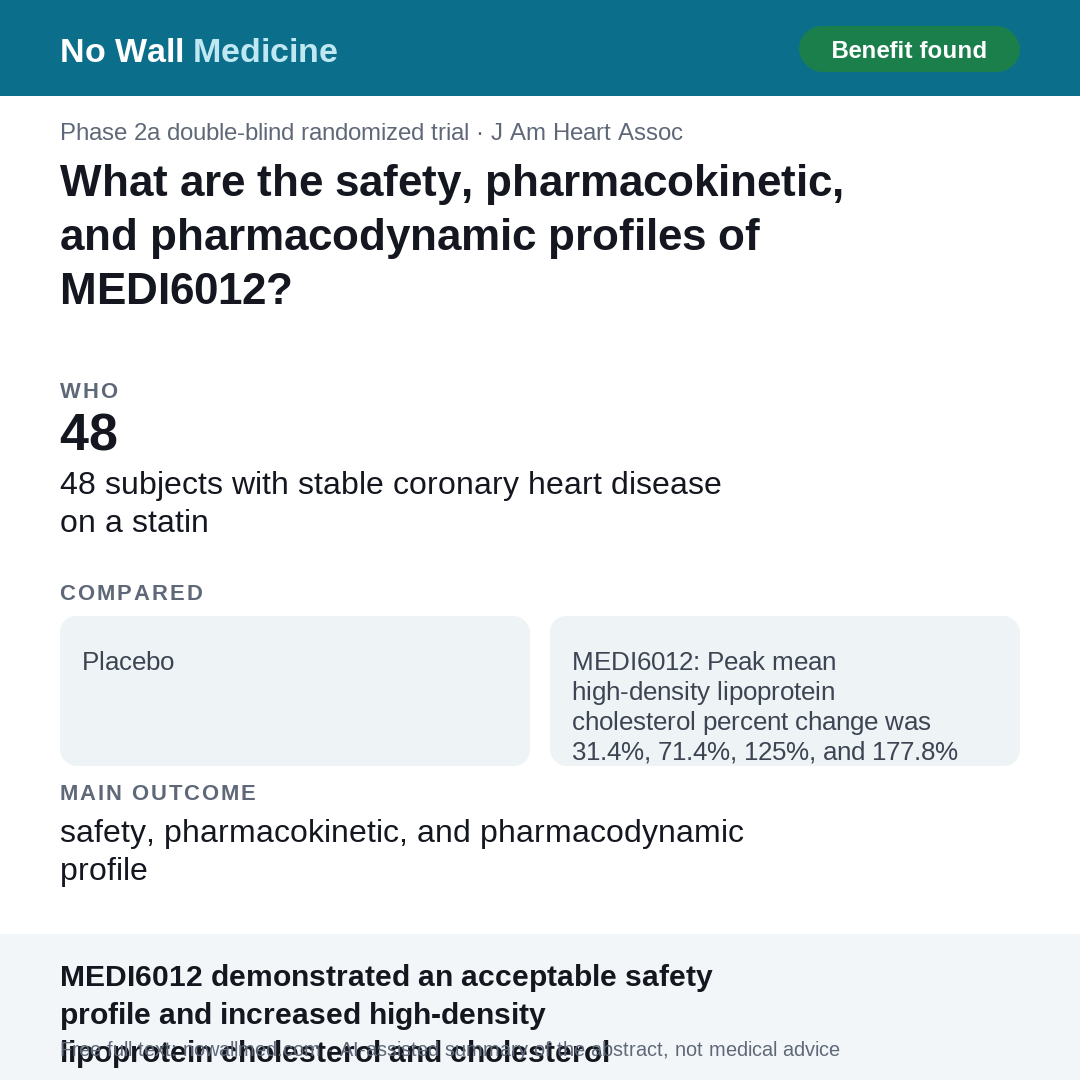
Clinical question: What are the safety, pharmacokinetic, and pharmacodynamic profiles of MEDI6012?
Why it matters: The safety, movement of the drug through the body, and effects on cholesterol transport for the enzyme MEDI6012 were unknown.
Key points
- Researchers studied 48 subjects with stable coronary heart disease on statin therapy who received different doses of MEDI6012 or a placebo.
- Intravenous doses of MEDI6012 were associated with peak mean high-density lipoprotein cholesterol increases of 31.4%, 71.4%, 125%, and 177.8%.
- The intravenous 80-, 240-, and 800-mg doses were associated with decreases in atherogenic small low-density lipoprotein particles by 41%, 88%, and 79%.
Headline and key points written with AI from the paper’s abstract, with every number checked against it. Read the paper before relying on them.
Was this summary helpful?
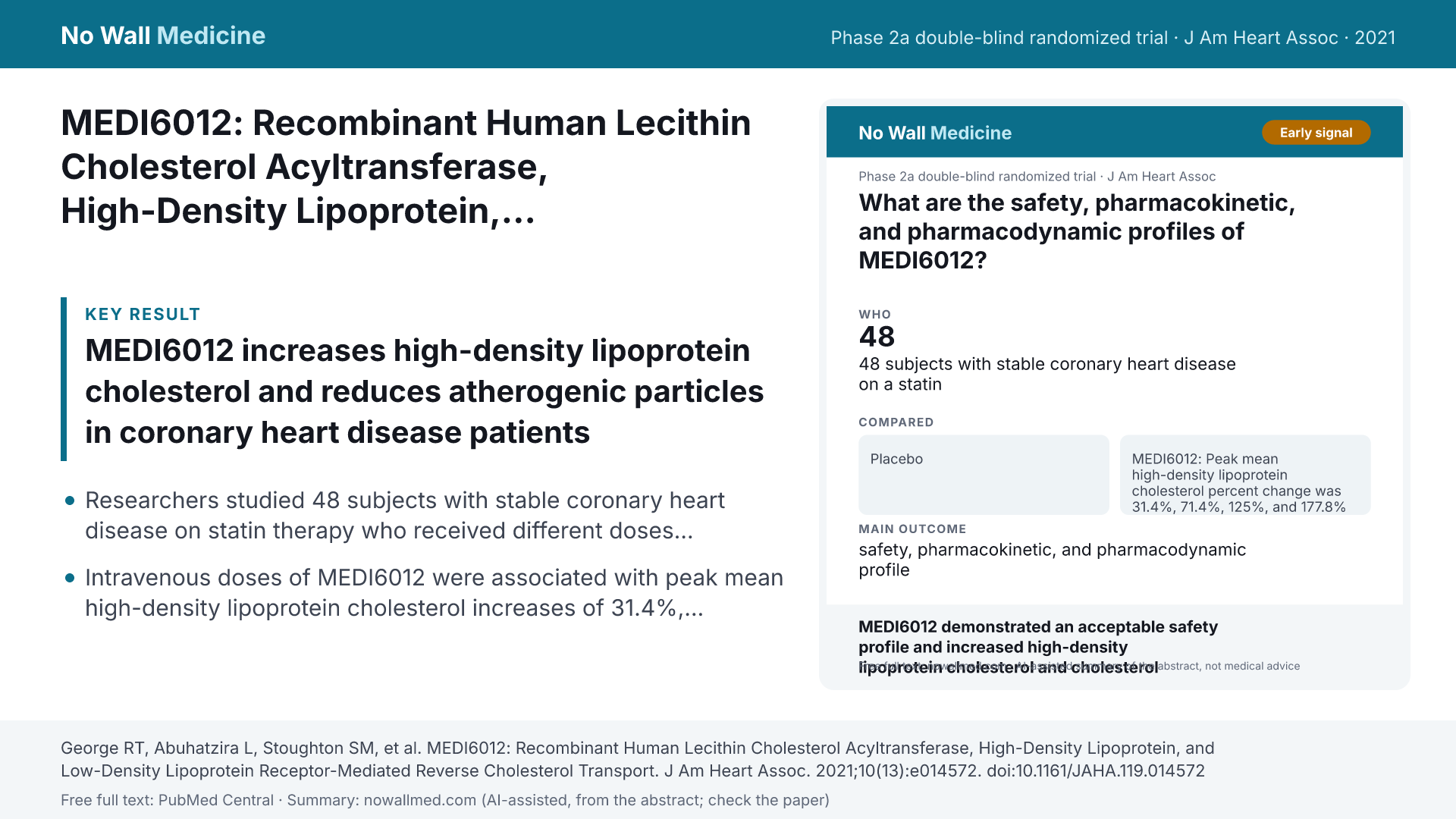
Subject terms
Cite this article
George RT, Abuhatzira L, Stoughton SM, Karathanasis SK, She D, Jin C. MEDI6012: Recombinant Human Lecithin Cholesterol Acyltransferase, High-Density Lipoprotein, and Low-Density Lipoprotein Receptor-Mediated Reverse Cholesterol Transport. J Am Heart Assoc. 2021. doi:10.1161/JAHA.119.014572
Spotted a mistake? Suggest a correction
Top studies every Monday
The week’s key trials and guidelines in your specialties, plus any topics you follow. By email, free.
Get the weekly digest